
Category: Definitions
-

What the Bible Says About Holding Peace: Understanding Its Meaning
In the Bible, “hold peace” refers to the act of remaining silent or refraining from speaking, often in times of conflict or contention. It emphasizes the importance of calmness and restraint, as seen in passages like Habakkuk 2:20, where it encourages waiting for God’s response rather than reacting hastily. Scripture 13 And Moses said to…
-

What the Bible Says About the Meaning of Tekoa
In the Bible, Tekoa is a town in Judah mentioned in 2 Samuel 14:2 as the birthplace of the wise woman who spoke to King David. The name Tekoa means “trumpet” or “a place of gathering” in Hebrew, symbolizing its significance in ancient Israelite society. Scripture 1 Now Joab the son of Zeruiah knew that…
-

What the Bible Says About the Meaning of the Word Loud
In the Bible, “loud” often refers to a strong or powerful sound, typically associated with expressions of joy, worship, or distress (e.g., Psalm 150:5). It can signify urgency or intensity in communication, such as in the cries of the oppressed or the praise of God. Scripture 16 On the morning of the third day there…
-

What the Bible Says About the Meaning of Amana
In the Bible, Amana refers to a mountain range mentioned in Song of Solomon 4:8. It symbolizes strength and beauty, serving as a backdrop for the poetic expressions of love in the text. Scripture 8 Come with me from Lebanon, my bride; come with me from Lebanon. Depart from the peak of Amana, from the…
-

What the Bible Says About No Dogs in the Kingdom of Heaven
The phrase “no dogs” in a biblical context is often interpreted from Revelation 22:15, which states that outside the New Jerusalem are “dogs,” referring metaphorically to immoral individuals or those who reject God’s ways. It signifies that such unclean or unrighteous behaviors will not be present in the heavenly kingdom. Scripture 18 You shall not…
-

What the Bible Says About Mesopotamia: A Definition and Exploration
In the Bible, Mesopotamia refers to the region located between the Tigris and Euphrates rivers, often associated with the ancient civilizations of Babylon and Assyria. It is mentioned as the homeland of key biblical figures, such as Abraham, who originally came from Ur of the Chaldeans (Genesis 11:31). Scripture 10 Then the servant took ten…
-
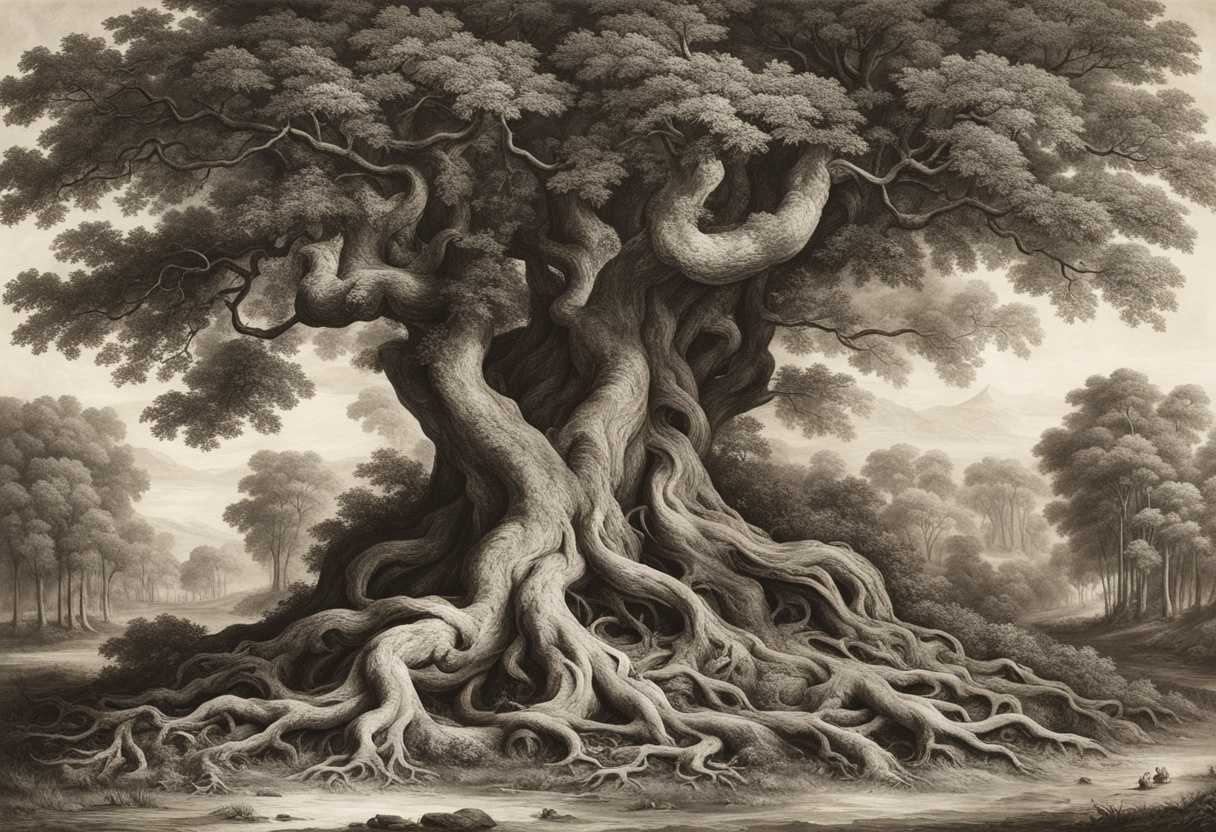
What the Bible Says About the Root of a Tree
In the Bible, the “root of a tree” often symbolizes the source of strength and stability, representing God’s foundational support and the heritage of faith. It can also denote a connection to one’s ancestry or spiritual lineage, as seen in scriptures like Isaiah 11:1, which refers to the “root of Jesse,” symbolizing the lineage of…
-

What the Bible Says About the Meaning of Azekah
Azekah is a biblical location mentioned in the context of the Valley of Elah, where the Israelites faced the Philistines (1 Samuel 17:1). The name Azekah is often interpreted to mean “dug out” or “the place of excavation.” Scripture 10 And the Lord threw them into a panic before Israel, who struck them with a…
-

What the Bible Says About the Meaning of a Speck
In the Bible, “speck” often refers to a small flaw or imperfection, particularly in the context of judgment. This concept is illustrated in Matthew 7:3-5, where it highlights the hypocrisy of noticing insignificant faults in others while ignoring one’s own larger shortcomings. Scripture 1 “Judge not, that you be not judged.” 2 For with the…
-

What the Bible Says About the Meaning of Debir
In the Bible, Debir refers to a city in the land of Canaan, also known as Kirjath-sepher or the “City of Books.” It is mentioned as a city conquered by Joshua and associated with the tribe of Judah (Joshua 15:15-17). Scripture 38 Then Joshua and all Israel with him turned back to Debir and fought…