
Category: Definitions
-

What the Bible Says About Casting Your Burdens
In the Bible, “cast” often refers to throwing or placing something forcefully, such as casting out demons or casting lots for decision-making. It can also symbolize the act of relinquishing burdens to God, as seen in 1 Peter 5:7, which encourages believers to “cast all your anxiety on Him.” Scripture 9 But Sarah saw the…
-

What the Bible Says About “It Is Better to Give Than to Receive”
The phrase “better to give than to receive” reflects the biblical principle found in Acts 20:35, where it emphasizes the value of generosity and selflessness over mere material gain. It underscores the idea that giving enriches the giver, fostering community and love. Scripture 32 And now I commend you to God and to the word…
-

What the Bible Says About Abaddon: Understanding Its Meaning and Significance
In the Bible, Abaddon is referred to as a place of destruction or a synonym for the abyss, often associated with desolation and death, as mentioned in Revelation 9:11. The term is derived from Hebrew, meaning “to perish,” and it also represents a figure of destruction or a destroyer in some interpretations. Scripture 1 And…
-
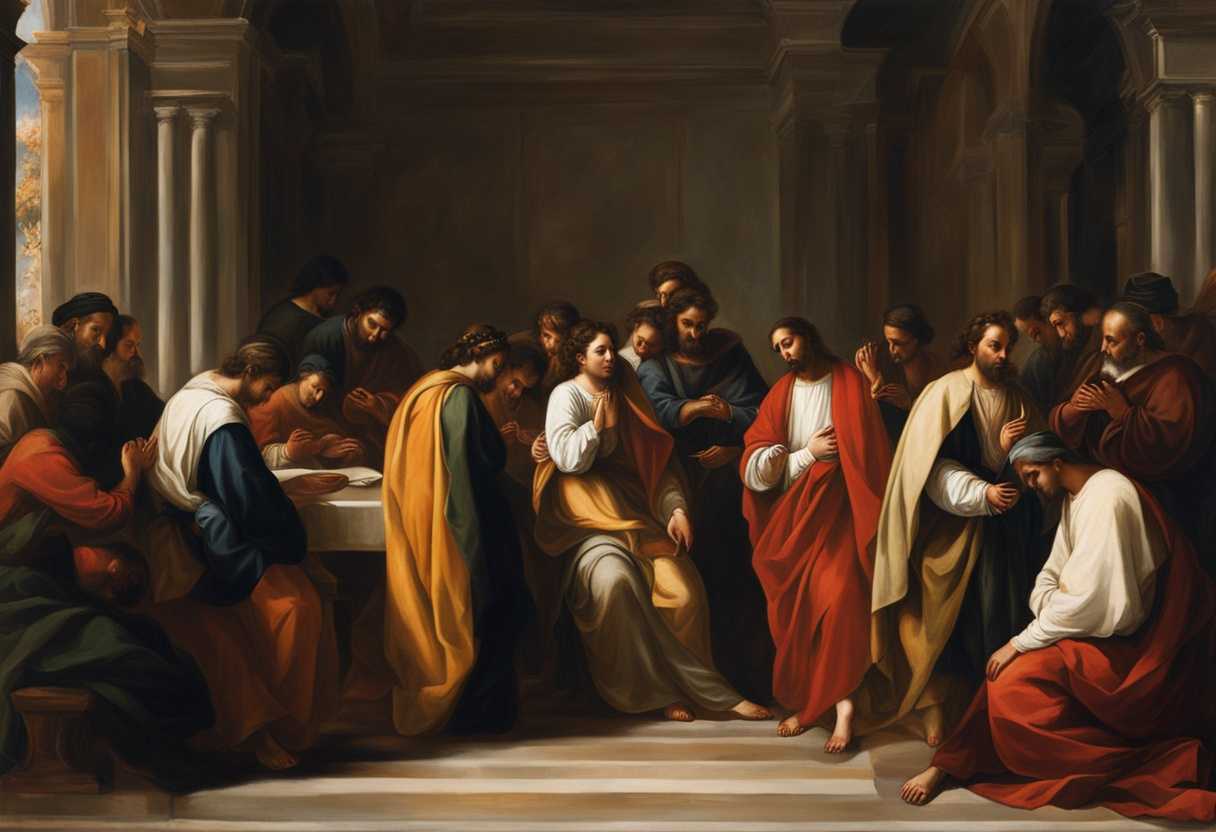
What the Bible Says About Not Calling Yourself a Rabbi
In the Bible, specifically in Matthew 23:8-10, “do not call yourself a rabbi” emphasizes humility and the importance of recognizing that all followers of Christ are equals under God, discouraging the elevation of certain individuals through titles. It teaches that God is the ultimate authority and guide in spiritual matters, rather than human leaders. Scripture…
-

What the Bible Says About the Godhead: Understanding Its Meaning
In the Bible, the term “Godhead” refers to the divine nature or essence of God, often associated with the concept of the Trinity, which includes the Father, Son, and Holy Spirit as distinct persons in one divine being. It emphasizes the unity and co-equal status of the three persons within the Godhead, as seen in…
-

What the Bible Says About Honoring Thy Father: Understanding Its Meaning
“Honor thy father” is a commandment found in Exodus 20:12, which calls for children to show respect, obedience, and care for their parents. This principle emphasizes the importance of family relationships and the value of honoring those who have authority and responsibility within the family structure. Scripture 12 “Honor your father and your mother, that…
-

What the Bible Says About the Meaning of Shibboleth
In the Bible, “Shibboleth” refers to a password or distinctive term used to identify members of a particular group. It appears in Judges 12:5-6, where the Gileadites used it to differentiate themselves from the Ephraimites by their pronunciation of the word. Scripture 1 The men of Ephraim were called to arms, and they crossed to…
-

What the Bible Says About “Pisseth Against the Wall”
In the Bible, “pisseth against the wall” is a phrase found in 1 Kings 14:10 and refers to male individuals, symbolizing those who are strong or of warrior status. It is often interpreted as a metaphor for God’s judgment against unfaithfulness, emphasizing the totality of the destruction that will come upon a house or lineage.…
-

What the Bible Says About Trance and Its Meaning
In the Bible, a trance is a state of deep contemplation or spiritual ecstasy where an individual may receive divine revelations or visions. It is often described as a temporary withdrawal from normal consciousness, allowing a person to encounter the supernatural, as seen in instances involving figures like Peter (Acts 10:10) and Ezekiel (Ezekiel 3:14).…
-

What the Bible Says About the Synagogue of Satan
The term “synagogue of Satan” appears in Revelation 2:9 and 3:9, where it refers to a group of individuals who falsely claim to be Jewish but oppose the followers of Christ. It symbolizes a community that stands in opposition to God’s people and their beliefs, reflecting spiritual deception and opposition. Scripture 8 “And to the…