
Category: Definitions
-
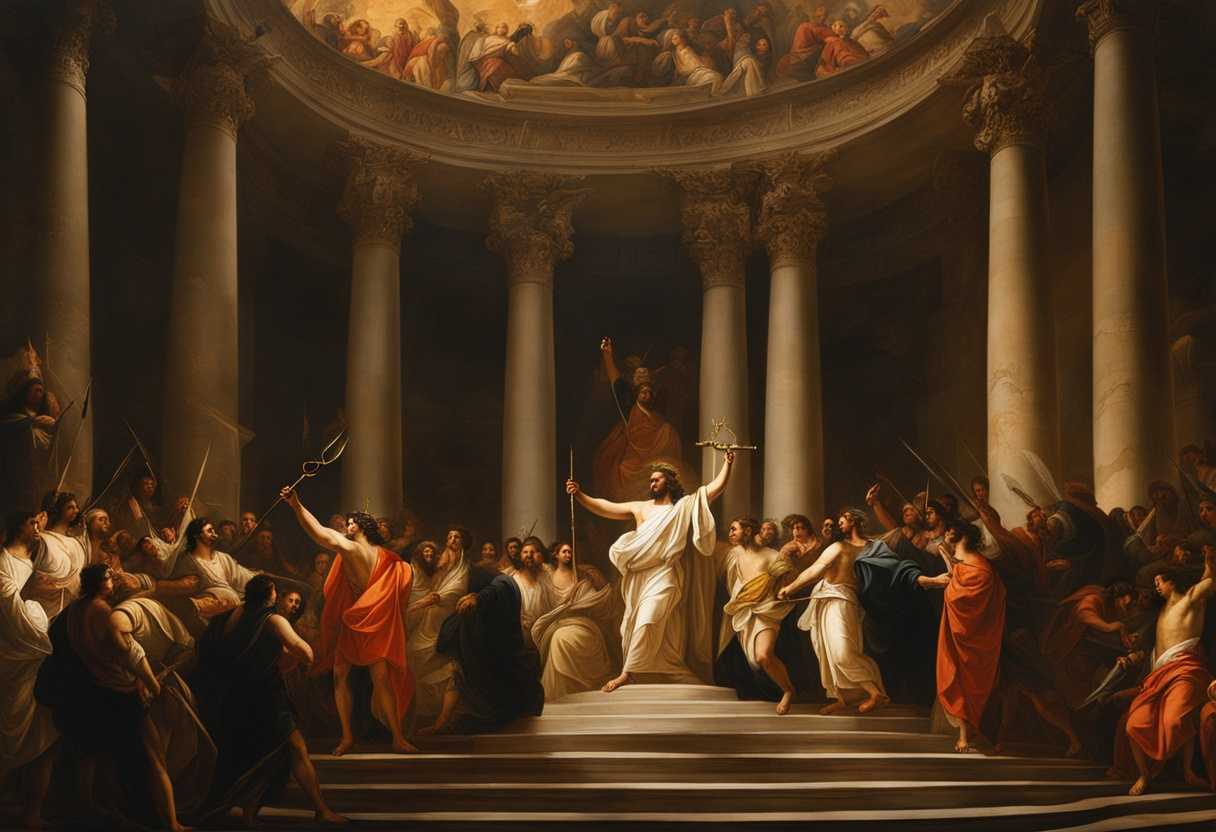
What the Bible Says About the Meaning of Baal Perazim
Baal Perazim, which means “Master of Breakthroughs,” is the name given to a site where King David defeated the Philistines in 2 Samuel 5:20. It signifies God’s intervention and victory over David’s enemies, marking a moment of divine breakthrough. Scripture 17 When the Philistines heard that David had been anointed king over Israel, all the…
-

What the Bible Says About Dissimulation: Understanding Its Meaning and Implications
In the Bible, dissimulation refers to the act of concealing one’s true motives or feelings, often associated with hypocrisy or deceit. It highlights the importance of sincerity and truthfulness in a believer’s conduct, as seen in passages like Romans 12:9, which encourages love to be genuine and devoid of hypocrisy. Scripture Let love be genuine.…
-

What the Bible Says About a Clear Conscience
In the Bible, a clear conscience refers to a state of moral purity and integrity, where an individual feels no guilt or shame regarding their actions, particularly in relation to God and others (1 Timothy 1:5). It signifies living in accordance with one’s faith and ethical beliefs, free from the burden of wrongdoing (Acts 24:16).…
-

What the Bible Says About Provocation: A Definition and Exploration
In the Bible, provocation refers to inciting or stirring up anger, often against God or His commands, as seen in examples like Israel’s rebellion in the wilderness (Psalm 78:40-41). It underscores the seriousness of disobedience and the consequences of turning away from God’s guidance. Scripture 11 And the Lord said to Moses, “How long will…
-

What the Bible Says About Enduement: Understanding Its Meaning
In the Bible, “enduement” refers to the act of being clothed or filled with spiritual power or grace, particularly associated with the Holy Spirit. This concept is often illustrated in passages such as Luke 24:49, where Jesus instructs His disciples to wait for the “promise of the Father,” symbolizing the empowerment for their mission. Scripture…
-

What the Bible Says About Obeisance: Understanding Its Meaning and Significance
In the Bible, “obeisance” refers to a gesture of respect, submission, or honor, often expressed through bowing or prostration before a superior or deity, reflecting humility and reverence. It is often associated with worship and acknowledgment of authority, as seen in instances like the worship of God or the acknowledgment of earthly rulers. Scripture 1…
-

What the Bible Says About Holy Communion
Holy Communion, also known as the Eucharist, is a Christian sacrament that commemorates the Last Supper of Jesus with His disciples, where bread and wine symbolize His body and blood. It is instituted by Jesus as a means for believers to remember His sacrifice and to participate in the new covenant between God and humanity…
-

What the Bible Says About Deeds: Understanding Their Definition and Significance
In the Bible, “deeds” refer to the actions or works that individuals carry out, often reflecting their moral character and faith. They are frequently emphasized as evidence of one’s faith, as seen in passages like James 2:17, which states that faith without deeds is dead. Scripture 14 What good is it, my brothers, if someone…
-

What the Bible Says About Light Bearers: Understanding Their Meaning
In the Bible, “light bearers” generally refers to those who carry or reflect God’s truth and righteousness, symbolizing enlightenment and guidance in a spiritual sense. Believers are often called to be “light” in the world, as seen in Matthew 5:14-16, where Jesus instructs His followers to let their light shine before others. Scripture 14 And…
-

What the Bible Says About Corruption: Understanding Its Meaning and Implications
In the Bible, corruption often refers to moral decay, decay of integrity, or the sinful acts that lead people away from God’s commandments. It signifies a state of spiritual decline and the impact of sin on individuals and communities, as seen in passages like Proverbs 11:3, which emphasizes deceit as a form of corruption. Scripture…