
Category: Definitions
-

What the Bible Says About Judas Maccabeus: A Definition and Legacy
Judas Maccabeus is a key figure in the biblical account of the Maccabean Revolt, as documented in the books of 1 and 2 Maccabees. He is significant for leading the Jewish revolt against Seleucid oppression, restoring Jewish worship in the Jerusalem Temple, and establishing the festival of Hanukkah to commemorate the rededication of the Temple.…
-

What the Bible Says About the Role of a Tanner
In the Bible, a tanner is a person who processes animal hides to make leather, which was considered an unclean profession due to contact with dead animals (Leviticus 11:39). Notably, in Acts 9:43, Simon the Tanner is mentioned as a significant figure, indicating the reach of the early Christian community even among trades considered lowly…
-

What the Bible Says About Preparation
In the Bible, “prepare” often signifies making ready for a specific purpose or event, both in a physical and spiritual sense. It can imply the act of arranging oneself or circumstances to fulfill God’s will, as seen in passages like Proverbs 16:1, which states that the preparations of the heart belong to man, but the…
-

What the Bible Says About the Meaning of Amnon
In the Bible, Amnon is the son of King David and Ahinoam, known for his tragic story involving his half-sister Tamar, which ends in his violent assault of her and subsequent murder by his brother Absalom. His name is often interpreted to mean “faithful” or “trustworthy.” Scripture 1 Now Absalom, David’s son, had a beautiful…
-

What the Bible Says About “Raze”
In the Bible, “raze” typically refers to the act of completely destroying or demolishing something, often used in the context of destroying cities or edifices as a form of judgment or eradication of evil (e.g., Jeremiah 26:18). It signifies total obliteration, leaving no remnants behind. Scripture 30 And I will destroy your high places and…
-

What the Bible Says About Boaz and Jachin: Symbolism and Meaning
Boaz means “strength” or “might,” representing a wealthy and influential figure in the Book of Ruth, who exemplifies kindness and redemption. Jachin means “He will establish” and is one of the two bronze pillars that stood at the entrance of Solomon’s Temple, symbolizing stability and God’s presence. Scripture 15 He cast two pillars of bronze.…
-
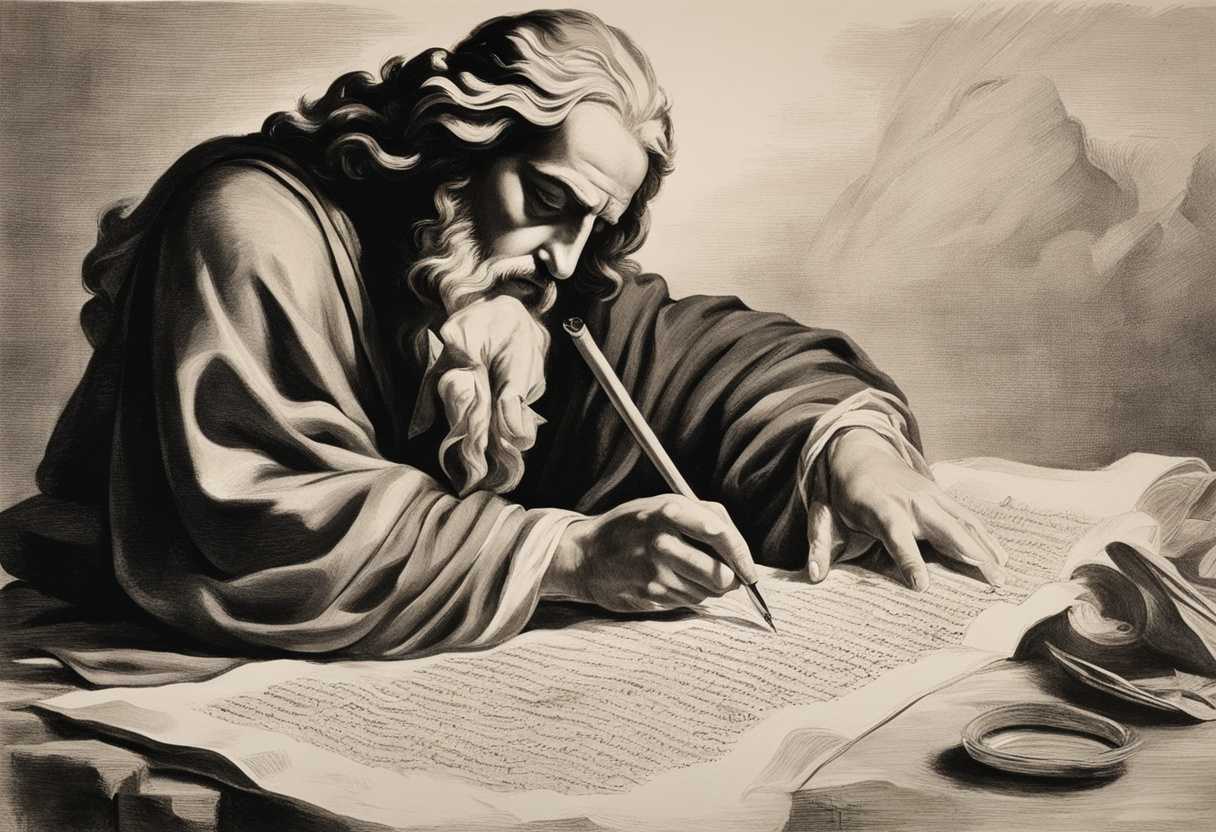
What the Bible Says About Writing
In the Bible, “write” often signifies the act of recording important messages, laws, or events, as seen in the scriptures where God commands Moses to write the law (Exodus 34:27). It can also symbolize the documentation of one’s faith or testimony, emphasizing the importance of preserving spiritual truths for future generations. Scripture 14 Then the…
-

What the Bible Says About the Meaning of Efrain
Ephraim, in the Bible, refers to one of the twelve tribes of Israel, named after Joseph’s second son. The name itself means “fruitful” or “double fruit,” signifying blessing and prosperity. Scripture 50 Before the year of famine came, two sons were born to Joseph. 51 Joseph called the name of the firstborn Manasseh. “For,” he…
-

What the Bible Says About Animals
In the Bible, animals are created beings that God made on the fifth and sixth days of creation, as stated in Genesis 1:20-25. They are often viewed as part of God’s creation that should be treated with care and respect, as seen in Proverbs 12:10, which emphasizes the righteous care for animals. Scripture 20 And…
-

What the Bible Says About Guibor: Understanding Its Meaning and Significance
In the Bible, “Guibor” refers to a character mentioned in 1 Chronicles 11:22, where he is described as a valiant warrior and a member of King David’s mighty men. The name itself means “mighty” or “heroic,” highlighting strength and valor in the context of leadership and battle. Scripture 6 For to us a child is…