
Category: Definitions
-
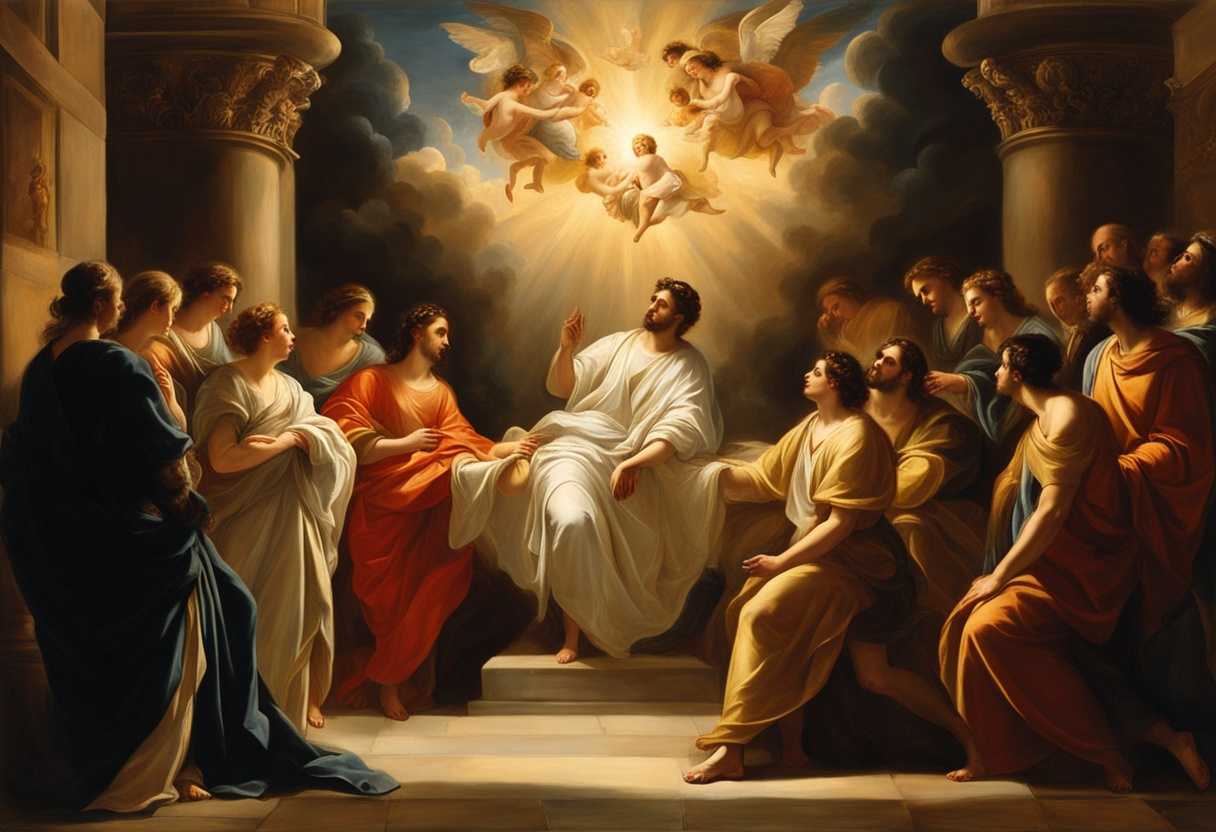
What the Bible Says About the Beatific Vision
The Beatific Vision refers to the ultimate direct experience of God in heaven, where believers will see Him face to face and share in divine life. While not explicitly named in the Bible, this concept is rooted in passages like 1 Corinthians 13:12, which speaks of knowing fully and being fully known, and Revelation 22:4,…
-

What the Bible Says About Impenitence: Understanding Its Definition and Consequences
Impenitence in the Bible refers to a refusal to repent or acknowledge one’s sins, often leading to persistence in sinful behavior despite awareness of its consequences. It is linked to a hardened heart and spiritual blindness, as seen in passages like Romans 2:5, which speaks of the wrath that follows such stubbornness. Scripture 24 Because…
-

What the Bible Says About the Definition of Life
In the Bible, life is often understood as a gift from God, characterized by the presence of the spirit (Genesis 2:7) and is meant to be lived in relation to God and others (John 10:10). It encompasses physical existence, spiritual vitality, and the fulfillment of God’s purpose. Scripture 7 then the Lord God formed the…
-

What the Bible Says About Tentmakers: Understanding Its Meaning
In the Bible, a “tentmaker” refers to someone who makes tents, and it is most notably associated with the Apostle Paul, who worked as a tentmaker to support himself during his missionary journeys (Acts 18:3). This term symbolizes self-sufficiency and the idea of balancing secular work with spiritual ministry. Scripture 1 After this Paul left…
-

What the Bible Says About the Definition of Cry
In the Bible, “cry” often signifies a deep emotional expression, whether it be sorrow, distress, or a plea for help, as seen in passages like Psalm 34:17, where the righteous cry out to God and are heard. It can also indicate a call to action, reflecting urgency and a desire for intervention or deliverance. Scripture…
-

What the Bible Says About the Asherah Pole
In the Bible, the Asherah pole represents a Canaanite fertility goddess’s worship and is often associated with idolatry and the worship of pagan deities that God condemned. It symbolizes the Israelites’ temptation to stray from monotheism and the covenant with Yahweh, leading to calls for its destruction in various scriptural accounts. Scripture 12 Take care,…
-

What the Bible Says About Safety: A Divine Definition
In the Bible, “safe” often conveys a sense of security and protection provided by God, underscored in scriptures such as Psalm 4:8, which speaks of peace and safety bestowed by trust in the Lord. It reflects the assurance of being sheltered from harm and adversity through faith. Scripture 10 The name of the Lord is…
-

What the Bible Says About Madness: A Definition and Exploration
In the Bible, madness often refers to a state of mind characterized by irrationality and loss of judgment, which can be seen as a result of disobedience to God or divine punishment (e.g., Deuteronomy 28:28-29). It may also represent spiritual or emotional turmoil, indicating a departure from wisdom and understanding that comes from God. Scripture…
-
What the Bible Says About Abandonment: Understanding Its Definition and Implications
In the Bible, abandonment often refers to the act of forsaking or leaving someone without support or care, which can be seen as a betrayal of trust and love, as reflected in passages like Psalm 27:10, where it expresses that even if one’s parents forsake them, the Lord will take them in. Spiritually, it can…
-

What the Bible Says About Bearing Witness
In the Bible, to “bear witness” means to testify or provide evidence to the truth of something, often in relation to God’s commands or the life of Jesus (John 1:7). It emphasizes the importance of sharing personal experiences or affirmations that validate faith and truth in the Christian context. Scripture 6 There was a man…