
Category: Quotes and Phrases
-

What the Bible Says About Adage Meaning
An adage in the Bible refers to a wise saying or proverb that conveys a moral lesson or truth. For example, many proverbs found in the Book of Proverbs serve as adages that provide guidance on righteous living and the consequences of one’s actions. Scripture 1 The proverbs of Solomon, son of David, king of…
-

What the Bible Says About the Meaning of “Alas”
In the Bible, “alas” is an exclamation used to express grief, sorrow, or lamentation. It often indicates a sense of distress or mourning over a difficult situation or judgment, as seen in various prophetic texts. Scripture 4 Ah, sinful nation, a people laden with iniquity, offspring of evildoers, children who deal corruptly! They have forsaken…
-

What the Bible Says About “A House Divided Cannot Stand”
The phrase “a house divided against itself cannot stand” comes from Mark 3:25 in the Bible, where Jesus emphasizes that internal conflict or division leads to destruction. It signifies that unity and cohesion are essential for any group or individual to thrive. Scripture 22 Then a demon-oppressed man who was blind and mute was brought…
-

What the Bible Says About the Meaning of “Buried a Pearl”
The phrase “buried a pearl” does not have a direct biblical reference, but it may evoke the parable of the hidden treasure in Matthew 13:44, which describes the Kingdom of Heaven as a treasure hidden in a field. In this context, valuing and seeking after spiritual truths can be seen as akin to finding and…
-
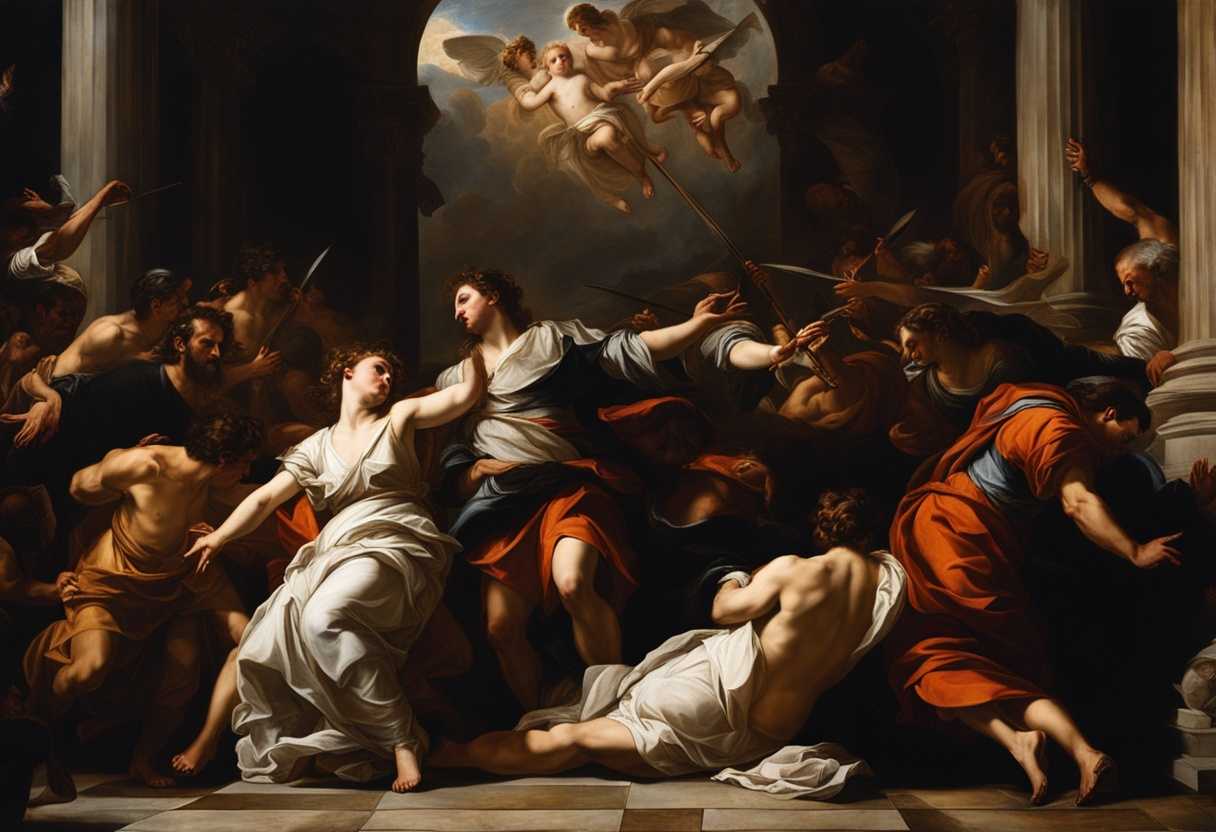
What the Bible Says About Redemption in Pulp Fiction
In “Pulp Fiction,” the quote often referenced is Ezekiel 25:17, which speaks to divine retribution and the protection of the righteous while punishing the wicked. Its meaning emphasizes themes of vengeance, justice, and the moral complexity found in the battle between good and evil. Scripture 17 I will execute great vengeance on them with wrathful…
-

What the Bible Says About Being of Good Cheer
The phrase “be of good cheer” in the Bible encourages individuals to maintain hope and strength in difficult times, often emphasizing the presence of God’s comfort and support. This phrase is notably used by Jesus in John 16:33, where He assures believers that despite trials, they can find peace in Him because He has overcome…
-

What the Bible Says About “How the Mighty Have Fallen”
The phrase “how are the mighty fallen” is found in 2 Samuel 1:19, expressing sorrow and lamentation over the downfall of powerful individuals, particularly King Saul and his sons. It highlights the tragic consequences of pride and the inevitability of mortality, reminding the faithful of the transient nature of earthly power. Scripture 17 And David…
-

What the Bible Says About Casting Your Pearls Before Swine: Understanding Its Meaning
The phrase “cast your pearls before swine” comes from Matthew 7:6, where it suggests that one should not share what is valuable or sacred with those who will not appreciate or respect it. It serves as a warning against wasting effort on those who are unworthy or hostile to what is being offered. Scripture 6…
-

What the Bible Says About the Meaning of Quotes
Bible quotes often encapsulate spiritual truths, moral lessons, or divine guidance that provide insight into human behavior and the nature of God. Understanding their meaning involves considering the context, historical background, and theological implications surrounding the verse. Scripture 16 All Scripture is breathed out by God and profitable for teaching, for reproof, for correction, and…
-

What the Bible Says About “Howbeit” and Its Meaning
In the Bible, “howbeit” is an archaic term used to mean “however” or “nevertheless.” It introduces a contrasting statement or clarifies a point that may differ from what was previously mentioned. Scripture 19 Then the disciples came to Jesus privately and said, “Why could we not cast it out?” 20 He said to them, “Because…