
1 Now when David lived in his house, David said to Nathan the prophet, “Behold, I dwell in a house of cedar, but the ark of the covenant of the Lord is under a tent.”
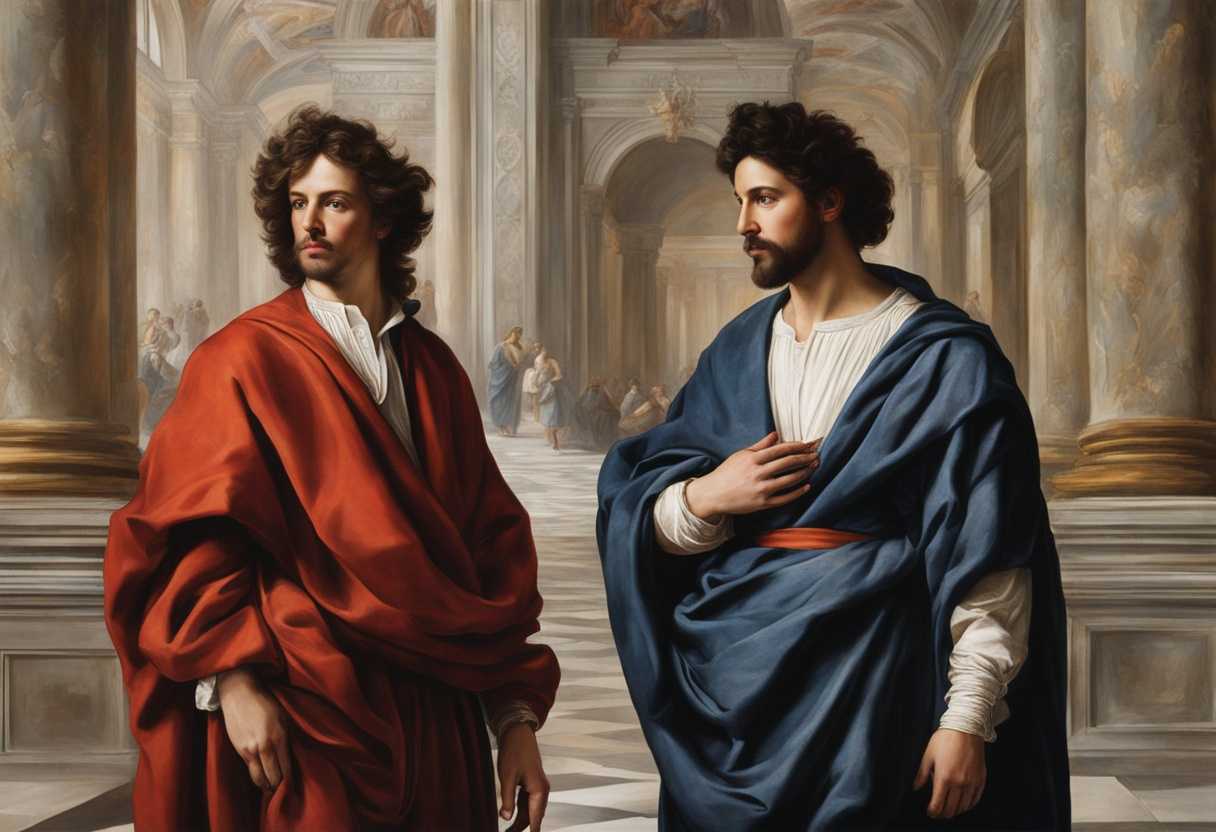
Setting the Scene for 1 Chronicles 17:1
In 1 Chronicles 17:1, we find King David in his palace in Jerusalem. The scene is set in a grand hall adorned with rich tapestries and ornate decorations. King David is seated on his throne, surrounded by his advisors and court officials. The atmosphere is solemn and reverent as they gather for an important discussion.
The reason for this gathering is that King David has expressed his desire to build a house for the Lord, a permanent dwelling place for the Ark of the Covenant. The prophet Nathan is also present, having been summoned by the king to seek the Lord’s guidance on this matter. As they discuss this significant proposal, the weight of the moment hangs heavy in the air, as they seek to discern God’s will in this important decision.
The room is filled with anticipation and expectation as they wait for Nathan to deliver the word of the Lord. The flickering light of the oil lamps casts a warm glow over the assembly, adding to the sense of reverence and awe in the presence of the Almighty. This pivotal moment in King David’s reign will shape the future of Israel and the worship of God for generations to come.
What is 1 Chronicles 17:1 about?
Isn’t it incredible how the promises made to David so long ago in the Bible still hold such profound significance for us today? God’s covenant with David, promising an everlasting kingdom, ultimately points to Jesus, the eternal King who reigns forever. This verse serves as a powerful reminder of God’s faithfulness and fulfillment of His promises throughout history. We can’t help but marvel at the intricate tapestry of God’s plan unfolding through the generations as we reflect on this verse. Through the lineage of David, Jesus was born as the ultimate fulfillment of God’s promise, establishing an everlasting kingdom that transcends time and space. This eternal reign of Jesus brings hope, assurance, and comfort to all who believe in Him, knowing that He is the King who reigns with righteousness and love.
So, as we ponder on this verse, let’s be reminded of the unchanging nature of God’s promises and the incredible depth of His love for us. Let’s trust in the eternal reign of Jesus, finding peace in knowing that His kingdom will never end, and His sovereignty is everlasting. Let’s live our lives in light of this beautiful truth, honoring Jesus as our eternal King and spreading His love and grace to those around us.
Understanding what 1 Chronicles 17:1 really means
King David’s heartfelt intentions reveal much about our relationship with God in 1 Chronicles 17:1. This verse, while seemingly simple, is rich with meaning and invites us to reflect on our desires to honor God in our lives.
Context and Background
First, let’s understand the context. King David, settled in his palace, expresses a desire to build a permanent house for the Ark of the Covenant. This moment comes after a period of stability and success for David, highlighting his deep sense of gratitude and duty towards God. This context is crucial because it sets the stage for God’s response and the subsequent covenant with David, which plays a significant role in the biblical narrative. David speaks of his own comfort in his palace compared to the Ark, which still resides in a tent. This juxtaposition is powerful. David’s palace symbolizes human achievement and comfort, while the tent represents the transient and humble dwelling of God’s presence. What does this say about our own priorities? Are we more focused on our own comfort than on honoring God?
Biblical Cross-References
This passage aligns with other scriptures that emphasize God’s desire for a relationship over rituals or buildings. For example, in Isaiah 66:1-2, God states that heaven is His throne and the earth His footstool, questioning what kind of house we could build for Him. Similarly, in Acts 7:48-50, Stephen reiterates that God does not dwell in houses made by human hands. These references help us understand that God values our hearts and intentions more than physical structures. This message is incredibly relevant in today’s world. We live in a society obsessed with material success and outward appearances. Yet, God calls us to focus on our inner spiritual life and our relationship with Him. David’s desire to build a house for God, while noble, reminds us that our true offering to God is our obedience, love, and reverence. A wealthy philanthropist wants to donate a large sum to build a new church building. However, the pastor gently suggests that the funds could be better used for community outreach and supporting those in need. This story mirrors David’s situation. While both actions are good, the latter aligns more closely with God’s heart for justice, mercy, and love. 1 Chronicles 17:1 nudges us to examine our priorities. Are we, like David, willing to move beyond our comfort to honor God genuinely? Let this verse challenge us to seek a deeper, more authentic relationship with God, focusing not on what we can build, but on how we can serve and love. How will you respond to this call in your own life?
How do we seek God’s will over our own?
Seeking God’s will over our own involves humbly submitting ourselves to His plans and purposes. It requires us to set aside our own desires and preferences to align ourselves with His perfect and sovereign will. When we seek God’s will over our own, we acknowledge His wisdom and sovereignty in all things, trusting that His plans are ultimately for our good and His glory.
This act of seeking God’s will involves seeking His guidance through prayer, studying His Word, and listening to the prompting of the Holy Spirit. It requires surrendering our own selfish ambitions and agendas in order to follow His leading. We demonstrate our reverence for Him and our commitment to walk in obedience to His ways by prioritizing God’s will over our own. Through this process, we allow God to work in and through us for His purposes, ultimately bringing about blessings and fulfillment in our lives.
Application
Think of life as a busy day at work or a hectic family dinner. In such moments, we seek advice and help from those we trust. In the same way, recognize the power and wisdom of God in guiding your life. Embrace the humility to ask for His direction and trust in His flawless plan. Will you take that step to surrender your own will and believe in His perfect timing and provision?

Reverend Michael Johnson is an experienced Church Minister with a profound expertise in spirituality and guidance. With a serene presence and a compassionate heart, he has faithfully served his congregation for over 20 years, leading them on a spiritual journey towards inner peace and enlightenment. Reverend Johnson’s extensive knowledge of religious philosophies and profound understanding of human nature have made him a trusted confidant and mentor to many, as he seamlessly weaves his profound wisdom into life teachings. Reverend Johnson’s calming demeanor and empathetic nature continue to uplift and heal souls, nurturing a sense of unity and tranquility within his community.