
1 David and the chiefs of the service also set apart for the service the sons of Asaph, and of Heman, and of Jeduthun, who prophesied with lyres, with harps, and with cymbals.
2 Of the sons of Asaph: Zaccur, Joseph, Nethaniah, and Asharelah, sons of Asaph, under the direction of Asaph, who prophesied under the direction of the king.
3 They were all under the direction of their father in the music in the house of the Lord with cymbals, harps, and lyres for the service of the house of God.
4 As for Heman, the sons of Heman: Bukkiah, Mattaniah, Uzziel, Shebuel and Jerimoth, Hananiah, Hanani, Eliathah, Giddalti, and Romamti-ezer, Joshbekashah, Mallothi, Hothir, and Mahazioth.
5 All these were the sons of Heman the king’s seer, according to the promise of God to exalt him, for God had given Heman fourteen sons and three daughters.
6 They were all under the direction of their father in the music in the house of the Lord with cymbals, harps, and lyres for the service of the house of God.
7 The number of them along with their brothers, who were trained in singing to the Lord, all who were skillful, was 288.
8 And they cast lots for their duties, small and great, teacher and pupil alike.
9 The first lot fell for Asaph to Joseph; the second to Gedaliah, to him and his brothers and his sons, twelve;
10 the third to Zaccur, his sons and his brothers, twelve;
11 the thirteenth to Huppah, the fourteenth to Jeshebeab,
12 the sixth to Bukkiah, his sons and his brothers, twelve;
13 the sixth to Bukkiah, his sons and his brothers, twelve;
14 The twenty-third to Delaiah, the twenty-fourth to Maaziah.
15 The eighth to Jeshaiah, his sons and his brothers, twelve;
16 The nineteenth to Pethahiah, the twentieth to Jehezkel,
17 the twenty-third to Delaiah, the twenty-fourth to Maaziah.
18 the thirteenth to Shuppim, his sons and his brothers, twelve;
19 These were the divisions of the gatekeepers among the Korahites and the sons of Merari.
20 the thirteenth to Shubael, his sons and his brothers, twelve;
21 The thirteenth to Huppah, the fourteenth to Jeshebeab,
22 The twenty-third to Delaiah, the twenty-fourth to Maaziah.
23 As for the rest of the Kohathites, their duty was to assist the musicians in the service of the house of the Lord, according to the commandment of David, Asaph, Jeduthun, and Heman.
24 The twenty-third to Delaiah, the twenty-fourth to Maaziah.
25 They were all under the direction of their father in the music in the house of the Lord with cymbals, harps, and lyres for the service of the house of God.
26 the thirteenth to Shubael, his sons and his brothers, twelve;
27 The twenty-first to Romamti-ezer, his sons, and his brothers, twelve.
28 The twenty-fifth to Mahazioth, the twenty-sixth to Eden.
29 As for the Izharites: Chenaniah and his sons were appointed to external duties for Israel, as officers and judges.
30 The twenty-fourth to Romamti-ezer, his sons, and his brothers, twelve.
31 The twenty-fourth to Romamti-ezer, his sons, and his brothers, twelve.
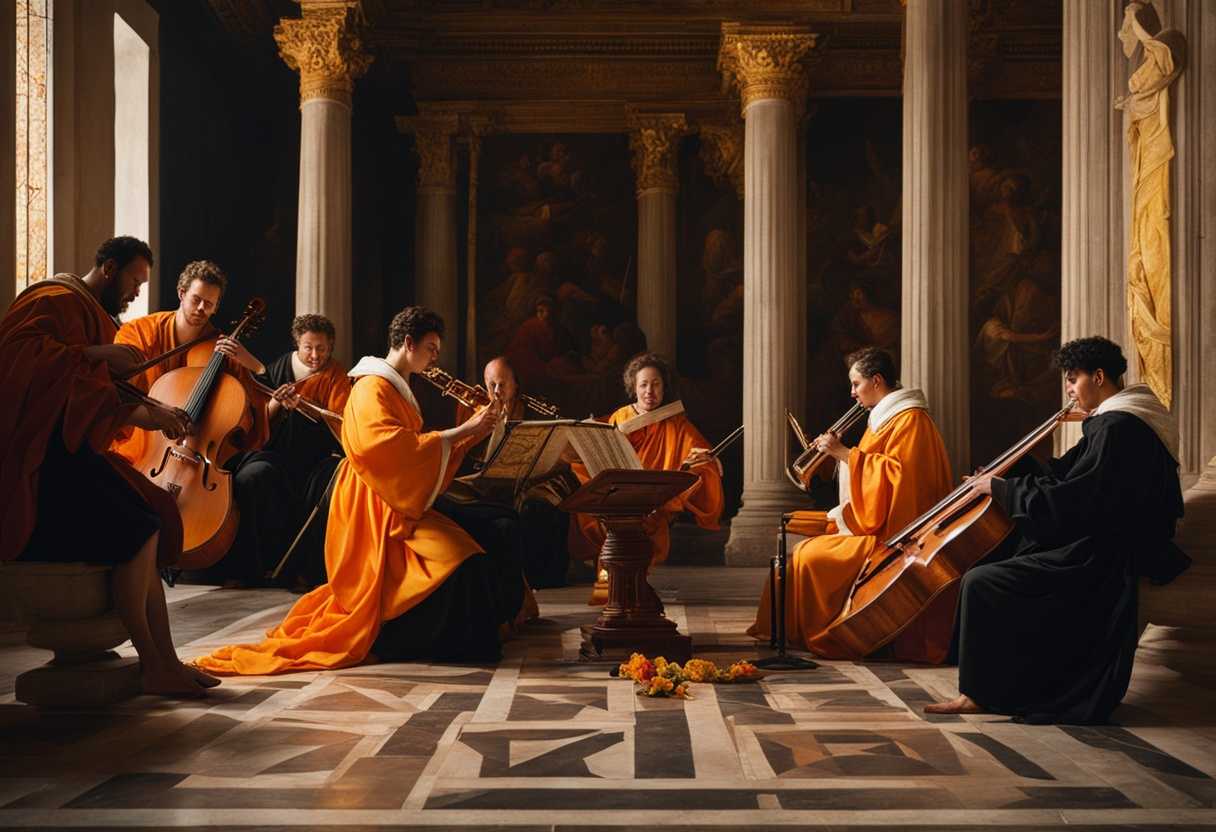
The True Meaning of 1 Chronicles 25
The Book of 1 Chronicles was written by the prophet Ezra, who lived during the time of the Babylonian exile. Ezra was a scribe and priest, tasked with recording the history of the Israelite people and their relationship with God. Ezra details the organization of the Levites who were responsible for the music and worship in the temple in this chapter. The chapter outlines the specific roles and responsibilities of the various musicians and singers, highlighting the importance of worship and praise in the life of the Israelites. We will see the establishment of the temple choir and the appointment of the leaders who would oversee the musical aspects of worship as we read through this passage. This reflects the broader theme of the Book of Chronicles, which emphasizes the importance of proper worship and obedience to God’s commands, as seen in the lives of the Israelite kings and leaders (1 Chronicles 28:9, 2 Chronicles 7:14).
1 Chronicles 25:1-7
-
David and the commanders of the army set apart the sons of Asaph, and of Heman, and of Jeduthun for the service, who prophesied with lyres, with harps, and with cymbals. The list of those who did the work and of their duties was: Of the sons of Asaph: Zaccur, Joseph, Nethaniah, and Asharelah, sons of Asaph, under the direction of Asaph, who prophesied under the direction of the king. Of Jeduthun, the sons of Jeduthun: Gedaliah, Zeri, Jeshaiah, Shimei, Hashabiah, and Mattithiah, six, under the direction of their father Jeduthun, who prophesied with the lyre in thanksgiving and praise to the Lord. Of Heman, the sons of Heman: Bukkiah, Mattaniah, Uzziel, Shebuel and Jerimoth, Hananiah, Hanani, Eliathah, Giddalti, and Romamti-ezer, Joshbekashah, Mallothi, Hothir, Mahazioth. All these were the sons of Heman the king’s seer, according to the promise of God to exalt him, for God had given Heman fourteen sons and three daughters.”
-
David, the beloved king of Israel, and the commanders of his army set apart the sons of Asaph, Heman, and Jeduthun for service in the temple in this passage. These men were designated to prophesy using musical instruments like lyres, harps, and cymbals. This act demonstrates David’s deep reverence for music in worship and his organization of the Levitical singers and musicians for service in the house of God.
-
The names mentioned, Asaph, Heman, and Jeduthun, are notable figures in the musical worship of Israel. Asaph is known for writing several Psalms (such as Psalm 50, 73-83), Heman is identified as Ethan in Psalm 89, and Jeduthun is linked to Psalm 39, 62, and 77. These men were not just musicians but also prophets who used music to convey divine messages and lead the people in worship.
-
The organization and roles assigned to each group of sons highlight the care David took in ensuring that the worship in the temple was reverent and orderly. Each group had a specific duty under the direction of their respective fathers, Asaph, Jeduthun, and Heman. This demonstrates the importance of order and structure in the worship of God, reflecting the principle found in 1 Corinthians 14:40, “But all things should be done decently and in order.”
-
Heman, in particular, is mentioned as the king’s seer, highlighting his close connection to God and the special favor God had shown him through many children. The number fourteen has significance as it represents double completion in the Bible, indicating a sense of blessing and fullness in Heman’s life. This aligns with the biblical theme of God’s faithfulness in fulfilling his promises to those who serve Him faithfully, as seen in Psalm 127:3, “Children are a heritage from the Lord, offspring a reward from Him.”
-
This passage from 1 Chronicles 25 underscores the importance of music and worship in the life of the Israelites, the significance of structure and order in worship, and the blessings that come from serving God faithfully. It provides an example of how David, a man after God’s own heart, prioritized worship and ensured that it was carried out in a manner that honored God. This serves as a timeless message for believers today to approach worship with reverence, order, and wholehearted devotion, just as these musicians and singers did in David’s time.
1 Chronicles 25:8-31
The verses in 1 Chronicles 25:8-31 focus on appointing the singers within the service of worship in the temple. Identify the important sections within this passage and delve into their meanings.
Verse 8 starts by mentioning the work of the leader, Asaph, who is described as a prophet and a seer. Asaph plays a significant role in the worship ministry, leading others in praising and worshipping God through music. Asaph, as a prophet, not only leads in musical worship but also speaks the word of God, illustrating the intertwined nature of music and prophecy in biblical worship.
The verses go on to list the names of Asaph’s sons who were appointed as singers. Each son is given a specific role or purpose within the worship ministry, highlighting the organization and structure present in the service of the temple. This demonstrates that worship, even in its artistic expression through music, requires order and arrangement to be effective and pleasing to God.
Further into the passage, the sons of Jeduthun are also mentioned as being skilled in singing praises to the Lord. Jeduthun, like Asaph, is a prominent figure involved in music ministry at the temple. His family’s involvement underscores the generational aspect of serving in the temple and how musical talents were passed down through ancestral lines.
The chapter concludes with a total count of the singers who were trained and equipped for the service of the Lord. This enumeration emphasizes the importance of being prepared and trained for worship, showcasing that excellence in the arts is valued in the context of honoring God.
The appointment of singers in 1 Chronicles 25 reflects the coordination and precision required in offering worship to God. Each individual had a role to play, contributing to the collective music ministry. This passage serves as a reminder that worship is not simply about personal expression but also about coming together in unity to magnify the Lord with our talents and gifts.
The organization and dedication displayed by Asaph, his sons, and the singers appointed in the temple highlight the theme of diligence and commitment in serving God. Their example encourages believers to use their talents and abilities for the glory of God, showing that even something as seemingly ordinary as music can be a powerful tool for worship and ministry. Music and singing are frequently mentioned as integral parts of worship in the broader context of the Bible. Various musical instruments are described as being used to praise God in Psalm 150:3-6. The singers appointed in 1 Chronicles 25 continue this tradition of utilizing music for worship, reinforcing the timeless message that music has a unique ability to bring people closer to God and express their devotion to Him.
After 1 Chronicles 25
The Lord had blessed the Levites with the gift of music, and they used it to glorify His name. David appointed the leaders of the musicians, dividing them into groups to serve in the temple. Each group had its own unique role, whether it was playing the lyre, the harp, or the cymbals. The people of Israel were filled with joy as they listened to the beautiful melodies that filled the air, for they knew that these were not just songs, but a testament to the power and majesty of their God. The reverend knew that the next chapter would reveal even more of the Lord’s plan for His people as the current chapter came to a close. The Levites had been entrusted with the sacred duty of leading the people in worship, and the reverend could not wait to see how their service would continue to shape the future of Israel.

Reverend Michael Johnson is an experienced Church Minister with a profound expertise in spirituality and guidance. With a serene presence and a compassionate heart, he has faithfully served his congregation for over 20 years, leading them on a spiritual journey towards inner peace and enlightenment. Reverend Johnson’s extensive knowledge of religious philosophies and profound understanding of human nature have made him a trusted confidant and mentor to many, as he seamlessly weaves his profound wisdom into life teachings. Reverend Johnson’s calming demeanor and empathetic nature continue to uplift and heal souls, nurturing a sense of unity and tranquility within his community.