
1 The sons of Levi: Gershon, Kohath, and Merari.
2 Elkanah had sons: Amasai and Ahimoth,
3 The children of Amram: Aaron, Moses, and Miriam. The sons of Aaron: Nadab, Abihu, Eleazar, and Ithamar.
4 Eleazar fathered Phinehas, Phinehas fathered Abishua,
5 Abishua fathered Bukki, Bukki fathered Uzzi,
6 Tahath his son, Uriel his son, Uzziah his son, and Shaul his son.
7 The sons of Merari: Mahli, Libni his son, Shimei his son, Uzzah his son,
8 Ahitub fathered Zadok, Zadok fathered Ahimaaz.
9 Ahimaaz fathered Azariah, Azariah fathered Johanan,
10 and Johanan fathered Azariah (it was he who served as priest in the house that Solomon built in Jerusalem).
11 Azariah fathered Amariah, Amariah fathered Ahitub,
12 and Ahitub fathered Zadok, and Zadok fathered Ahimaaz;
13 and Ahitub fathered Zadok, and Zadok fathered Ahimaaz;
14 Azariah fathered Seraiah, Seraiah fathered Jehozadak;
15 Jehozadak went into exile when the Lord sent Judah and Jerusalem into captivity by the hand of Nebuchadnezzar.
16 The sons of Levi: Gershom, Kohath, and Merari.
17 These are the names of the sons of Gershom: Libni and Shimei.
18 the sons of Kohath: Amram, Izhar, Hebron, and Uzziel
19 The sons of Merari: Mahli and Mushi. These are the clans of the Levites according to their fathers.
20 and Johanan fathered Azariah (it was he who served as priest in the house that Solomon built in Jerusalem).
21 The sons of Merari: Mahli, Libni his son, Shimei his son, Uzzah his son,
22 The sons of Kohath: Amminadab his son, Korah his son, Assir his son,
23 The sons of Kohath: Amminadab his son, Korah his son, Assir his son,
24 As for the sons of Korah: Assir, Elkanah, and Abiasaph; these were the sons of Korah.
25 The sons of Elkanah: Amasai and Ahimoth,
26 As for Elkanah, the sons of Elkanah: Amasai and Ahimoth.
27 Eliab his son, Jeroham his son, Elkanah his son.
28 The sons of Samuel: Joel the firstborn, the second Abijah.
29 The sons of Merari: Mahli, Libni his son, Shimei his son, Uzzah his son,
30 Shimea his son, Haggiah his son, and Asaiah his son.
31 These are the men whom David put in charge of the service of song in the house of the Lord after the ark rested there.
32 They ministered with song before the tabernacle of the tent of meeting until Solomon built the house of the Lord in Jerusalem, and they performed their service according to their order.
33 These are the men who served and their sons. Of the Kohathites: Heman the singer, the son of Joel, son of Samuel,
34 the son of Elkanah, the son of Jeroham, the son of Eliel, the son of Toah,
35 the son of Zuph, the son of Elkanah, the son of Mahath, the son of Amasai,
36 the son of Elkanah, the son of Joel, the son of Azariah, the son of Zephaniah,
37 the son of Tahath, the son of Assir, the son of Ebiasaph, the son of Korah,
38 the son of Izhar, the son of Kohath, the son of Levi, the son of Israel.
39 Heman’s brother Asaph stood on his right hand, while Merari’s son Ethan stood on his left hand. Then their brothers, the Levites, were appointed for all the service of the tabernacle of the house of God.
40 to be ministering in the house of the Lord in Jerusalem, according to the ordinance of David their father.
41 The son of Ethan: Azariah.
42 the son of Ethan, the son of Zimmah, the son of Shimei,
43 The son of Jahath, the son of Gershom, the son of Levi.
44 And their kinsmen the sons of Merari stood on the left hand: Ethan the son of Kishi, son of Abdi, son of Malluch,
45 the son of Hashabiah, the son of Amaziah, the son of Hilkiah,
46 the son of Amzi, the son of Bani, the son of Shemer,
47 The son of Mahli, Eleazar, who had no sons.
48 Their kinsmen the Levites were appointed for all the service of the tabernacle of the house of God.
49 But Aaron and his sons made offerings on the altar of burnt offering and on the altar of incense for all the work of the Most Holy Place, and to make atonement for Israel, according to all that Moses the servant of God had commanded.
50 These are the descendants of Aaron: Eleazar his son, Phinehas his son, Abishua his son,
51 These are the men David put in charge of the service of song in the house of the Lord after the ark rested there.
52 They ministered with song before the tabernacle of the tent of meeting until Solomon built the house of the Lord in Jerusalem, and they performed their service according to their order.
53 They gave to the sons of Aaron the priest Hebron, the city of refuge for the manslayer, with its pasturelands, Libnah with its pasturelands,
54 These are the dwelling places according to their settlements within their borders for the sons of Aaron’s families of the Kohathites, for theirs was the first lot,
55 They gave Hebron to Caleb, as Moses had said. And he drove out from it the three sons of Anak.
56 but the fields of the city and its villages they gave to Caleb the son of Jephunneh.
57 To the sons of Aaron they gave the cities of refuge: Hebron, Libnah with its pasturelands, Jattir, Eshtemoa with its pasturelands,
58 Hilen with its pasturelands, Debir with its pasturelands,
59 and Ashan with its pasturelands, and Beth-shemesh with its pasturelands;
60 And out of the tribe of Benjamin: Geba with its pasturelands, Alemeth with its pasturelands, and Anathoth with its pasturelands. All their cities throughout their families were thirteen.
61 To the rest of the Kohathites were given by lot out of the clan of the tribe, out of the half-tribe, the half of Manasseh, ten cities.
62 And to the rest of the Kohathites were given by lot out of the clan of the tribe, out of the half-tribe, the half of Manasseh, ten cities.
63 To the sons of Merari were given by lot out of the tribe of Reuben, the tribe of Gad, and the tribe of Zebulun twelve cities.
64 They gave by lot out of the tribes of Judah, Simeon, and Benjamin these cities that are mentioned by name.
65 They gave by lot out of the tribes of Judah, Simeon, and Benjamin these cities that are mentioned by name.
66 The rest of the Kohathites received by lot from the clans of the tribe of Ephraim, from the tribe of Dan and the half-tribe of Manasseh, ten cities.
67 They were given by lot to the sons of Aaron, of the family of the Kohathites, for the first lot was theirs.
68 Jokmeam with its pasturelands, Beth-horon with its pasturelands,
69 Aijalon with its pasturelands, Gath-rimmon with its pasturelands,
70 and out of the half-tribe of Manasseh, Aner with its pasturelands, and Bileam with its pasturelands, for the rest of the clans of the Kohathites.
71 To the sons of Gershom were given out of the clan of the half-tribe of Manasseh: Golan in Bashan with its pasturelands and Ashtaroth with its pasturelands;
72 And from the tribe of Issachar, Kedesh with its pasturelands, Daberath with its pasturelands,
73 So they gave to the descendants of Aaron the priest Hebron with its pasturelands, the city of refuge for the manslayer, Libnah with its pasturelands,
74 They were given the cities of refuge: Shechem with its pasturelands in the hill country of Ephraim, Gezer with its pasturelands,
75 The sons of Elkanah: Amasai and Ahimoth,
76 The sons of Merari: Mahli, Libni his son, Shimei his son, Uzzah his son,
77 to the rest of the Merarites were allotted out of the tribe of Zebulun: Rimmono with its pasturelands, Tabor with its pasturelands.
78 And beyond the Jordan east of Jericho, they were given Shechem in the hill country of Ephraim, Gezer,
79 But the fields of the city and its villages they gave to Caleb the son of Jephunneh.
80 They gave by lot out of the tribes of Judah, Simeon, and Benjamin these cities that are mentioned by name.
81 Heshbon with its pasturelands, Jazer with its pasturelands;
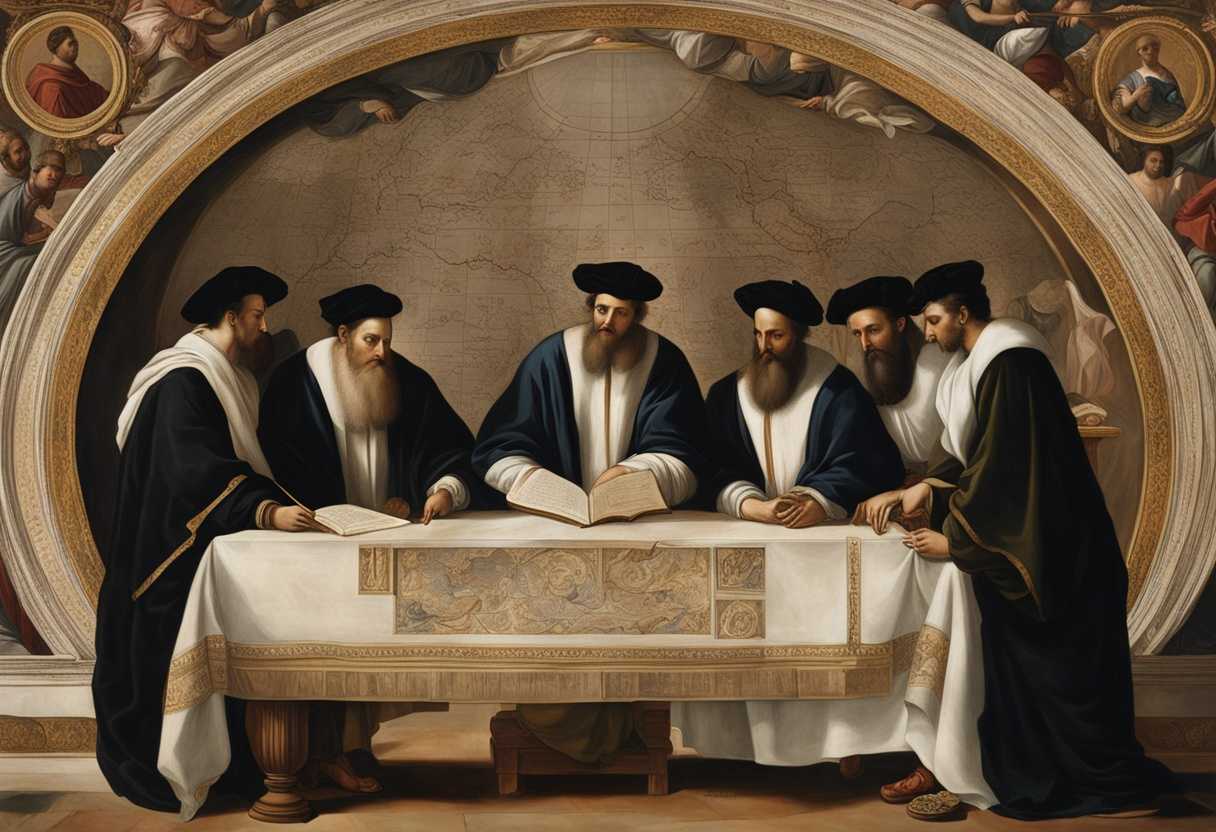
The True Meaning of 1 Chronicles 6
The Book of 1 Chronicles was written by the prophet Ezra, who lived during the time of the Babylonian exile. Ezra was a scribe and priest, tasked with recording the history of God’s chosen people, the Israelites. We focus on the Levites, the tribe responsible for the religious duties in the temple, as we delve into their genealogy. We will see how their lineage connects to the important figures of the past, such as Aaron and Moses, and how their roles were vital in the worship of the Lord.
The chapter also provides insights into the organization and responsibilities of the Levites, from the priests who offered sacrifices to the musicians who led the people in praise. These details shed light on the intricate workings of the temple and the importance of the Levites in the spiritual life of the nation. We will be reminded of the faithfulness of God in preserving His people and the significance of the Levites in maintaining the covenant relationship between the Israelites and their Creator as we explore this chapter.
1 Chronicles 6:1-15
The genealogy of the Levites is detailed in 1 Chronicles 6:1-15, tracing their lineage from Levi, the third son of Jacob and Leah. This particular section of the chapter focuses on the descendants of Levi through his son Gershon. The genealogy is essential as it establishes the legitimacy and lineage of the Levites who were designated by God for specific roles within the priestly duties.
The Levites were set apart by God to serve in the tabernacle and later in the temple. They were responsible for the care and transportation of the tabernacle, the music during worship, and assisting the priests in their duties. Understanding the genealogy of the Levites underscores the importance of their role within the religious structure of ancient Israel.
Gershon, the son of Levi, was given certain responsibilities within the Levitical order. His descendants are listed here to show the lineage of those who served in specific roles such as being in charge of the tabernacle’s curtains and hangings (1 Chronicles 6:1-15). The chronicler emphasizes the continuity and sanctity of the Levitical line by recording these genealogies, ensuring that only those of direct descent from Levi were qualified for priestly duties.
This detailed genealogy reinforces the importance of lineage and heritage in the Old Testament, particularly in matters of service to God in the tabernacle or temple. It underscores the notion of God’s covenant with Israel and the significance of obedience to His commands. The Levites’ role was crucial in facilitating the worship and sacrificial system prescribed by God, demonstrating the necessity of order and structure in religious practice.
Furthermore, this passage ties into the broader themes of the Bible, such as the faithfulness of God in maintaining His covenant promises through the generations. The genealogy of the Levites serves as a reminder of God’s provision and guidance in establishing a system for approaching Him in worship. It also highlights the importance of honoring one’s heritage and respecting the roles and responsibilities passed down through family lines, as seen in the case of the Levites. We can reflect on our own spiritual lineage and the significance of our heritage in the faith by exploring these verses. We are called to honor and uphold the teachings and traditions passed down to us by our spiritual predecessors, just as the Levites were called to serve God in specific ways based on their ancestry. This genealogy serves as a reminder of the importance of knowing our roots and understanding how they shape our identity and relationship with God, echoing the sentiment expressed in Hebrews 12:1 about running the race with perseverance and looking to those who have gone before us in faith.
1 Chronicles 6:16-30
1. Section breakdown:
– Verse 16: The sons of Levi: Gershom, Kohath, and Merari.
– Verse 17: These are the names of the sons of Gershom: Libni and Shimei.
– Verse 18: The sons of Kohath: Amram, Izhar, Hebron, and Uzziel.
– Verse 19: The sons of Merari: Mahli and Mushi. These are the clans of the Levites, according to their fathers.
– Verse 20: To Gershom belonged Ladan and Shimei.
– Verse 21: The sons of Kohath were Amram, Izhar, Hebron, and Uzziel.
– Verse 22-27: The sons of Merari: Mahli, Libni his son, Shimei his son, Uzzah his son, Shimea his son, Haggiah his son, Asaiah his son.
– Verse 28: These are the men whom David put in charge of the service of song in the house of the LORD after the ark rested there.
– Verse 29: They ministered with song before the tabernacle of the tent of meeting until Solomon built the house of the LORD in Jerusalem, and they performed their service according to their order.
– Verse 30: These are the sons of Levi by their fathers’ houses, the heads of fathers’ houses as they were listed according to the number of the names of the individuals from twenty years old and upward who were to do the work for the service of the house of the LORD.
**2. The passage details the genealogy of the Levites, who were chosen by God for special duties in the Tabernacle and later the Temple. The Levites were one of the twelve tribes of Israel; however, they were not given a portion of land like the other tribes, as their inheritance was to serve in the sacred duties of the sanctuary. These verses emphasize the importance of lineage and the responsibilities that were passed down through generations within the tribe of Levi.
The mention of Gershom, Kohath, and Merari refers to the three sons of Levi, and from their descendants, we see various family lines established with specific roles within the Levitical priesthood. Each group had its own set of duties within the Tabernacle, such as carrying and caring for the sacred items during the Israelites’ wilderness wanderings.
The reference to David appointing men for the service of song in the house of the Lord after the ark was brought to Jerusalem highlights the significance of music in worship. Singing praises to God has always been an integral part of worship, and these individuals were chosen for their musical abilities to lead the congregation in worship.
Furthermore, the transition from the Tabernacle to the Temple, from the time of David to Solomon, is mentioned, illustrating the continuity of worship practices within the Israelite community. The Levites maintained their roles and duties despite changes in the physical structure of the place of worship, emphasizing their commitment to serving God through their prescribed responsibilities. This passage underscores the importance of order, continuity, and reverence in the worship of God. It also serves as a reminder of the value of serving faithfully in whatever capacity God has called us, whether it be through music, leadership, or other specific roles within the community of believers. We too are called to serve God wholeheartedly with our unique gifts and talents, just as the Levites were dedicated to their service in the house of the Lord.
1 Chronicles 6:31-48
The genealogy of the descendants of Levi, the tribe set apart for priestly duties, is seen in 1 Chronicles 6:31-48. This passage highlights the importance of lineage and the meticulous record-keeping of the Levites as they served in the tabernacle and later in the temple. It begins by mentioning the sons of Kohath, a branch of the Levites that was responsible for the sacred objects in the tabernacle, including the ark of the covenant. The mention of the ark is significant because it symbolized God’s presence among His people. We see the faithfulness of God in preserving and providing for His chosen people as we trace the lineage of the Levites through this passage. Despite their shortcomings and failures, God remained faithful to the covenant He made with them. The mention of Heman, Asaph, and Ethan, who were appointed by King David to lead worship in the tabernacle, reminds us of the importance of worship and praise in the life of believers. These men played a crucial role in the spiritual life of Israel, leading the people in song and instrumental music.
Furthermore, the genealogy in this passage serves as a reminder of God’s faithfulness to fulfill His promises. The descendants of Levi continued to serve as priests and Levites throughout the generations, demonstrating God’s enduring covenant with His people. This lineage also points forward to the ultimate High Priest, Jesus Christ, who would come from the tribe of Judah but would serve as a High Priest forever after the order of Melchizedek (Hebrews 6:20).
The meticulous record-keeping of the Levites in 1 Chronicles serves as a testament to the importance of honoring God’s instructions and preserving the history of His people. It is a reminder for us today to value our spiritual heritage and to remain faithful in our service to God. We are called to serve God wholeheartedly and to pass on the faith to future generations, just as the Levites faithfully served in their appointed roles (Psalm 78:4-7). 1 Chronicles 6:31-48 provides us with a detailed genealogy of the Levites, showcasing God’s faithfulness in preserving His people and fulfilling His promises. It emphasizes the importance of worship, lineage, and faithful service in the life of believers. Reflecting on this passage can encourage us to remain steadfast in our faith and committed to serving the Lord with diligence and devotion.
1 Chronicles 6:49-53
Verse 49 of 1 Chronicles 6 mentions Ahiman, a Levite assigned to serve in the temple during the time of King David. The Levites had been designated by God to serve in the tabernacle and later in the temple. They were responsible for various duties, including assisting the priests, singing praises to God, and maintaining the sanctuary. Ahiman’s mention reminds us of the significance of serving God faithfully in the roles He has appointed for us. The faithfulness of Ahiman and his fellow Levites highlights the importance of serving God with dedication and loyalty, trusting in His provision and guidance.
Further in verse 50, we encounter the city of Anathoth. Anathoth was a city in the tribal territory of Benjamin and was assigned to the Levites. It was the hometown of the prophet Jeremiah (Jeremiah 1:1). The mention of Anathoth in 1 Chronicles 6 points to the historical significance of this city within the tribe of Benjamin and its connection to the Levites. It serves as a reminder of God’s sovereignty in planning and assigning territories to His people. The city of Anathoth also carries a prophetic significance through Jeremiah, who was called by God to prophesy during a tumultuous period in Israel’s history.
Moving on to verse 51, it speaks of Heman, one of the Levites chosen by David to be a chief musician in the tabernacle worship. Heman was a skilled musician and singer, appointed along with Asaph and Ethan to lead the worship of God through music (1 Chronicles 15:17-19). The role of music in worship is emphasized throughout the Bible, highlighting its power to express praise and adoration to God. Heman’s appointment as a chief musician underscores the importance of using our talents and gifts to glorify God and lead others in worship.
Lastly, in verse 53, the cities mentioned – Kirjatharba (Hebron) and its surrounding pasturelands – were designated as safe havens for those seeking refuge from retribution or revenge. These cities of refuge were established by God to provide sanctuary and protection for individuals who unintentionally caused harm to others (Numbers 35). This system of justice demonstrated God’s mercy and desire for fair treatment even in the midst of consequences for actions committed. It reflects the overarching theme of God’s justice and mercy working together throughout the Old Testament, leading ultimately to the fulfillment of His justice through the sacrifice of Jesus Christ in the New Testament. Individuals like Ahiman and Heman in their service to God are highlighted in 1 Chronicles 6:49-53, presenting a rich tapestry of historical details. Through these accounts, we are reminded of our call to serve God faithfully, use our talents for His glory, and trust in His provision and justice in all circumstances.
1 Chronicles 6:54-81
The genealogy of the tribe of Levi in 1 Chronicles 6:54-81 specifically focuses on the descendants of Aaron, who was the first high priest of the Israelites. This lineage is crucial as the Levites were designated by God to serve in the tabernacle and later in the temple. The passage lists various cities that were given to the Levites from the tribes of Judah, Simeon, and Benjamin. These cities were not only meant to provide dwelling places for the Levites but also served as centers for religious and administrative activities.
Within this genealogy, we encounter several important figures such as Aaron, who was appointed by God as the high priest and played a significant role in leading the Israelites during their exodus from Egypt. His lineage continued through his sons Eleazar and Ithamar, who also served as priests. The mention of these individuals underscores the importance of priesthood within the Israelite community and highlights the continuity of the priestly tradition within the tribe of Levi. God’s faithfulness in preserving and sustaining His chosen people throughout generations is emphasized by including these details in the genealogy of the Levites. The meticulous recording of lineage demonstrates the Israelites’ reverence for their ancestry and the importance they placed on honoring their heritage. This genealogical record also serves as a reminder of the covenant that God established with the descendants of Abraham, Isaac, and Jacob, promising to be their God and bless them with a land of their own. As we delve into the genealogies and lineages presented in the Bible, we are reminded of the interconnectedness of past events and how they shape the present and future. These records not only provide historical context but also serve as a testament to God’s faithfulness in fulfilling His promises. It is through understanding the lineage and heritage of the Israelites that we gain insight into the unfolding plan of God for His people and His redemptive work throughout history.
The genealogy of the Levites in 1 Chronicles 6 not only serves as a historical account but also carries theological significance. It reinforces the importance of the priesthood, the faithfulness of God in preserving His people, and the continuity of His plan of salvation through the generations. Studying these genealogies invites us to reflect on our own spiritual heritage and the legacy we are called to uphold as followers of Christ. We are encouraged to trust in His promises and remain steadfast in our devotion to Him, knowing that God remained faithful to the Israelites, as He is the same yesterday, today, and forever (Hebrews 13:8).
After 1 Chronicles 6
The Levites had been entrusted with the sacred duties of the temple. They served as priests, musicians, and gatekeepers, ensuring the proper worship of God. Their lineage and responsibilities had been carefully recorded, a testament to the importance of their role in the life of the Israelites. The Levites became the backbone of the religious community as the chapter drew to a close, showcasing their unwavering devotion to God and His house. The stage was now set for the next chapter, where we would witness the Levites’ continued service and the unfolding of God’s plan for His chosen people.

Reverend Michael Johnson is an experienced Church Minister with a profound expertise in spirituality and guidance. With a serene presence and a compassionate heart, he has faithfully served his congregation for over 20 years, leading them on a spiritual journey towards inner peace and enlightenment. Reverend Johnson’s extensive knowledge of religious philosophies and profound understanding of human nature have made him a trusted confidant and mentor to many, as he seamlessly weaves his profound wisdom into life teachings. Reverend Johnson’s calming demeanor and empathetic nature continue to uplift and heal souls, nurturing a sense of unity and tranquility within his community.