
1 Corinthians 10:25 is about affirming the freedom Christians have in eating food that has been offered to idols as long as it does not cause their brothers and sisters to stumble in their faith.
25 Eat whatever is sold in the meat market without raising any question on the ground of conscience.
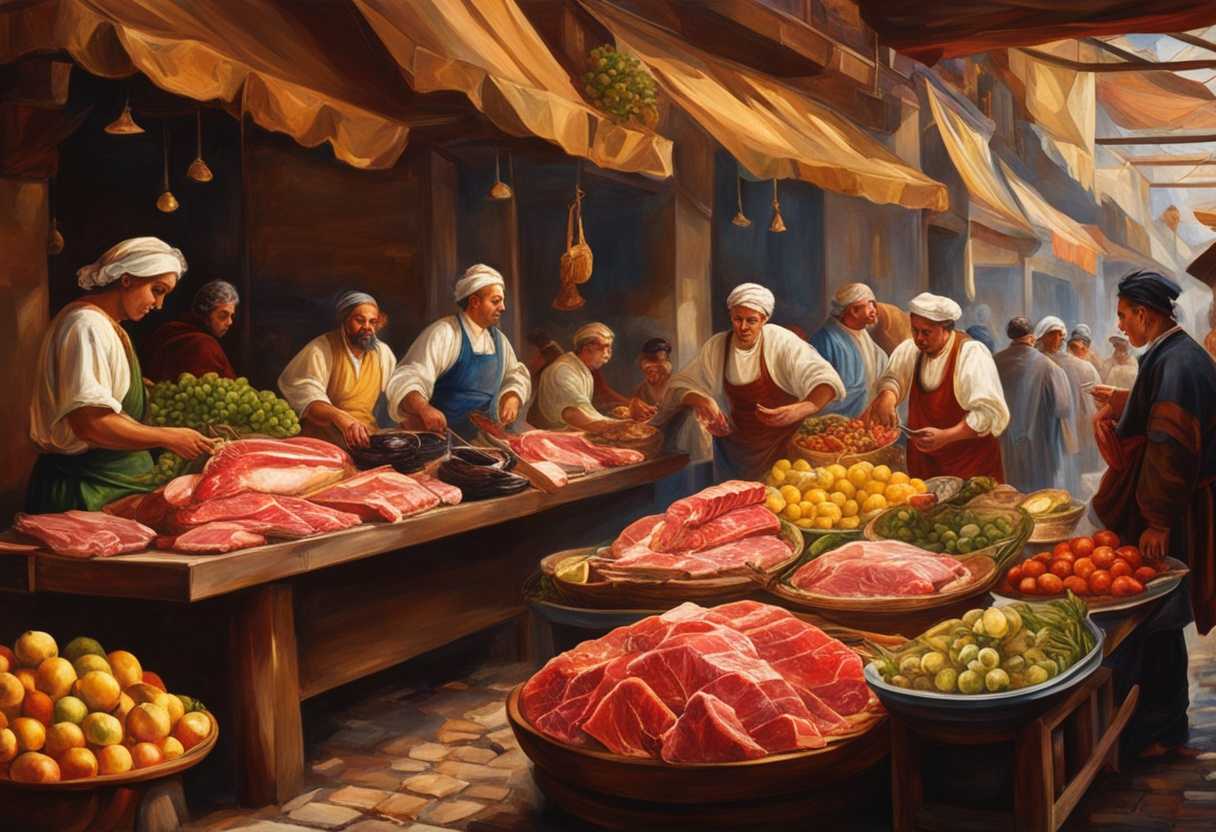
Setting the Scene for 1 Corinthians 10:25
In the bustling marketplace of Corinth, a diverse group of believers has gathered for a Bible study session led by the apostle Paul. The aroma of various spices and foods fills the air as merchants call out their wares. The group finds a quiet corner near a marble fountain, seeking respite from the noise and chaos of the marketplace.
Among those present are Lydia, a wealthy merchant known for her generosity, and Aquila and Priscilla, a couple who are skilled tentmakers and fervent followers of Christ. They have all come together to learn from Paul’s teachings and deepen their understanding of the faith. As they sit on woven mats, Paul begins to speak about the importance of maintaining spiritual discipline and avoiding temptation, drawing parallels between their current surroundings and the challenges they face as Christians in a pagan society.
The group listens intently, their faces reflecting a mix of determination and conviction. Despite the distractions and temptations surrounding them, they are eager to grow in their faith and support one another on their spiritual journey. As Paul concludes his lesson, the sound of a distant trumpet heralds the end of the day in the marketplace, but the impact of his words lingers in their hearts, inspiring them to remain steadfast in their commitment to Christ.
What is 1 Corinthians 10:25 about?
The apostle Paul is addressing the issue of whether it is permissible for Christians to eat meat that has been offered to idols in this verse. During that time, it was a common practice to offer meat to pagan gods before selling it in the market. Some Christians were conflicted about whether they should eat this meat because they were concerned it might compromise their faith.
Paul’s advice to “do whatever is sold in the meat market without raising questions for conscience’ sake” is about not getting caught up in legalistic debates or unnecessary concerns. He is emphasizing that as long as the meat itself is not inherently sinful, Christians can consume it without any guilt or worries about its previous association with idols. This verse encourages believers to focus on what truly matters—loving God, loving others, and living in a way that glorifies Him.
So, the next time you find yourself in a situation where you’re unsure about what to eat or what choices to make, remember this verse. If it doesn’t go against your conscience or God’s commands, then go ahead and enjoy your meal without overthinking it. Let’s strive to live with a clear conscience, free from unnecessary burden, and always seeking to honor God in all that we do.
Understanding what 1 Corinthians 10:25 really means
To understand this verse fully, we need to place it within its broader context. This verse is part of Paul’s first letter to the Corinthians, where he addresses various issues that the early Christian community in Corinth was facing. Paul is discussing the topic of eating food that has been sacrificed to idols in this particular chapter, a common practice in Corinth due to its polytheistic culture. This topic was contentious because it intersected with issues of conscience, freedom, and community.
Phrase Analysis
The phrase “Eat anything sold in the meat market without raising questions of conscience” can seem straightforward, but it carries deep theological and ethical implications. Paul is essentially advising the Corinthians not to worry about whether the meat they buy has been sacrificed to idols. This advice is rooted in the understanding that idols have no real existence and that there is only one God. Paul is encouraging believers to exercise their freedom in Christ without being burdened by unnecessary worries.
Theological Implications
This verse echoes Paul’s broader teaching on Christian liberty and responsibility. Paul explains in 1 Corinthians 8:4-6 that “an idol is nothing at all in the world” and that “there is no God but one.”” He encourages believers to use their freedom wisely, bearing in mind the conscience of weaker believers. This balance between freedom and responsibility is crucial in Christian ethics.
Relevance Today
How is this relevant to us today? While we might not be worried about meat sacrificed to idols, we do face many situations where our actions might affect others’ consciences. Whether it’s the media we consume, the lifestyles we adopt, or the words we use, we are constantly navigating a complex web of moral and ethical decisions. This verse reminds us to live in the freedom Christ has given us but to also be mindful of how our actions impact others.
Anecdote for Illustration
Let me share a story that might help illustrate this point. Imagine a Christian living in a multicultural city where various religious festivals are celebrated. One day, this person is invited to a neighbor’s festival, where food is offered to everyone. Should they eat the food? This verse advises that they can enjoy the meal without worrying about the religious implications of the food itself. However, if another Christian who is new to the faith is with them and feels uneasy, it might be wise to consider their feelings and perhaps refrain. This verse teaches us about the balance between exercising our freedom in Christ and being considerate of others’ consciences. It calls us to live thoughtfully and lovingly, ensuring that our actions build up the community rather than cause division. So, as you go about your daily life, ask yourself: How can I honor my freedom in Christ while also respecting the consciences of those around me? This is a question that leads to deeper, more compassionate living.
How can I glorify God in everyday decisions?
We can glorify God in all that we do by seeking to honor Him in everyday decisions. We can bring glory to His name by choosing paths that align with God’s principles and seeking to do what is pleasing to Him. This involves considering how our choices reflect our faith and values, and striving to live in a way that is consistent with our commitment to follow God. When faced with decisions, we can ask ourselves if our actions would bring glory to God and further His kingdom on earth.
Additionally, glorifying God in everyday decisions involves surrendering our own will and desires to God’s will. It means seeking His guidance through prayer, studying His Word, and relying on the Holy Spirit to lead us in the paths of righteousness. We can demonstrate our faith and obedience to God by submitting our decisions to Him and trusting in His wisdom. We ultimately glorify God in everyday decisions by reflecting our love and devotion to Him, acknowledging His sovereignty over our lives, and recognizing His presence in all aspects of our daily living.
Application
Picture your life as a bustling marketplace, filled with family and work. In the midst of this, consider how your actions impact those around you. Are your choices lifting others up, or tripping them on their journey? Show love and make thoughtful decisions, reflecting the compassion and grace we’ve received. How will you build someone up today?

Reverend Michael Johnson is an experienced Church Minister with a profound expertise in spirituality and guidance. With a serene presence and a compassionate heart, he has faithfully served his congregation for over 20 years, leading them on a spiritual journey towards inner peace and enlightenment. Reverend Johnson’s extensive knowledge of religious philosophies and profound understanding of human nature have made him a trusted confidant and mentor to many, as he seamlessly weaves his profound wisdom into life teachings. Reverend Johnson’s calming demeanor and empathetic nature continue to uplift and heal souls, nurturing a sense of unity and tranquility within his community.