
1 Corinthians 11:13 is about the importance of maintaining order and propriety in worship practices, emphasizing respect for authority and the divine order of creation.
13 Judge for yourselves: is it proper for a wife to pray to God with her head uncovered?
Setting the Scene for 1 Corinthians 11:13
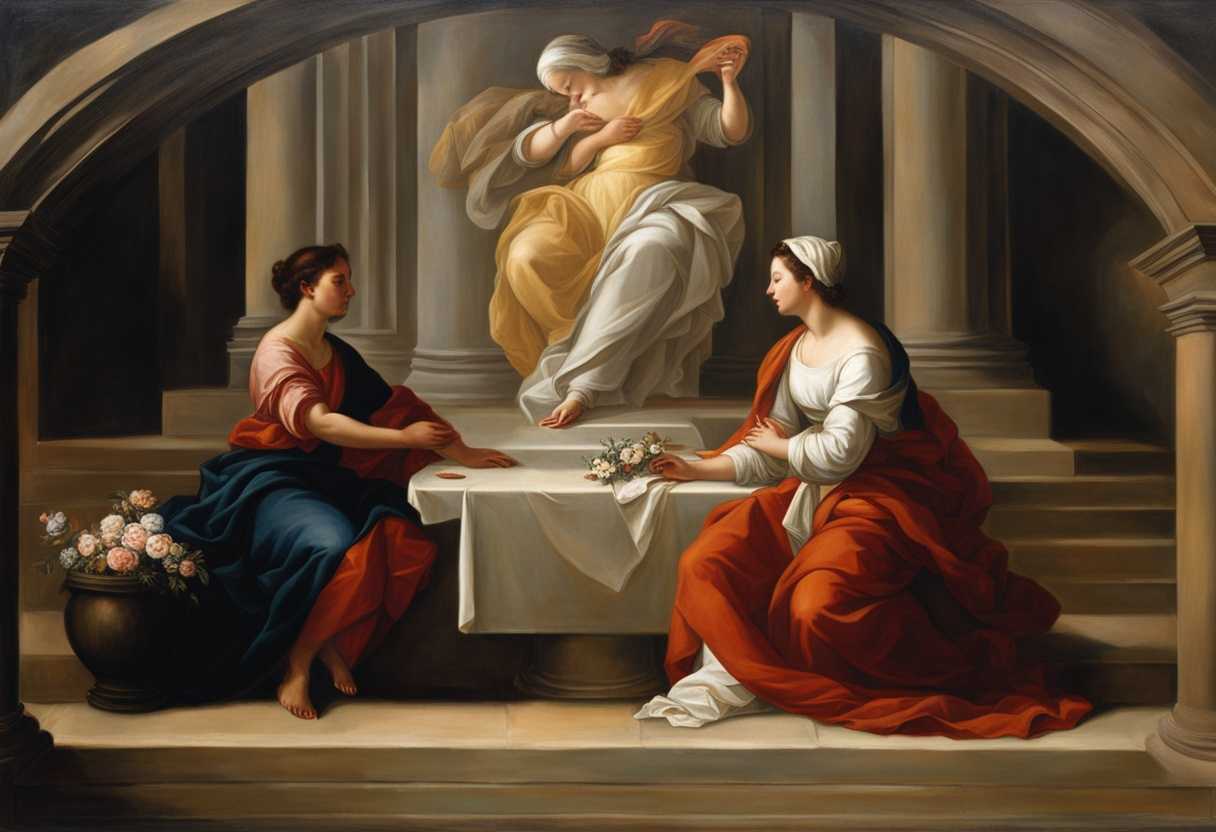
In 1 Corinthians chapter 11, the apostle Paul is addressing the church in Corinth regarding the issue of head coverings during worship. The scene is set in a bustling first-century church gathering in Corinth. The room is filled with believers from various backgrounds, eagerly listening to Paul’s teachings on proper decorum and order in worship.
Among the congregation are men and women, some of whom are adorned with head coverings while others are not. The discussion arises from the cultural norms of the time, where head coverings were a symbol of submission and respect. Paul, in his letter, explains the significance of head coverings in the context of worship and the hierarchy established by God.
As Paul speaks, the room is filled with a mix of curiosity and contemplation. The believers in Corinth are grappling with how to apply these teachings in their own lives and worship practices. The atmosphere is one of earnest seeking and a desire to honor God in all they do, even in the seemingly small details of attire during worship.
What is 1 Corinthians 11:13 about?
This verse seems to imply a traditional and gender-specific expectation related to hair length. Many cultures and societies around the world have considered hair a symbol of femininity and masculinity. Short hair is often associated with masculinity and strength, while long hair is often associated with femininity and beauty. This expectation of gender-specific hair length can be traced back to historical and cultural norms that dictated how men and women should present themselves.
But let’s pause and reflect – why should hair length be tied to gender identity or expression? Shouldn’t individuals have the freedom to express themselves however they see fit, regardless of societal expectations or norms? Educators must teach acceptance and respect for individuality and diversity. Encouraging students to embrace their unique identities, whether through their appearance or other aspects of their being, can help create a more inclusive and understanding society. This verse may ultimately prompt us to critically examine the limitations that societal expectations place on individuals based on their gender. It serves as a reminder to challenge these stereotypes and celebrate the diverse ways in which people choose to express themselves. Let’s strive to create an environment where everyone feels accepted and valued, regardless of their outward appearance or how they choose to express their identities.
Understanding what 1 Corinthians 11:13 really means
Structure for Commentary:
1. Introduction to the Verse and Its Context
2. Explanation of Key Phrases
3. Cross-Referencing Other Biblical Passages
4. Relevance to Contemporary Life
5. Anecdotal Illustration
6. Encouragement for Personal Reflection
Commentary:
-
Introduction to the Verse and Its Context:
The verse in question is part of a larger discussion by Paul on the topic of worship practices, specifically addressing issues of propriety and decorum in public worship. Paul’s letters to the Corinthians often dealt with questions of behavior and customs, aiming to guide the church in maintaining unity and order. -
Explanation of Key Phrases:
When Paul asks, “Is it proper for a woman to pray to God with her head uncovered?” he is not merely addressing a cultural norm of his time but inviting the Corinthians to consider the broader implications of their actions in worship. The term “proper” here refers to what is fitting or appropriate within the context of their faith community, emphasizing respect and reverence in worship. -
Cross-Referencing Other Biblical Passages:
To better understand Paul’s teaching, we can look at 1 Timothy 2:9-10, where Paul advises women to dress modestly and with good deeds appropriate for those who profess to worship God. Similarly, in Galatians 3:28, Paul asserts that in Christ, there is neither male nor female, highlighting the spiritual equality of all believers. These references help frame the conversation in 1 Corinthians, balancing cultural practices with the underlying principle of honoring God. -
Relevance to Contemporary Life:
Today, this verse challenges us to think about the ways we show respect and reverence in our worship practices. While the specific issue of head coverings may not be as relevant, the principle of approaching God with a respectful heart remains timeless. It invites us to examine our attitudes and behaviors in worship, ensuring they reflect our reverence for God. -
A young woman named Emily who recently joined a church provides an anecdotal illustration. She noticed that everyone dressed modestly and reverently for service, which was different from her previous church experience. Initially, she felt out of place but soon realized that these outward expressions were manifestations of an inward reverence for God. This helped her understand the importance of aligning her external actions with her internal faith.
-
We must ask ourselves: Do our actions in worship reflect our reverence for God as we reflect on this verse? Do we consider how our behaviors and customs impact our community’s perception of worship? Let this verse be a reminder to approach God with a heart full of respect and a spirit of unity, fostering an environment where everyone can focus on worshiping Him. Paul’s guidance in 1 Corinthians 11:13, though rooted in specific cultural norms, carries a timeless message about approaching God with a heart and actions that honor Him. Let us strive to embody this reverence in both our personal lives and within our worship communities.
How can we honor God through our outward appearance?
We can honor God through our outward appearance by following the teachings in 1 Corinthians 11:13, which specifically addresses the importance of maintaining a symbol of authority on our heads. We demonstrate our respect for God’s design and order by adhering to these guidelines. Our appearance reflects our obedience to God and our desire to live in accordance with His will.
Furthermore, by considering and respecting the cultural norms and customs of the time, we can show reverence for God in our outward appearance. This may involve dressing modestly, presenting ourselves in a neat and orderly manner, and conducting ourselves with humility and dignity. Our physical presentation can be a reflection of our internal reverence and devotion to God, setting us apart as followers of Christ in a world that often prioritizes superficiality and vanity. We honor God through our outward appearance by making a conscious effort to reflect His values and principles in how we present ourselves to the world. We can glorify God in all aspects of our lives, including our physical appearance, by aligning our appearance with His expectations and reflecting His character through our dress and demeanor.
Application
Think of your life as a busy office or a bustling family home. Just as you check in on your tasks or loved ones, it’s crucial to check in on your soul. Open God’s Word and compare it to the actions and thoughts in your heart. Are you living in sync with His truth? Take a moment, pause, and look within. Are you ready to step up and align your life with God’s Word?

Reverend Michael Johnson is an experienced Church Minister with a profound expertise in spirituality and guidance. With a serene presence and a compassionate heart, he has faithfully served his congregation for over 20 years, leading them on a spiritual journey towards inner peace and enlightenment. Reverend Johnson’s extensive knowledge of religious philosophies and profound understanding of human nature have made him a trusted confidant and mentor to many, as he seamlessly weaves his profound wisdom into life teachings. Reverend Johnson’s calming demeanor and empathetic nature continue to uplift and heal souls, nurturing a sense of unity and tranquility within his community.