
1 Corinthians 11:23-32 is about the solemn significance of partaking in the Lord’s Supper with reverence, examining oneself before doing so, and recognizing the body and blood of Christ as symbols of his sacrifice for the forgiveness of sins.
23 For I received from the Lord what I also delivered to you, that the Lord Jesus on the night when he was betrayed took bread,
24 and when he had given thanks, he broke it, and said, “This is my body, which is for you. Do this in remembrance of me.”
25 In the same way also he took the cup, after supper, saying, “This cup is the new covenant in my blood. Do this, as often as you drink it, in remembrance of me.”
26 For as often as you eat this bread and drink the cup, you proclaim the Lord’s death until he comes.
27 Whoever, therefore, eats the bread or drinks the cup of the Lord in an unworthy manner will be guilty concerning the body and blood of the Lord.
28 Let a person examine himself, then, and so eat of the bread and drink of the cup.
29 For anyone who eats and drinks without discerning the body eats and drinks judgment on himself.
30 That is why many of you are weak and ill, and some have died.
31 But if we judged ourselves truly, we would not be judged.
32 But when we are judged by the Lord, we are disciplined so that we may not be condemned along with the world.
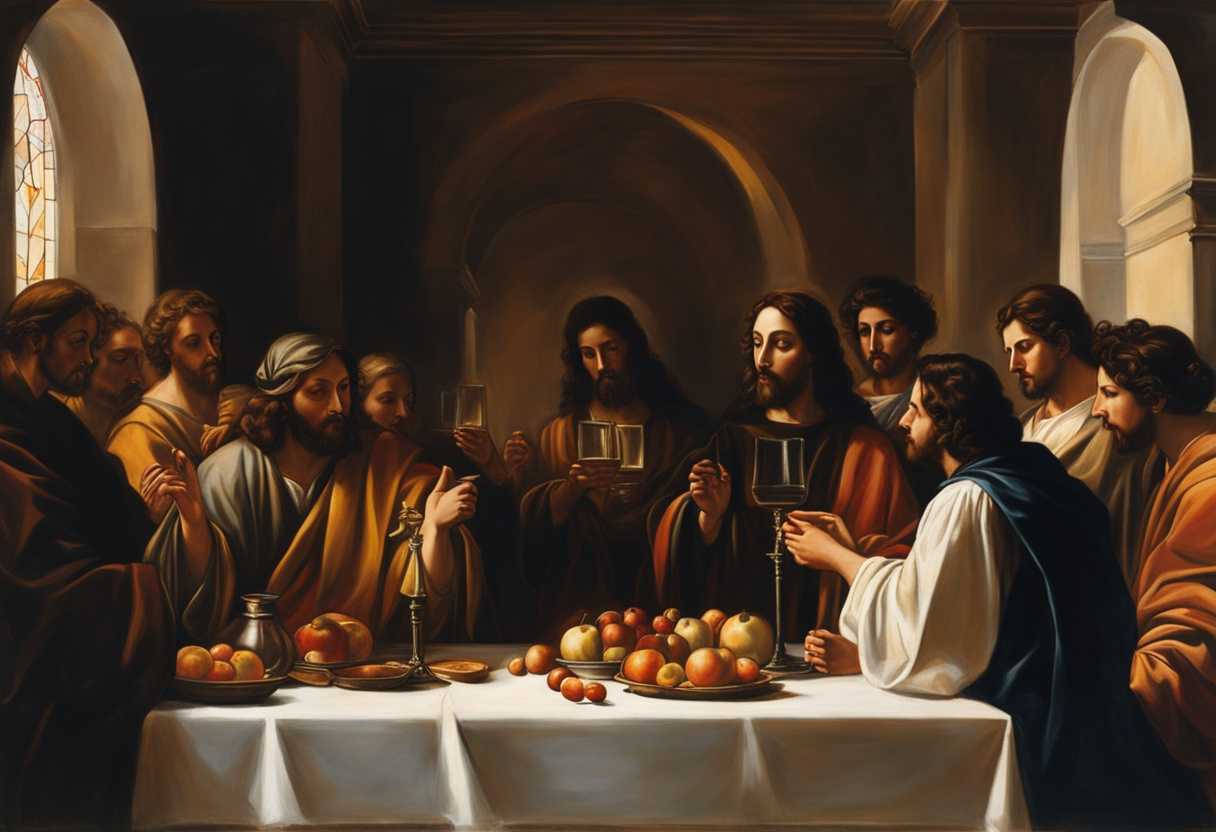
Setting the Scene for 1 Corinthians 11:23-32
The scene described in 1 Corinthians 11:23-32 takes place in a humble meeting room in the city of Corinth. The room is dimly lit by oil lamps, casting a warm glow on the faces of the gathered believers. The air is filled with the scent of incense, creating an atmosphere of reverence and solemnity. The room is furnished simply, with a long wooden table at the center surrounded by cushions for seating.
Among those present are the members of the early Christian community in Corinth, including men and women of various backgrounds and social statuses. They have come together to share in the Lord’s Supper, a sacred meal instituted by Jesus himself during the Last Supper. The believers are dressed modestly, with heads bowed in prayer and hearts open to receive the spiritual nourishment of the bread and wine.
As they partake in the bread and wine, they do so with a deep sense of gratitude and remembrance for the sacrifice of Christ. The leader of the gathering, likely an elder or apostle, recites the words of Jesus, passing on the tradition that has been handed down to them. In this moment, they are united in their faith and commitment to following the ways of the Lord, seeking forgiveness for their sins and renewing their dedication to living a life worthy of the gospel.
What is 1 Corinthians 11:23-32 about?
This verse from 1 Corinthians 11:27-29 emphasizes the importance of approaching the Lord’s Supper with a heart of reverence and self-reflection. When we come to the table to partake in this sacred act, we are called to examine ourselves and ensure that our hearts are in the right place. Are we truly acknowledging the significance of what we are participating in? Are we approaching it with the respect and humility that it deserves? We deepen our connection with God and each other by engaging in self-examination, ensuring that we are partaking in a worthy manner. It allows us to reflect on our relationship with God, seek forgiveness for any wrongdoings, and recommit ourselves to following His will. As we gather around the table with our fellow believers, let us remember the sacrifice of Christ and renew our commitment to living a life that reflects His love and grace. Approach the Lord’s Supper with reverence, gratitude, and a willingness to examine our hearts before the One who gave it all for us.
Understanding what 1 Corinthians 11:23-32 really means
In 1 Corinthians 11:23-32, the Apostle Paul addresses the Corinthian church regarding the Lord’s Supper, a significant practice in Christian tradition. This passage holds profound meaning as it delves into the essence of the Lord’s Supper and its implications for believers. When Paul mentions, “The Lord Jesus on the night he was betrayed took bread,” he refers to the institution of the Lord’s Supper during the Passover meal, symbolizing Christ’s sacrificial love through His body and blood given for humanity. This act serves as a poignant reminder of Jesus’ ultimate sacrifice and the imperative nature of commemorating it.
The command to “Do this in remembrance of me” underscores the perpetual observance of the Lord’s Supper as a memorial of Christ’s sacrifice. By partaking in the bread and cup, believers engage in a proclamation of faith in Jesus’ death and an anticipation of His return. This practice not only reinforces the hope of Christ’s second coming but also underscores the significance of living in a manner that honors His sacrifice. However, Paul warns against partaking in the Lord’s Supper unworthily, emphasizing the need for reverence and self-examination to avoid sinning against the body and blood of the Lord.
The call for self-examination before partaking in the Lord’s Supper encourages believers to align their hearts and actions with Christ’s teachings. This introspective practice fosters spiritual growth and accountability within the Christian community. Paul’s mention of the consequences of unworthy participation, such as weakness, sickness, and spiritual slumber, serves as a stark reminder of the importance of approaching the Lord’s Supper with sincerity and humility. This passage resonates with contemporary believers, urging them to engage in regular self-reflection, repentance, and a deep appreciation for the significance of Jesus’ sacrifice.
The Lord’s Supper continues to hold a central place in Christian worship, serving as a poignant reminder of Christ’s sacrifice and fostering a sense of community among believers. By encouraging self-examination and repentance, this practice promotes spiritual growth and accountability within the body of Christ. Moreover, it reinforces the hope of Christ’s return and underscores the necessity of living out His teachings in our daily lives. As we approach the Lord’s Supper, let us do so with reverence, introspection, and a heart filled with gratitude for the profound sacrifice of Jesus Christ.
How can we approach the Lord’s Supper reverently?
Approaching the Lord’s Supper reverently involves understanding the significance of the sacrament. It is a time to remember and reflect on Jesus’ sacrifice for our sins. When we partake in the bread and the cup, we are symbolically participating in the remembrance of Christ’s body broken and blood shed for our salvation. This act should be approached with a solemn and grateful heart, recognizing the ultimate act of love and grace demonstrated through Jesus’ sacrifice.
Additionally, approaching the Lord’s Supper reverently also involves introspection and self-examination. The apostle Paul warns against partaking of the Lord’s Supper in an unworthy manner. Therefore, before participating in this sacred act, we should take a moment to examine our hearts, confessing any sins or shortcomings, and seeking forgiveness and reconciliation with God. This practice allows us to approach the Lord’s Supper with humility, sincerity, and a desire to honor Christ’s sacrifice properly.
Lastly, approaching the Lord’s Supper reverently requires a spirit of unity and communion with fellow believers. The sharing of the bread and the cup signifies our unity as the body of Christ. Therefore, we should approach this time with love, understanding, and a spirit of reconciliation towards others. Partaking in the Lord’s Supper with reverence and a focus on the meaning behind the sacrament can help us experience a deeper connection with God and with our Christian community.
Application
Think of the Lord’s Supper as the family dinner of your spiritual life—a time to connect deeply. Just as you wouldn’t rush through a meal with loved ones without being fully present, take a moment to examine your heart and actions before partaking. Let gratitude for Jesus’ sacrifice guide you. Are you truly prepared to honor this moment with the reverence it deserves?

Reverend Michael Johnson is an experienced Church Minister with a profound expertise in spirituality and guidance. With a serene presence and a compassionate heart, he has faithfully served his congregation for over 20 years, leading them on a spiritual journey towards inner peace and enlightenment. Reverend Johnson’s extensive knowledge of religious philosophies and profound understanding of human nature have made him a trusted confidant and mentor to many, as he seamlessly weaves his profound wisdom into life teachings. Reverend Johnson’s calming demeanor and empathetic nature continue to uplift and heal souls, nurturing a sense of unity and tranquility within his community.