
1 Corinthians 11:28 is about examining oneself before participating in the Holy Communion, ensuring a posture of reverence and preparation for receiving the spiritual significance of the sacrament.
28 Let a person examine himself, then, and so eat of the bread and drink of the cup.
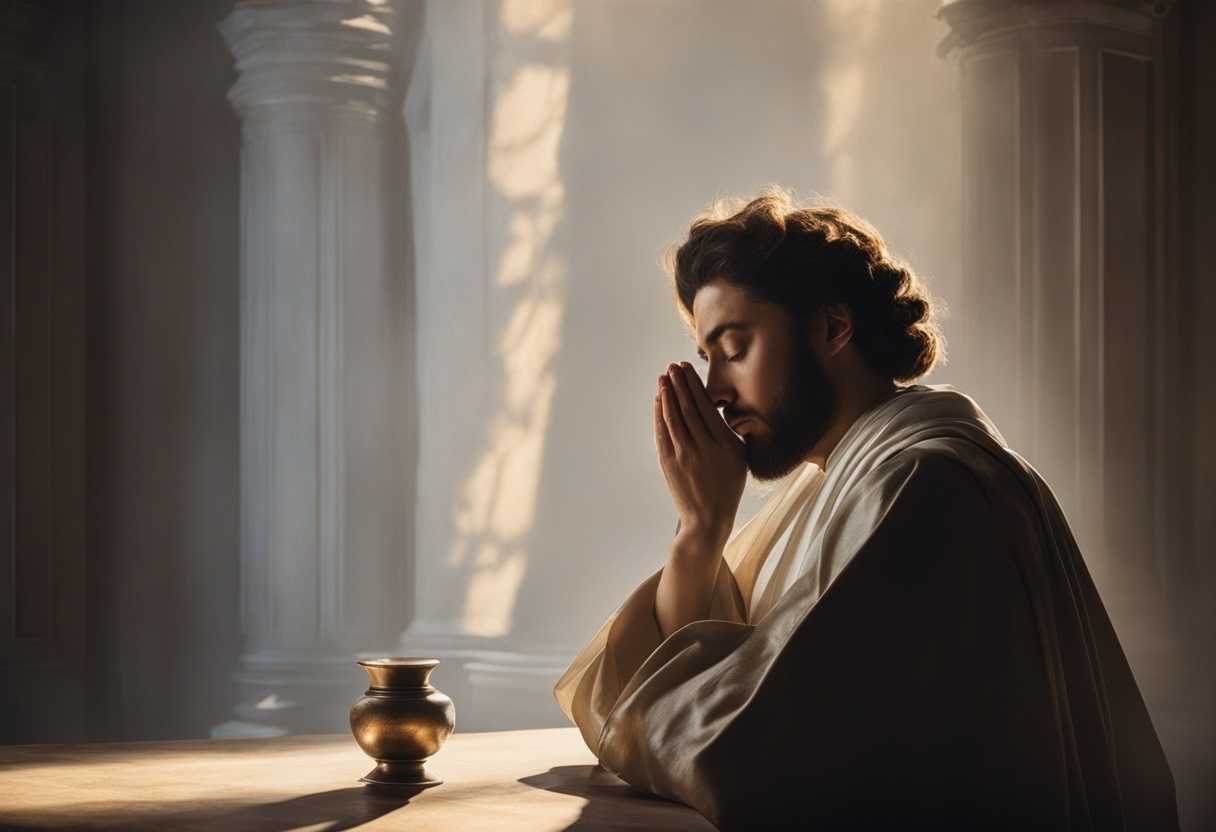
Setting the Scene for 1 Corinthians 11:28
In 1 Corinthians 11:28, the apostle Paul is addressing the Corinthian church regarding the proper observance of the Lord’s Supper. The scene is set in a gathering of believers in Corinth, likely in a home or a meeting place designated for Christian fellowship. The room is dimly lit by oil lamps, casting a warm glow on the faces of those present.
Among the attendees are men and women from various backgrounds, coming together to share in the breaking of bread and the drinking of wine in remembrance of Jesus’ sacrifice. The atmosphere is solemn yet filled with a sense of unity and reverence for the occasion. Paul, the author of the letter, is present either in person or through his written words being read aloud to the congregation.
As Paul admonishes the believers to examine themselves before partaking in the sacrament, the room falls silent, each individual reflecting on their own hearts and actions. The scene is one of introspection and spiritual contemplation, as the believers prepare to participate in this sacred act of communion with Christ and one another.
What is 1 Corinthians 11:28 about?
This verse emphasizes the importance of self-reflection and self-examination before participating in communion, also known as the Lord’s Supper. It calls on individuals to look inward and assess their thoughts, actions, and intentions before coming to the table to partake in the bread and wine symbolizing Jesus’ body and blood. By examining oneself, you can ensure you are approaching this sacred act with the right attitude, reverence, and understanding of its significance. Consider what this momentous occasion represents in your faith journey and its importance. Reflect on your relationship with God, any sins that may need confession or repentance, and your commitment to living a life that honors and pleases Him. Do you approach the Lord’s Supper with sincerity and humility, understanding the deep sacrifice and love behind it? Take time to prepare your heart and mind, seeking forgiveness and renewal so you can fully partake in this sacred act with a clear conscience and genuine devotion.
Understanding what 1 Corinthians 11:28 really means
Structure:
- Introduction to the Verse
- Context Within the Bible
- Key Phrases and Their Meaning
- Related Biblical Passages
- Relevance to Modern Life
- Reflective Anecdote
- Conclusion and Call to Action
Commentary:
-
Paul emphasizes the importance of self-examination before participating in the Lord’s Supper in 1 Corinthians 11:28. This verse calls for introspection and a sincere evaluation of one’s spiritual state. It’s a profound reminder that our relationship with God is not just communal but deeply personal.
-
Context Within the Bible:
This verse is situated in a passage where Paul addresses the Corinthians about their conduct during the Lord’s Supper. The Corinthians were treating it frivolously, causing divisions and missing its sacred purpose. Paul admonishes them to approach this holy act with reverence and self-awareness. -
Key Phrases and Their Meaning:
The phrase “examine himself” is central to this verse. It signifies a deep, personal reflection on one’s actions, thoughts, and spiritual health. It’s not merely a surface-level check but a thorough introspection to ensure one is in a right relationship with God and others. This self-examination is a form of spiritual discipline that fosters humility and repentance. -
Related Biblical Passages:
This call for self-examination is echoed in other parts of Scripture. David prays in Psalm 139:23-24, “God, search me and know my heart; test me and know my anxious thoughts. Lamentations 3:40 says, “Let us examine our ways and test them, and let us return to the Lord.”” These passages reinforce the idea that self-scrutiny is a crucial step towards spiritual growth and alignment with God’s will. -
Taking time for self-examination can feel like a luxury in today’s fast-paced world. However, it’s more relevant than ever. We live in an era of distraction and superficial connections, making it easy to lose sight of our inner spiritual state. Regular self-examination helps us stay grounded and maintain a sincere relationship with God. It encourages us to confront our weaknesses and seek God’s grace to overcome them.
-
A busy professional attends church regularly but feels spiritually disconnected. One Sunday, during communion, he remembers Paul’s admonition and decides to truly examine his life. He realizes that his work has become an idol, overshadowing his family and spiritual life. This moment of clarity leads him to make significant changes, prioritizing his relationship with God and loved ones. This transformation began with a simple act of self-examination.
-
Let’s commit to regular self-examination as we reflect on this verse. Before partaking in communion, or even at the start of each day, take a moment to introspect. Ask yourself: Am I living in alignment with God’s will? Are there areas in my life that need repentance and change? By honoring God, we not only cultivate a more authentic and fulfilling spiritual journey.
Are we examining ourselves before partaking in communion?
Yes, it is important to examine ourselves before partaking in communion. This involves reflecting on our thoughts, actions, and attitudes to ensure that we are in a right relationship with God and our fellow believers. We acknowledge our need for forgiveness and repentance by examining ourselves and approaching the communion table with a humble and contrite heart.
Partaking in communion is a sacred act that represents the body and blood of Jesus Christ given for the forgiveness of sins. Therefore, it is essential that we approach this act with reverence and sincerity. We examine ourselves to ensure that we take communion in a worthy manner and reaffirm our commitment to following Christ and living a life that is pleasing to Him. Examining ourselves before partaking in communion ultimately prepares our hearts to truly receive the spiritual nourishment and blessings that come from participating in this remembrance of Christ’s sacrifice. It is a time for introspection, confession, and restoration, as we seek to draw closer to God and experience the fullness of His grace and love.
Application
Pause and reflect on your life, just like you would evaluate your performance at work or your role in your family. When Paul tells us to examine ourselves before communion, he’s asking you to dig deep, find any wrongs, and correct them. This act prepares your heart, making sure you’re in a good place spiritually. Are you willing to take this crucial step to enrich your faith today?

Reverend Michael Johnson is an experienced Church Minister with a profound expertise in spirituality and guidance. With a serene presence and a compassionate heart, he has faithfully served his congregation for over 20 years, leading them on a spiritual journey towards inner peace and enlightenment. Reverend Johnson’s extensive knowledge of religious philosophies and profound understanding of human nature have made him a trusted confidant and mentor to many, as he seamlessly weaves his profound wisdom into life teachings. Reverend Johnson’s calming demeanor and empathetic nature continue to uplift and heal souls, nurturing a sense of unity and tranquility within his community.