
1 Corinthians 12:12-20 is about how all believers form one body in Christ, each with their own unique gifts and functions, but all necessary and interconnected for the proper functioning of the whole.
12 For just as the body is one and has many members, and all the members of the body, though many, are one body, so it is with Christ.
13 For in one Spirit we were all baptized into one body—Jews or Greeks, slaves or free—and all were made to drink of one Spirit.
14 For the body does not consist of one member but of many.
15 If the foot should say, “Because I am not a hand, I do not belong to the body,” that would not make it any less a part of the body.
16 and if the ear should say, “Because I am not an eye, I do not belong to the body,” that would not make it any less a part of the body.
17 If the whole body were an eye, where would be the sense of hearing? If the whole body were an ear, where would be the sense of smell?
18 But as it is, God arranged the members in the body, each one of them, as he chose.
19 If all were a single member, where would the body be?
20 As it is, there are many parts, yet one body.
Setting the Scene for 1 Corinthians 12:12-20
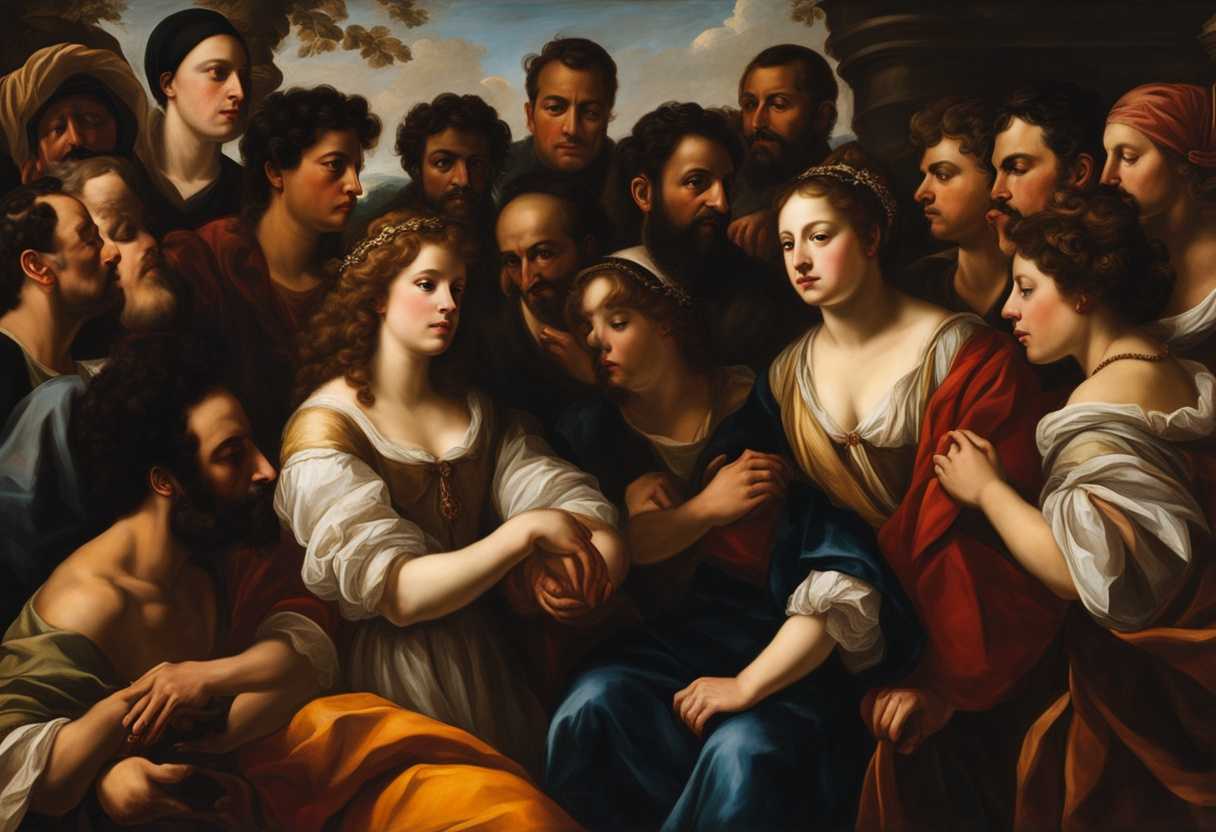
In 1 Corinthians chapter 12, the apostle Paul uses the analogy of the human body to explain the concept of the church as the body of Christ. Imagine a vibrant and diverse community gathered in a spacious and sunlit room, adorned with colorful tapestries and flickering candles. The room is filled with people from all walks of life, each uniquely gifted and called to be part of the body of Christ.
Among the group are individuals with different talents and backgrounds – teachers, healers, administrators, and more. They have come together through their shared faith in Christ, forming a beautiful tapestry of unity amidst their diversity. As they sit in a circle, listening intently to Paul’s words, they begin to grasp the profound truth that each one of them is an essential part of the body of Christ, with a unique role to play in God’s kingdom.
As the discussion unfolds, a sense of awe and reverence fills the room as they realize the importance of honoring and valuing each member of the body. They understand that just as the eye cannot say to the hand, “I don’t need you,” so too, they must work together in harmony and love, recognizing the indispensable role that each person plays in fulfilling God’s purposes on earth.
What is 1 Corinthians 12:12-20 about?
This verse is emphasizing the unity and interconnectedness of a community, like a church, where each individual plays a unique and important role. Just like how a body has many different parts, each with its own function, the members of a church have diverse talents, abilities, and roles to contribute to the well-being of the whole community. It highlights the idea that every person is essential and valuable in their own way, and that together, they form a cohesive and flourishing body.
Think about it this way: imagine a choir where each singer has a different voice and range. If everyone sang the same note, the beauty and harmony of the music would be lost. Similarly, in a church community, each member brings their own gifts and strengths, which complement and support one another. This verse encourages us to appreciate and respect the differences among us, recognizing that diversity is what enriches and strengthens the body of believers. It invites us to embrace our unique roles and talents, knowing that we are all indispensable parts of the larger whole.
Understanding what 1 Corinthians 12:12-20 really means
This passage from 1 Corinthians 12:12-20 is part of Paul’s letter to the Corinthians, where he addresses the unity and diversity within the body of Christ. Paul uses the metaphor of the human body to illustrate how different members of the church, though diverse, are all essential and interconnected. “Just as a body, though one, has many parts” emphasizes the unity of the church as one body, despite its many diverse members. “All its many parts form one body” highlights the interdependence of each member, showing that every part is necessary for the body to function properly. Paul is drawing a direct parallel between the human body and the body of Christ, indicating that the church should function in a similar harmonious and interdependent manner.
In Romans 12:4-5, Paul similarly speaks about the body of Christ, emphasizing that each member belongs to all the others. Ephesians 4:16 talks about the body being joined and held together by every supporting ligament, growing and building itself up in love. Colossians 1:18 describes Christ as the head of the body, the church, underscoring the importance of unity under Christ. In today’s world, where individualism is often celebrated, this passage reminds us of the importance of community and interdependence. It encourages us to value each person’s unique contributions and to work together harmoniously, recognizing that we are stronger together than apart.
Imagine a sports team where each player has a unique role. A soccer team, for instance, has forwards, midfielders, defenders, and a goalkeeper. Each position is crucial, and the team cannot function properly if even one player is missing or not performing their role. Similarly, in the body of Christ, each member has a unique role that is vital to the overall mission and health of the church. This passage calls us to embrace our diversity and work together as one body in Christ. It challenges us to recognize the value in each person and to support one another in our collective mission. By understanding and living out this metaphor, we can create a more unified and effective community that reflects the love and purpose of Christ.
How can we value and include all members equally?
We can value and include all members equally by recognizing that each individual in the community has their own unique role and importance. Just like how the human body is made up of different parts that all have their own function and significance, every member of a community is valuable in their own way. We can create a more inclusive and supportive environment where everyone feels respected and valued by acknowledging and appreciating the diverse strengths, talents, and perspectives of each person.
It is important to understand that no one member is more important than another, and that every individual contributes to the overall well-being of the community. When we recognize and celebrate the differences among us and work together in unity, we can build a stronger and more vibrant community. We can foster a sense of belonging and equality that honors the inherent worth and dignity of each individual by actively seeking to include all members, listening to their voices, and ensuring that everyone has a seat at the table.
Application
Think of the church like a busy office or a bustling family home. Every one of us is a vital team member or family member, each with a unique job that keeps everything running smoothly. Don’t underestimate your role—it’s essential. Without your contribution, the whole system can falter. Are you ready to step up and make your mark where it’s needed most?

Reverend Michael Johnson is an experienced Church Minister with a profound expertise in spirituality and guidance. With a serene presence and a compassionate heart, he has faithfully served his congregation for over 20 years, leading them on a spiritual journey towards inner peace and enlightenment. Reverend Johnson’s extensive knowledge of religious philosophies and profound understanding of human nature have made him a trusted confidant and mentor to many, as he seamlessly weaves his profound wisdom into life teachings. Reverend Johnson’s calming demeanor and empathetic nature continue to uplift and heal souls, nurturing a sense of unity and tranquility within his community.