
1 Corinthians 14:33-35 is about emphasizing orderliness in the church gatherings and instructing women to remain silent in the assembly, reflecting the cultural norms of the time and promoting harmony and respect among believers.
33 For God is not a God of confusion but of peace.
34 the women should keep silent in the churches. For they are not permitted to speak, but should be in submission, as the Law also says.
35 If there is anything they desire to learn, let them ask their husbands at home. For it is shameful for a woman to speak in church.
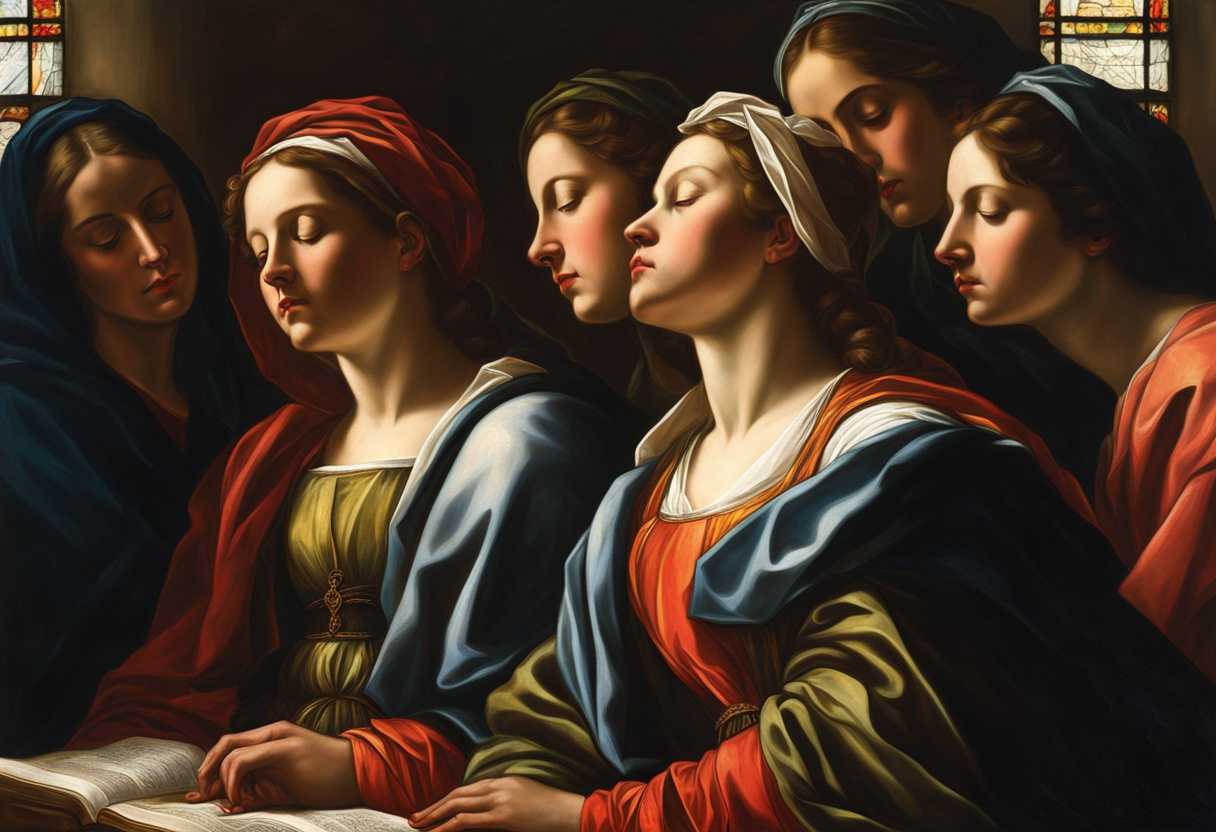
Setting the Scene for 1 Corinthians 14:33-35
In 1 Corinthians 14:33-35, the apostle Paul addresses the Corinthian church regarding the order and decorum that should be maintained during their gatherings. The scene is set in a bustling first-century Christian community in Corinth. The believers have gathered together in a large meeting place, likely a home or a communal space, to worship, pray, and learn from the teachings of the apostles.
Among the attendees are men and women from various backgrounds and social statuses, all coming together to grow in their faith. The women in the group are instructed by Paul to remain silent during the meetings and to ask their husbands at home if they have any questions. This directive is given to ensure that there is no confusion or disorder during the gatherings, as Paul emphasizes that God is a God of peace and not of confusion.
The setting is filled with a sense of reverence and eagerness to learn more about the teachings of Jesus Christ. The believers are seated or standing attentively, listening to the words being shared with them. The atmosphere is one of respect and order, as they seek to honor God in all that they do during their time together.
What is 1 Corinthians 14:33-35 about?
This verse from the Bible, 1 Corinthians 14:35, can be a controversial and misunderstood passage. It’s important to understand the historical and cultural context in which it was written to truly grasp its meaning. During ancient times, women were not typically allowed to speak in public or hold leadership roles in society. This verse reflects that societal norm and the specific cultural practices of the early Christian church. Let’s, as teachers and followers of Christ, dig deeper into the essence of this verse. Instead of viewing it as a command to silence women in all aspects of their lives, we should consider the intended message of respect and order within the church community. We can interpret this verse in a way that upholds the dignity and equality of all individuals by asking questions like, “How can we?”” we can strive to promote a more inclusive and equitable environment in our communities. Encouraging open dialogue, mutual understanding, and the empowerment of all members, regardless of gender, can help bring light to the true teachings of love and acceptance that Jesus preached.
Understanding what 1 Corinthians 14:33-35 really means
To provide a meaningful commentary on this passage, let’s establish a structure that guides us through its understanding:
- Contextual Background
- Key Phrases and Their Meanings
- Supporting Biblical References
- Relevance to Modern Readers
- Anecdote and Practical Application
Contextual Background:
The Apostle Paul wrote 1 Corinthians to address issues within the Corinthian church, including disorder in worship services. This passage specifically addresses the role of women in church gatherings. It’s essential to understand the cultural and historical context of the early church, where societal norms significantly differed from today’s.
Key Phrases and Their Meanings:
The passage contains phrases such as “God is not a God of disorder but of peace.” This emphasizes that God values order and peace in worship settings. The instruction for women to “remain silent in the churches” and to be “in submission” can feel jarring to contemporary readers. However, in the original context, it likely addressed disruptions during worship rather than a blanket prohibition against women speaking.
Supporting Biblical References:
To gain a fuller understanding, we can look at other parts of Paul’s writings. Paul states in Galatians 3:28, “There is neither Jew nor Greek, slave nor free, male and female, for you are all one in Christ Jesus.”” This suggests an underlying principle of equality in Christ. Additionally, women like Priscilla (Acts 18:26) played active roles in teaching and ministry, indicating that Paul’s instructions in 1 Corinthians were situational rather than universal.
Relevance to Modern Readers:
Today, these verses challenge us to think critically about cultural norms and biblical principles. The call for order and peace in worship remains relevant, but the application may differ. Modern readers should consider the underlying principles rather than a literal application that disregards context.
Anecdote and Practical Application:
Imagine a church service where everyone speaks simultaneously, creating chaos. It’s hard to worship or learn in such an environment. Paul’s advice aimed to prevent such disorder. Today, we can apply this by ensuring our worship services facilitate peace and focus. For instance, a church I once attended had a time for open sharing, but it was structured to ensure everyone could speak and be heard respectfully. This balance maintained order while allowing participation. This passage encourages us to value order and peace in worship, reflecting God’s character. It also invites us to look beyond the surface and understand the cultural context, applying biblical principles thoughtfully in our contemporary world. How can we, as a community, foster an environment of peace and order while respecting the diverse voices within our church?
How can women contribute in spiritual gatherings?
Women can contribute in spiritual gatherings by participating and sharing their insights in a respectful and orderly manner. They can offer prayers, reflections, or share personal testimonies that can edify and encourage the assembly. It is important for women, like all participants, to bring a spirit of humility and attentiveness to the teachings and discussions taking place.
Additionally, women can support the gathering through their presence and engagement. Women can foster a sense of community and unity within the group by actively listening, asking thoughtful questions, and showing genuine interest in the spiritual growth of others. Their unique perspectives and experiences can enrich the discussion and bring a deeper understanding of spiritual matters to the gathering. Women, alongside men, can ultimately contribute to creating a more vibrant and inclusive spiritual environment where all individuals feel valued and respected.
Application
Picture your life as a bustling office or a warm, loving home. Just as you strive for peace and clarity there, remember that worship should reflect the same harmony. Women, consider keeping silent and seeking guidance afterwards, echoing the wisdom of the law. Are you prepared to bring that same sense of order and reverence to your spiritual gatherings?

Reverend Michael Johnson is an experienced Church Minister with a profound expertise in spirituality and guidance. With a serene presence and a compassionate heart, he has faithfully served his congregation for over 20 years, leading them on a spiritual journey towards inner peace and enlightenment. Reverend Johnson’s extensive knowledge of religious philosophies and profound understanding of human nature have made him a trusted confidant and mentor to many, as he seamlessly weaves his profound wisdom into life teachings. Reverend Johnson’s calming demeanor and empathetic nature continue to uplift and heal souls, nurturing a sense of unity and tranquility within his community.