
1 Corinthians 16:1-2 is about Paul instructing the Corinthian church to set aside money on the first day of the week for a collection to support the believers in Jerusalem, reinforcing the principles of regular, intentional giving and communal support within the Christian community.
1 Now concerning the collection for the saints: as I directed the churches of Galatia, so you also are to do.
2 On the first day of every week, each of you is to put something aside and store it up, as he may prosper, so that there will be no collecting when I come.
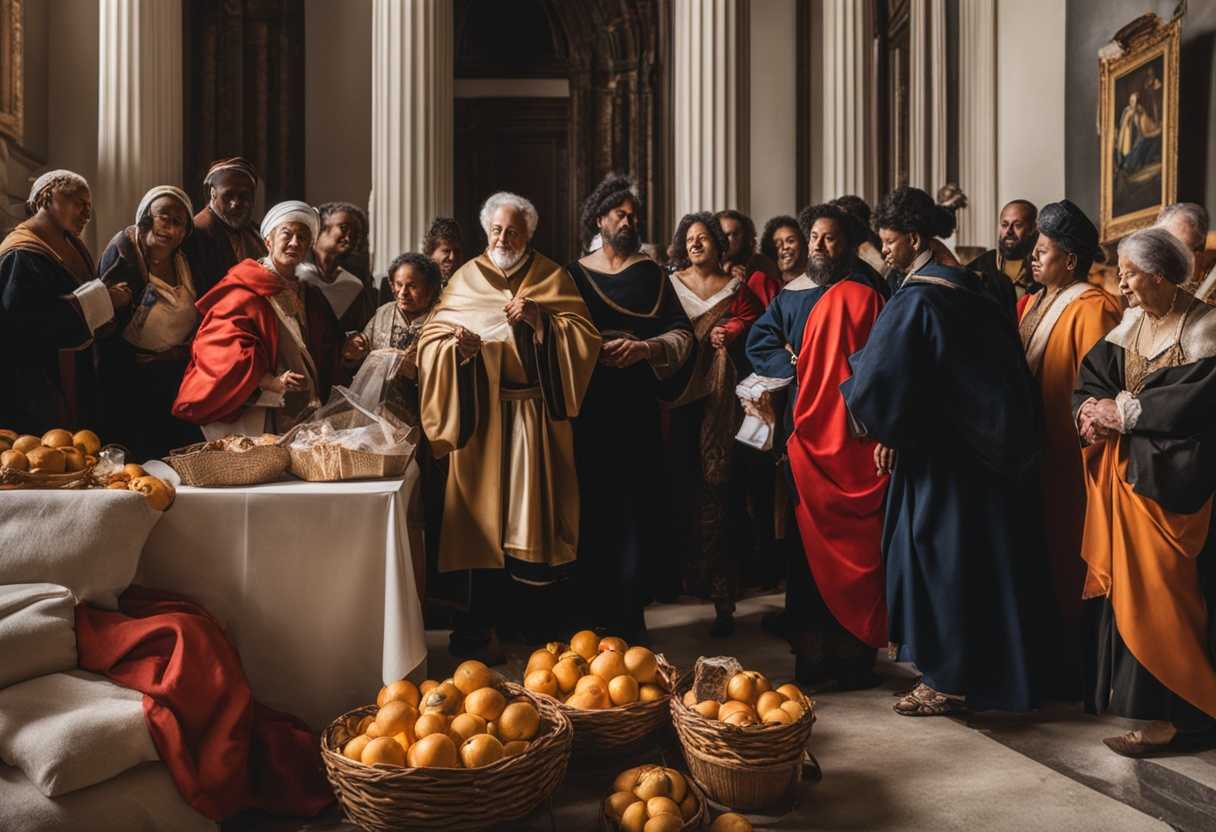
Setting the Scene for 1 Corinthians 16:1-2
In 1 Corinthians 16:1-2, the apostle Paul is writing to the church in Corinth, instructing them on the collection for the saints. The scene is set in the city of Corinth, a bustling hub of trade and culture in ancient Greece. The church members have gathered together in a large meeting hall, with sunlight streaming in through the windows, casting a warm glow on the faces of the congregation.
Paul, a revered figure in the early Christian church, stands before the assembly, his voice clear and authoritative as he addresses the believers. The members of the church, a diverse group of men and women from different backgrounds and social statuses, listen attentively as Paul explains the importance of contributing to the collection for the saints in Jerusalem. Some of them nod in agreement, while others furrow their brows in concentration, taking in Paul’s words.
The room is filled with a sense of unity and purpose as the believers prepare to follow Paul’s instructions and gather their contributions. The atmosphere is one of reverence and solidarity, as the early Christians come together to support their fellow believers in need, embodying the spirit of generosity and community that Paul so passionately advocates for in his letter.
What is 1 Corinthians 16:1-2 about?
Paul is emphasizing the importance of regular giving to support the work of the church and help those in need in this verse. Believers demonstrate a commitment to generosity and stewardship of the resources that God has entrusted to them by setting aside money weekly. This practice not only ensures a consistent flow of support for the church’s ministries but also reflects a heart that is willing to prioritize God’s work above personal desires.
Have you ever thought about how your financial contributions can make a difference in the lives of others? You are participating in a tangible way to support the community of believers and extend God’s love and provision to those in need by following Paul’s instruction. It’s a powerful way to demonstrate your faith and trust in God to provide for both your needs and the needs of others.
So, next time you receive your income, consider setting aside a portion to give back to the church and support its ministries. Allow yourself to experience the joy and fulfillment that come from being a cheerful giver, knowing that your contributions are making a meaningful impact in the lives of others and furthering God’s kingdom on earth.
Understanding what 1 Corinthians 16:1-2 really means
Structure:
1. Introduction to the passage
2. Context within the broader biblical narrative
3. Detailed analysis of key phrases
4. Cross-references to other biblical passages
5. Relevance to contemporary life
6. Anecdote for practical application
7. Invitation for reflection and engagement
Commentary:
-
Paul provides guidance on how the church in Corinth should handle collections for the saints in 1 Corinthians 16:1-2. The specific instructions emphasize regular and intentional giving, a practice that holds significant meaning for both the giver and the community.
-
Context within the Broader Biblical Narrative:
Paul’s instructions come at the end of a letter addressing various issues within the Corinthian church, ranging from divisions to questions about the resurrection. Paul underscores the importance of practical love and support within the Christian community by concluding with directives on charitable giving. -
Detailed Analysis of Key Phrases:
Paul urges the believers to set aside a sum of money “on the first day of every week.” This regularity suggests that giving should be a habitual and deliberate act, not sporadic or impulsive. The phrase “in keeping with your income” indicates that giving is a personal and proportional act, reflecting one’s own resources and circumstances. -
Cross-References to Other Biblical Passages:
This practice of regular giving aligns with the teaching in 2 Corinthians 9:7, where Paul says, “Each one must give as he has decided in his heart, not reluctantly or under compulsion, for God loves a cheerful giver.” Additionally, Acts 2:44-45 describes the early church sharing everything in common and selling possessions to give to anyone in need, highlighting the communal aspect of Christian generosity. -
Paul’s advice remains relevant in today’s world, where financial pressures and societal demands can be overwhelming. Regular, proportional giving fosters a sense of stewardship and responsibility. It also cultivates a heart of generosity and compassion, countering the often self-centered culture prevalent today.
-
The small church community faced financial difficulties. Each member committed to setting aside a portion of their income weekly, no matter how small. Over time, their collective contributions not only sustained the church but also enabled them to support local outreach programs. This practical obedience to Paul’s teaching transformed their community and deepened their sense of purpose and connection.
-
Invitation for Reflection and Engagement:
What would it look like for you to adopt a practice of regular, intentional giving? How might this discipline affect your relationship with money and your sense of community? Reflect on your own resources and consider how you can contribute to the needs around you in a meaningful way. Your consistent acts of generosity can become a powerful testimony of faith and love in action. We not only honor the instruction given by Paul but also participate in a timeless tradition of compassion and support that strengthens both individual faith and communal bonds by integrating these steps into our lives.
How can we faithfully allocate resources for God’s work?
We should follow the principle outlined in the verse by setting aside a portion of our income on a regular basis in faithfully allocating resources for God’s work. This act of giving is not meant to be done haphazardly or impulsively, but rather in a thoughtful and deliberate manner. We demonstrate our commitment and prioritize the advancement of His Kingdom by dedicating a portion of our resources to support the work of God. We should allocate our resources cheerfully and with a spirit of generosity. Giving generously and sacrificially reflects our gratitude for all that God has blessed us with and acknowledges our dependence on Him. It is through our faithful stewardship that we participate in God’s work on earth, supporting ministries, missions, and the needs of others in a way that honors and glorifies Him. We align our hearts with His purposes and invest in the eternal impact of spreading His love and truth by prioritizing the use of our resources for God’s work.
Application
Life is busy; we juggle work, family, and endless to-dos. Yet, amidst all this, setting aside part of our income each week is crucial. Picture it as paying your future with God, just like you budget for bills and savings. This practice not only advances God’s work but shows your commitment and trust. How will you act on this call to invest in God’s kingdom?

Reverend Michael Johnson is an experienced Church Minister with a profound expertise in spirituality and guidance. With a serene presence and a compassionate heart, he has faithfully served his congregation for over 20 years, leading them on a spiritual journey towards inner peace and enlightenment. Reverend Johnson’s extensive knowledge of religious philosophies and profound understanding of human nature have made him a trusted confidant and mentor to many, as he seamlessly weaves his profound wisdom into life teachings. Reverend Johnson’s calming demeanor and empathetic nature continue to uplift and heal souls, nurturing a sense of unity and tranquility within his community.