
1 Corinthians 1:26-27 is about how God often chooses the seemingly foolish and weak of the world to shame the wise and strong, in order to display His power and bring glory to Himself.
26 For consider your calling, brothers: not many of you were wise according to worldly standards, not many were powerful, not many were of noble birth.
27 But God chose what is foolish in the world to shame the wise; God chose what is weak in the world to shame the strong;
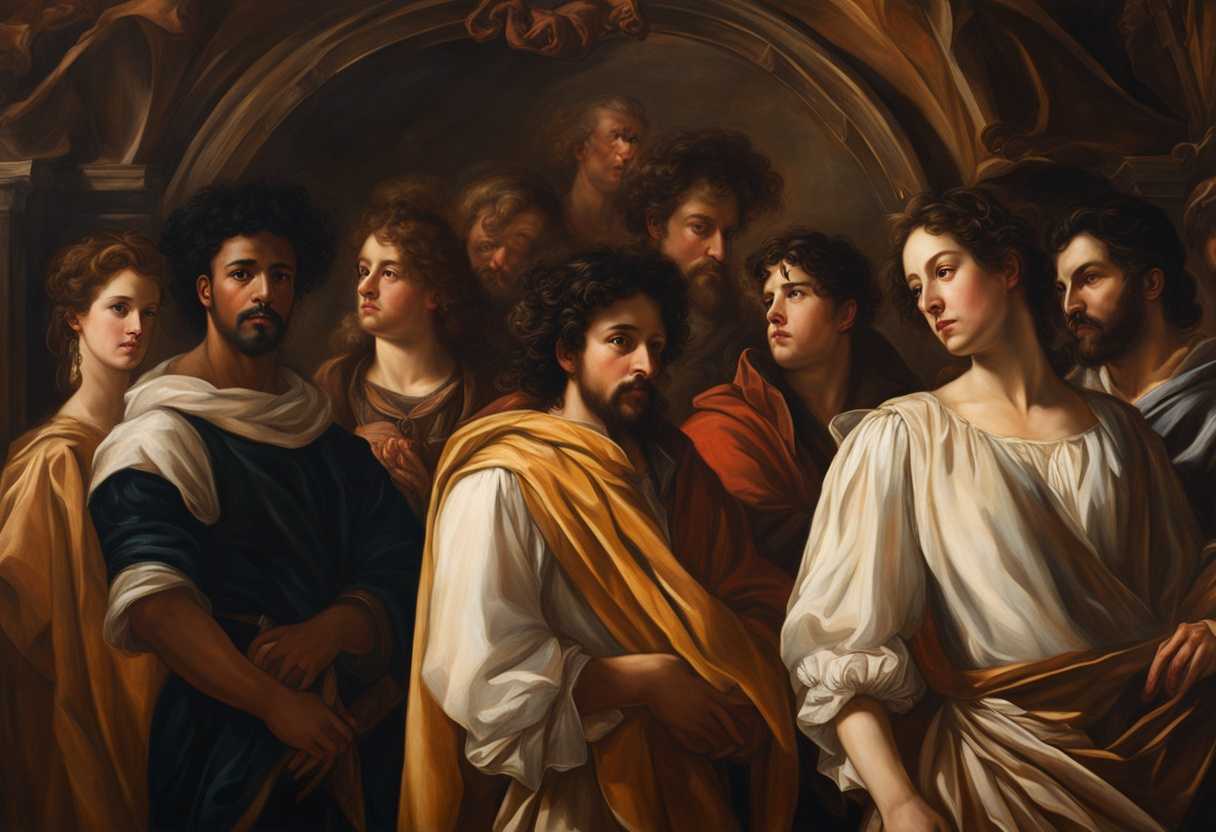
Setting the Scene for 1 Corinthians 1:26-27
In 1 Corinthians chapter 1, the apostle Paul sets the scene in the bustling city of Corinth, a diverse and cosmopolitan hub of trade and culture in ancient Greece. The Corinthian church was a mix of people from various backgrounds, including Jews, Greeks, and Romans. Paul, writing to the Corinthians, addresses the divisions and conflicts that were arising among them.
In this particular passage (1 Corinthians 1:26-27), Paul highlights the fact that not many of the Corinthian believers were considered wise by human standards, influential, or of noble birth. Instead, God chose to work through the foolish, weak, and lowly in the world to shame the wise and strong. The scene is set in a humble meeting place where believers from different walks of life gather to hear Paul’s words of wisdom and encouragement.
Among those present are former idol worshippers, slaves, merchants, and even a few wealthy patrons who had come to faith in Christ. The room is dimly lit by oil lamps, and the air is filled with the scent of incense burning in the background. As Paul speaks, his words resonate with power and authority, challenging the Corinthians to set aside their worldly status and embrace the foolishness of the cross. The scene is a vivid reminder that God’s ways are not always the ways of the world, and His wisdom often confounds human understanding.
What is 1 Corinthians 1:26-27 about?
This verse reminds us that God’s ways are often contrary to the ways of the world. God chooses to work through the weak and foolish to showcase His power and wisdom in a society that values strength and wisdom. It challenges us to reconsider our definitions of strength and wisdom and to recognize that God’s standards are different from those of the world.
Think about it, why would God choose the weak and foolish over the strong and wise? Perhaps it is to show that His power is made perfect in weakness, as mentioned in another part of the Bible. This verse calls us to humble ourselves and acknowledge that our strength and wisdom are nothing compared to the sovereignty and wisdom of God. It invites us to trust in God’s unique way of working through the seemingly insignificant to accomplish great things. So, let’s reflect on this verse and consider how we can embrace our weaknesses and foolishness, knowing that God can use them for His glory.
Understanding what 1 Corinthians 1:26-27 really means
To provide a meaningful commentary on 1 Corinthians 1:26-27, let’s follow a structured approach that delves into the context, interpretation, and application of the passage.
Context and Background
Paul’s first letter to the Corinthians addresses a community struggling with divisions and a sense of superiority among its members. These verses are part of a broader argument where Paul emphasizes God’s wisdom over human wisdom. The passage invites believers to reflect on their own calling and the nature of God’s choices.
Breakdown and Interpretation
Paul begins by urging the Corinthians to consider their calling, reminding them that not many were wise, powerful, or of noble birth by worldly standards. This sets the stage for a profound truth: God often chooses what the world considers foolish and weak to shame the wise and strong. This choice underscores God’s power and wisdom, which starkly contrasts with human values.
Other passages, such as James 2:5 (“Has not God chosen those who are poor in the eyes of the world to be rich in faith and to inherit the kingdom?”), echo this theme. Both passages emphasize that God values faith and humility over worldly status.
Meaningful Phrases and Their Significance
The phrase “not many of you were wise by human standards” challenges readers to reconsider their value systems. This radical call to humility challenges a society that often prizes intelligence, wealth, and status. Paul isn’t dismissing wisdom or power outright; rather, he is highlighting that these are not prerequisites for God’s calling.
Similarly, “God chose the foolish things of the world to shame the wise” is a profound statement about divine reversal. It reassures those who feel inadequate by worldly measures, reminding them that God’s criteria are different. God’s choices are purposeful, designed to reveal His glory and wisdom. This passage remains highly relevant in today’s world, where success is often measured by achievements and accolades. It speaks to anyone who has ever felt overlooked or undervalued. It reminds us that God’s approval does not depend on societal standards. A member of our community, once dismissed as uneducated and insignificant, found her calling in serving others with compassion and humility. Her impact has been profound, touching lives in ways that those with more conventional achievements might never have. Her story is a living testament to the truth of this passage. Ask yourself: What standards do I use to measure worth, both in myself and others, as you reflect on this passage? How can I align my values more closely with God’s? This introspection can lead to a more inclusive and compassionate outlook, mirroring the divine reversal Paul talks about.
Conclusion
1 Corinthians 1:26-27 invites us to see through God’s eyes, valuing what He values. It challenges societal norms and offers a comforting reminder that God’s wisdom often defies human expectations. We can foster a community that values faith, humility, and divine wisdom over worldly accolades by embracing this perspective.
Do we value humility over worldly status?
The verse highlights the idea that God often chooses those who are not considered wise, influential, or of high status by worldly standards to be His followers. This emphasizes the importance of humility in the eyes of God, as He values a person’s heart and faith over their earthly success or social standing. God showcases that true worth and value come from one’s relationship with Him rather than their position in society by choosing ordinary and seemingly insignificant individuals to carry out His work.
Therefore, the verse encourages us to prioritize humility over worldly status. It challenges us to shift our focus from seeking recognition and approval from the world to seeking validation and purpose from God. Embracing humility allows us to recognize that we are all equal in God’s eyes, regardless of our achievements or societal position, and that our worth comes from our identity as His children. This perspective invites us to humbly serve others and live out our faith authentically, trusting in God’s plan and provision rather than relying on our own status or accomplishments.
Application
Think of your life as a busy workday or a bustling family gathering. 1 Corinthians 1:26-27 reminds us that God values the humble and lowly. Imagine God choosing the humble like you to build something great. In your daily challenges, be open to humility so God’s power shines through your small moments. Will you let God’s strength work through your everyday actions?

Reverend Michael Johnson is an experienced Church Minister with a profound expertise in spirituality and guidance. With a serene presence and a compassionate heart, he has faithfully served his congregation for over 20 years, leading them on a spiritual journey towards inner peace and enlightenment. Reverend Johnson’s extensive knowledge of religious philosophies and profound understanding of human nature have made him a trusted confidant and mentor to many, as he seamlessly weaves his profound wisdom into life teachings. Reverend Johnson’s calming demeanor and empathetic nature continue to uplift and heal souls, nurturing a sense of unity and tranquility within his community.