
1 Kings 12:25-33 is about the story of King Jeroboam setting up golden calves in Bethel and Dan as objects of worship, leading the people of Israel to turn away from the true God and violating the first commandment by creating idols.
25 Then Jeroboam built Shechem in the hill country of Ephraim and lived there. And he went out from there and built Penuel.
26 And Jeroboam said in his heart, “Now the kingdom will turn back to the house of David.
27 If this people go up to offer sacrifices in the temple of the Lord at Jerusalem, then the heart of this people will turn again to their lord, to Rehoboam king of Judah, and they will kill me and return to Rehoboam king of Judah.”
28 So the king took counsel and made two calves of gold. And he said to the people, “You have gone up to Jerusalem long enough. Behold your gods, O Israel, who brought you up out of the land of Egypt.”
29 And he set one in Bethel, and the other he put in Dan.
30 Then this thing became a sin, for the people went as far as Dan to be before one.
31 He also made temples on high places and appointed priests from among all the people, who were not of the Levites.
32 And Jeroboam appointed a feast on the fifteenth day of the eighth month like the feast that was in Judah, and he offered sacrifices on the altar. So he did in Bethel, sacrificing to the calves that he made. And he placed in Bethel the priests of the high places that he had made.
33 He went up to the altar that he had made in Bethel on the fifteenth day in the eighth month, in the month that he had devised from his own heart. And he instituted a feast for the people of Israel and went up to the altar to make offerings.
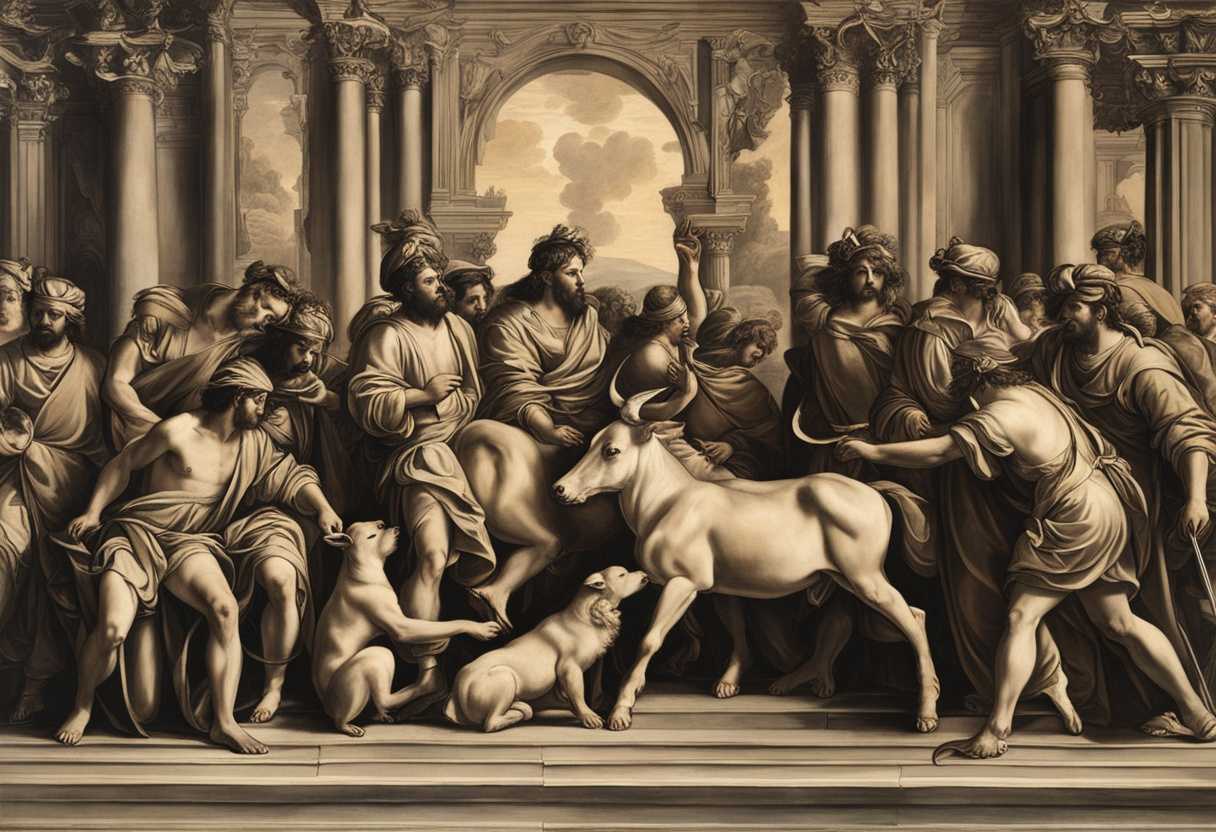
Setting the Scene for 1 Kings 12:25-33
In 1 Kings chapter 12, we find ourselves in the kingdom of Israel shortly after the death of King Solomon. Rehoboam, Solomon’s son, has ascended to the throne, but the people are discontent with his leadership. Jeroboam, a former official under Solomon, has returned from exile and is leading a rebellion against Rehoboam’s rule.
The scene is set in the city of Shechem, where Jeroboam has gathered the people of Israel to discuss their grievances with Rehoboam. The atmosphere is tense as the crowd listens intently to Jeroboam’s words, feeling a sense of unity and purpose in their desire for change. The surroundings are filled with the murmurs of the crowd, the dust kicked up from their sandals, and the weight of history hanging in the air as they stand at a crossroads in the kingdom’s fate.
As Jeroboam speaks passionately about the heavy burdens imposed by Solomon and now Rehoboam, the people grow more resolute in their decision to follow him. They are on the brink of a monumental shift in power and allegiance, as they prepare to break away from the house of David and establish a new kingdom under Jeroboam’s leadership. The stage is set for a pivotal moment in Israel’s history, as the people’s discontent and Jeroboam’s ambition converge to shape the future of the nation.
What is 1 Kings 12:25-33 about?
Oh, the story of King Jeroboam and the golden calves is a cautionary tale of the dangers of idolatry and straying from the true path of faith. Pagan cultures in biblical times commonly practiced worshiping golden calves, symbolizing false gods and materialism. King Jeroboam’s decision to set up these idols for worship was not only a betrayal of the one true God but also a turning away from the teachings and commandments given to the people of Israel.
Imagine the disappointment and anger that God must have felt seeing His people led astray by these golden calves, symbols of greed and disobedience. The verse serves as a powerful reminder of the importance of staying true to our beliefs and not allowing material distractions to derail our spiritual journey. It also highlights the consequences of putting worldly desires above our faith and the potential harm that can come from succumbing to the temptations of idolatry. We should learn from King Jeroboam’s mistakes and remain steadfast in our devotion to God, resisting the allure of false idols that may lead us astray.
Understanding what 1 Kings 12:25-33 really means
Introduction and Context
To understand 1 Kings 12:25-33, we first need to establish the context. Jeroboam, the first king of the northern kingdom of Israel, faces the challenge of keeping his people from returning to the southern kingdom of Judah. This passage highlights his decisions to build new worship centers and introduce new religious practices. These actions have profound theological and moral implications.
Analysis of Key Phrases
Jeroboam’s decision to make “two calves of gold” and tell the people, “Here are your gods, O Israel,” is deeply troubling. This phrase echoes the infamous incident of the golden calf in Exodus 32, where the Israelites, led astray, built an idol. Jeroboam’s actions directly contravene the first two commandments, which prohibit idolatry and the worship of other gods (Exodus 20:3-4).
Theological Implications
Jeroboam’s establishment of alternative worship centers in Bethel and Dan is a calculated move to prevent his subjects from going to Jerusalem to worship. This decision underscores a fundamental issue: placing political expediency above spiritual fidelity. Jeroboam creates his own religious system, leading his people into sin and setting a dangerous precedent that prioritizes human authority over divine command.
Relevance to Modern Readers
Today, we may not build golden calves, but we can still fall into the trap of idolatry by prioritizing material success, personal comfort, or social approval over our relationship with God. Jeroboam’s story is a cautionary tale about the dangers of compromising spiritual integrity for convenience or control. It challenges us to examine our own lives and ask, “Are there areas where I am letting worldly concerns overshadow my commitment to God?”
Connecting with Other Passages
Jeroboam’s actions contrast sharply with the example of King David, who, despite his flaws, sought to honor God’s commands and centralize worship in Jerusalem. Psalm 51:10, where David asks God to “create in me a clean heart,” underscores the importance of genuine repentance and devotion. Jesus emphasizes worship “in spirit and truth” (John 4:24) in the New Testament, reminding us that authentic worship cannot be manufactured or manipulated for personal gain. A small church once faced a significant financial crisis. Instead of compromising their values to attract more members or donations, the congregation decided to trust in God’s provision. They focused on genuine worship and serving their community. Over time, their faithfulness bore fruit, not just in financial stability, but in spiritual growth and community impact. This modern-day example echoes the message of 1 Kings 12:25-33: true worship and faithfulness to God’s commands will ultimately lead to blessings, even if the path isn’t immediately clear or easy. Reflecting on 1 Kings 12:25-33 reminds us of the importance of steadfastness in our faith and the dangers of allowing external pressures to dictate our spiritual practices. Jeroboam’s story serves as a powerful warning to prioritize our relationship with God above all else, trusting in His guidance and provision. Let us strive to worship in spirit and truth, aligning our hearts and actions with God’s will.
How can we guard against compromising our worship?
We can guard against compromising our worship by cultivating a strong foundation in our faith. It is essential to stay rooted in the teachings of our faith and not be swayed by false ideologies or practices. We can build a firm foundation that will help protect us from compromising our worship by continuously studying and understanding our beliefs.
Another way to guard against compromising our worship is to be vigilant in discerning what influences we allow into our lives. We can help safeguard our worship from being diluted or distorted by outside influences by surrounding ourselves with positive and uplifting sources of guidance, such as fellow believers, reputable religious texts, and trusted spiritual leaders.
Lastly, we can guard against compromising our worship by regularly examining our intentions and motivations behind our worship practices. It is important to worship with a sincere and pure heart, free from any ulterior motives or desires for personal gain. We can ensure that our worship remains authentic and in line with the true essence of our faith by approaching it with humility, gratitude, and devotion.
Application
Just like juggling work and family, our spiritual life demands our focus and commitment. Don’t let the distractions of success or the lure of easy solutions turn you away from your true path. Reflect on your choices and align them with God’s will. Prioritize your relationship with Him above all. Are you prepared to clear the clutter and refocus your heart on what truly matters?

Reverend Michael Johnson is an experienced Church Minister with a profound expertise in spirituality and guidance. With a serene presence and a compassionate heart, he has faithfully served his congregation for over 20 years, leading them on a spiritual journey towards inner peace and enlightenment. Reverend Johnson’s extensive knowledge of religious philosophies and profound understanding of human nature have made him a trusted confidant and mentor to many, as he seamlessly weaves his profound wisdom into life teachings. Reverend Johnson’s calming demeanor and empathetic nature continue to uplift and heal souls, nurturing a sense of unity and tranquility within his community.