
1 Kings 12:6-16 is about King Rehoboam’s foolish decision to reject the advice of the elders and instead listen to the young men, leading to the division of the kingdom of Israel.
6 Then King Rehoboam took counsel with the old men, who had stood before Solomon his father while he was yet alive, saying, “How do you advise me to answer this people?”
7 And they said to him, “If you will be a servant to this people today and serve them, and speak good words to them when you answer them, then they will be your servants forever.”
8 But he abandoned the counsel that the old men gave him and took counsel with the young men who had grown up with him and stood before him.
9 He said to them, “What do you advise that we answer this people who have said to me, ‘Lighten the yoke that your father put on us’?”
10 And the young men who had grown up with him said to him, “Thus shall you speak to this people who said to you, ‘Your father made our yoke heavy, but you lighten it for us,’ thus shall you say to them, ‘My little finger is thicker than my father’s thighs.
11 And now, whereas my father laid on you a heavy yoke, I will add to your yoke. My father disciplined you with whips, but I will discipline you with scorpions.
12 So Jeroboam and all the people came to Rehoboam the third day, as the king said, “Come to me again the third day.”
13 And the king answered the people harshly, and forsaking the counsel that the old men had given him,
14 and he spoke to them according to the counsel of the young men, saying, “My father made your yoke heavy, but I will add to your yoke. My father disciplined you with whips, but I will discipline you with scorpions.”
15 So the king did not listen to the people, for it was a turn of affairs brought about by the Lord that he might fulfill his word, which the Lord spoke by Ahijah the Shilonite to Jeroboam the son of Nebat.
16 So when all Israel saw that the king did not listen to them, the people answered the king, “What portion do we have in David? We have no inheritance in the son of Jesse. To your tents, O Israel! Look now to your own house, David.” So Israel went to their tents.
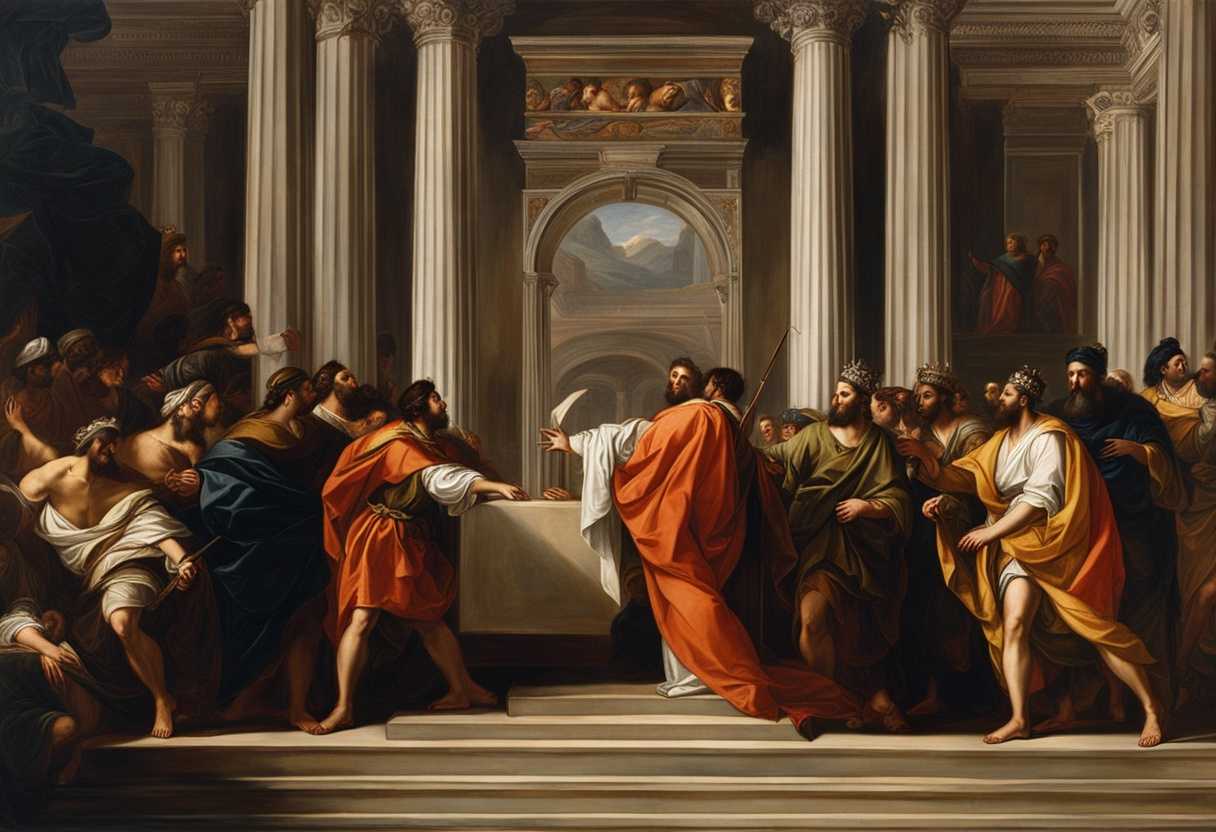
Setting the Scene for 1 Kings 12:6-16
In 1 Kings chapter 12, the scene is set in the kingdom of Israel shortly after the death of King Solomon. Rehoboam, Solomon’s son, has just ascended to the throne. The people of Israel, led by Jeroboam, come to Rehoboam with a request to lighten the heavy burden of taxes and labor that Solomon had placed upon them. Rehoboam seeks counsel from the elders who had served his father, and they advise him to be kind and considerate to the people, and in return, they will serve him faithfully.
However, Rehoboam also seeks advice from his younger peers, who urge him to rule with an iron fist and increase the people’s burden. Ignoring the wisdom of the elders, Rehoboam follows the counsel of his friends and responds harshly to the people’s plea for relief. This leads to a rebellion, with Jeroboam and the northern tribes of Israel breaking away from Rehoboam’s rule, setting the stage for the division of the kingdom into Israel in the north and Judah in the south.
The scene is tense and charged with emotion as Rehoboam faces a critical decision that will determine the future of the kingdom. The setting is likely a grand hall or throne room, with advisors, elders, and nobles gathered around the new king, each offering their counsel and opinions. The atmosphere is thick with anticipation and uncertainty as Rehoboam’s choice sets off a chain of events that will shape the course of Israel’s history.
What is 1 Kings 12:6-16 about?
Rehoboam’s pride and arrogance led to the division of Israel, which was a key part of God’s plan in this verse. Rehoboam’s refusal to heed wise counsel and his insistence on maintaining a harsh rule over the people resulted in a rebellion led by Jeroboam. This rebellion ultimately led to the division of the kingdom of Israel into two separate entities – the northern kingdom of Israel and the southern kingdom of Judah.
Have you ever reflected on how pride can blind us and lead us to make decisions that have far-reaching consequences? Rehoboam’s inability to humble himself and listen to advice not only cost him the loyalty of the people but also paved the way for the fulfillment of God’s plan for Israel. It’s a powerful reminder of the importance of humility, wisdom, and the consequences of our actions on a larger scale. God works through human choices and circumstances to bring about His divine will, reminding us of the intricate ways in which we ponder on Rehoboam’s story. Despite the mistakes and failures of individuals like Rehoboam, God’s plan and purposes prevail. It challenges us to consider how our own actions and attitudes can either align with or hinder God’s ultimate plans. We should strive to be humble, seek wise counsel, and be mindful of the ripple effects our choices can have in fulfilling God’s purposes in our lives and in the world around us.
Understanding what 1 Kings 12:6-16 really means
In the historical setting of 1 Kings 12:6-16, we find Rehoboam, the newly crowned king of Israel, facing a crucial moment as the people approach him to alleviate the heavy burdens imposed by his father, Solomon. The request to “lighten the harsh labor and the heavy yoke” reflects the people’s longing for a more compassionate and fair leadership. This plea sets the stage for a pivotal decision that will shape Rehoboam’s reign. The key characters in this narrative include Rehoboam himself, the elders who served under Solomon, and the young men who grew up with Rehoboam.
As the elders advise Rehoboam to “be a servant to these people,” they emphasize the essence of true leadership as one of humility and service rather than dominance. In contrast, the arrogant declaration of the young men, boasting that “my little finger is thicker than my father’s waist,” reveals a mindset of pride and a lack of empathy. The contrast between these two perspectives highlights the importance of humility and empathy in effective leadership. The elders’ counsel echoes timeless wisdom found in biblical passages like Proverbs 15:1, emphasizing the power of a gentle response to defuse conflict.
The relevance of this passage extends beyond its historical context, speaking to universal principles of leadership, decision-making, and empathy. The concept of servant leadership, exemplified by Jesus in Matthew 20:26-28, emphasizes the importance of serving others to achieve true greatness. Similarly, James 1:19 underscores the value of listening, a trait essential for leaders to understand the needs and concerns of those they lead. In today’s world, where leadership is often associated with power and authority, the story of Rehoboam serves as a poignant reminder of the virtues of humility and compassion.
To illustrate the impact of these principles in modern contexts, consider a manager faced with employees requesting flexibility in working hours. By choosing to listen, empathize, and consider their needs, the manager can foster a positive work environment and enhance productivity. This parallels how Rehoboam could have united his kingdom by heeding wise counsel and prioritizing the well-being of his people. Looking at historical examples like Nelson Mandela, whose servant leadership brought healing and reconciliation to a divided nation, we see the transformative power of humility and empathy in leadership.
In conclusion, the passage from 1 Kings 12:6-16 offers a timeless lesson on the essence of true leadership. It challenges us to lead with humility, seek wise counsel, and prioritize the well-being of those under our care. By embodying these principles, we can cultivate more just, compassionate, and effective communities, fostering a legacy of servant leadership that transcends time and culture.
How can we respond with humility in moments of conflict?
Responding with humility in moments of conflict can require setting aside our pride and ego. It involves acknowledging that we may not have all the answers and being willing to listen to the perspectives and concerns of others. Showing humility can create a space for open communication and understanding, which can ultimately lead to resolution and reconciliation.
Responding with humility in moments of conflict also involves recognizing that we are not infallible and that we may have contributed to the conflict in some way. Taking responsibility for our actions and words can help defuse tensions and pave the way for finding a mutually agreeable solution. Humility allows us to approach the situation with a sense of openness and a willingness to work towards a positive outcome, even if it means making concessions or compromises.
When faced with conflict, it is important to remember that humility does not equate to weakness. Instead, it reflects strength of character and a willingness to prioritize harmony and understanding over being “right” or winning an argument. We can lead by example and foster a culture of respect, empathy, and cooperation in our relationships and communities by embodying humility in moments of conflict.
Application
In the journey of life, decisions are the milestones that shape our path. Let us be like Rehoboam, seeking divine guidance in our modern-day crossroads. Trust in the wisdom from above, for it lights the way in the midst of uncertainty. Will you choose to anchor your choices in the unwavering counsel of God, paving a way of clarity and purpose in this complex world?

Reverend Michael Johnson is an experienced Church Minister with a profound expertise in spirituality and guidance. With a serene presence and a compassionate heart, he has faithfully served his congregation for over 20 years, leading them on a spiritual journey towards inner peace and enlightenment. Reverend Johnson’s extensive knowledge of religious philosophies and profound understanding of human nature have made him a trusted confidant and mentor to many, as he seamlessly weaves his profound wisdom into life teachings. Reverend Johnson’s calming demeanor and empathetic nature continue to uplift and heal souls, nurturing a sense of unity and tranquility within his community.