
1 Kings 16:29-34 is about King Ahab’s reign of evil in Israel, leading the people into idolatry and sin, which ultimately brings about God’s judgment through the prophet Elijah.
29 In the thirty-eighth year of Asa king of Judah, Ahab the son of Omri began to reign over Israel, and Ahab the son of Omri reigned over Israel in Samaria twenty-two years.
31 And as if it had been a light thing for him to walk in the sins of Jeroboam the son of Nebat, he took for his wife Jezebel the daughter of Ethbaal king of the Sidonians, and went and served Baal and worshiped him.
31 And as if it had been a light thing for him to walk in the sins of Jeroboam the son of Nebat, he took for his wife Jezebel the daughter of Ethbaal king of the Sidonians, and went and served Baal and worshiped him.
32 And he erected an altar for Baal in the house of Baal, which he built in Samaria.
33 And Ahab made an Asherah. Ahab did more to provoke the Lord, the God of Israel, to anger than all the kings of Israel who were before him.
34 In his days Hiel of Bethel built Jericho. He laid its foundation at the cost of Abiram his firstborn, and set up its gates at the cost of his youngest son Segub, according to the word of the Lord, which he spoke by Joshua the son of Nun.
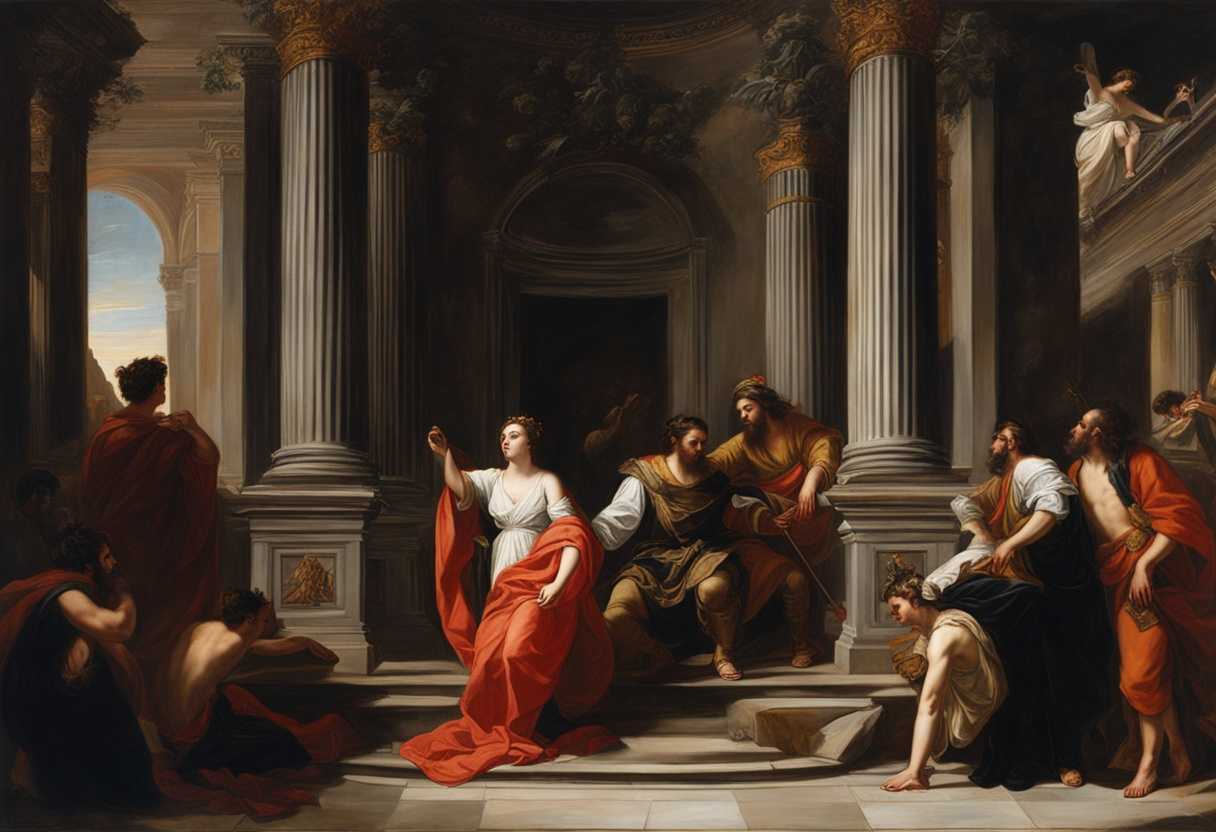
Setting the Scene for 1 Kings 16:29-34
In 1 Kings chapter 16, we find ourselves in the kingdom of Israel during a tumultuous time. Ahab, the son of Omri, has ascended to the throne, succeeding his father as king. Ahab’s reign is marked by his marriage to Jezebel, a Phoenician princess who introduces the worship of Baal to Israel, leading the people astray from the worship of the one true God.
The scene unfolds in the royal court of King Ahab, where he is surrounded by his advisors and officials. Jezebel, with her commanding presence, stands by his side, exerting her influence over the king and the affairs of the kingdom. The atmosphere is tense as the people of Israel are divided between those loyal to the worship of Baal and those who remain faithful to the God of their ancestors.
As Ahab and Jezebel consolidate their power, the prophet Elijah emerges as a voice of opposition, challenging the king and queen to repent and turn back to the Lord. The stage is set for a dramatic showdown between the forces of idolatry and the prophetic call to righteousness, setting the scene for the unfolding drama that will shape the course of Israel’s history.
What is 1 Kings 16:29-34 about?
Let’s reflect on this passage together. King Ahab’s reign in 1 Kings 16:29-34 is characterized by wickedness, idolatry, and disobedience to God. Ahab’s marriage to Jezebel, a woman who advocated for the worship of false gods, further led Israel astray from the path of righteousness. This narrative serves as a cautionary tale, emphasizing the destructive consequences of turning away from God and embracing sinful practices. King Ahab’s story prompts us to ponder the significance of leadership and the influence it holds over a nation as we delve into it.
We are prompted by King Ahab’s story to ponder the significance of leadership and the influence it holds over a nation as we delve into it. Ahab’s leadership not only impacted his own spiritual journey but also had far-reaching effects on the people of Israel, leading them down a dangerous path of idol worship. This account serves as a stark reminder of the importance of leaders who uphold moral values, righteousness, and faith in God to guide their people towards goodness and obedience.
Reflecting on King Ahab’s reign challenges us to evaluate our own lives and leadership roles. Are we staying true to our faith and values like faithful leaders, or are we at risk of falling into the same pitfalls of idolatry and disobedience? Let us strive to lead with integrity, righteousness, and a steadfast commitment to following God’s will, ensuring that our influence uplifts and inspires others towards the light of truth and righteousness by taking heed of Ahab’s story.
Understanding what 1 Kings 16:29-34 really means
In 1 Kings 16:29-34, we delve into the reign of Ahab, son of Omri, over Israel, and the pivotal role played by his marriage to Jezebel, daughter of Ethbaal, king of the Sidonians. Ahab’s rule is marred by severe idolatry, as he not only neglects God’s commandments but actively promotes the worship of Baal, leading Israel astray. The construction of altars for Baal signifies a departure from Yahweh, solidifying the presence of idol worship in the land. Additionally, the rebuilding of Jericho by Hiel of Bethel, at the cost of his sons, serves as a grim fulfillment of Joshua’s curse, underscoring the consequences of disobedience to God’s decrees.
The phrase “Ahab son of Omri did more evil in the eyes of the Lord than any of those before him” starkly portrays the severity of Ahab’s transgressions and his significant deviation from God’s ways. His marriage to Jezebel not only symbolizes a political alliance but also ushers in the establishment of Baal worship in Israel, further distancing the nation from its true faith. Ahab’s act of setting up an altar for Baal in Samaria institutionalizes idol worship, directly contradicting the worship of Yahweh, as commanded by God.
This passage resonates with contemporary relevance, serving as a cautionary tale against straying from God and succumbing to the allure of idolatry in various forms prevalent today, such as materialism, power, and unhealthy relationships. It underscores the vital importance of adhering to God’s commandments and the dire consequences that disobedience can bring. Ahab and Jezebel’s story warns us about the detrimental impact of ungodly partnerships and alliances, urging us to be vigilant in our associations and choices.
Consider a scenario where a community leader prioritizes personal gain over ethical principles, forming alliances with corrupt individuals that lead the community down a path of moral decay. The repercussions of these decisions mirror the plight of Israel under Ahab’s rule, illustrating how leadership and individual choices can profoundly influence a community’s spiritual and moral trajectory. This modern parallel underscores the enduring relevance of the biblical narrative and its timeless lessons for contemporary society.
In conclusion, 1 Kings 16:29-34 serves as a poignant reminder of the significance of remaining steadfast in faith, avoiding the pitfalls of idolatry, and being wary of ungodly influences that can lead us astray. It prompts introspection among readers, encouraging them to evaluate the influences shaping their beliefs and actions, and to prioritize fidelity to God’s commandments in a world fraught with distractions and temptations.
How can we maintain loyalty to God amid temptations?
Maintaining loyalty to God amid temptations involves staying grounded in our faith and seeking His guidance constantly. It is essential to resist the allure of worldly temptations by keeping our focus on God’s teachings and relying on His strength to overcome any challenges that may come our way. We can find the support and encouragement needed to remain steadfast in our loyalty to God by staying connected to Him through prayer, studying the scriptures, and surrounding ourselves with like-minded believers. Remembering the consequences of straying from God’s path is crucial in the face of temptations. Reflecting on the negative outcomes that may result from giving in to temptations can serve as a powerful deterrent and remind us of the importance of remaining faithful to God. We can strengthen our resolve to stay loyal to God even when faced with challenging circumstances by understanding the destructive nature of sinful behaviors and staying vigilant in our commitment to righteousness.
Furthermore, cultivating a deep sense of gratitude for God’s blessings and recognizing His constant presence in our lives can also help us maintain loyalty amid temptations. We can develop a sense of reverence and awe that motivates us to honor God with our thoughts, words, and actions by acknowledging His goodness and faithfulness. Keeping a grateful heart and staying attuned to God’s unwavering love and grace can provide us with the motivation and strength needed to resist temptations and uphold our loyalty to Him.
Application
In the fast-paced race of life, don’t let sin slow you down. Take a moment to reassess your path and steer clear of distractions pulling you away from what’s truly important. It’s time to commit to a life guided by faith and righteousness. Will you choose to walk the righteous path and stay true to your beliefs, no matter the obstacles that may come your way?

Reverend Michael Johnson is an experienced Church Minister with a profound expertise in spirituality and guidance. With a serene presence and a compassionate heart, he has faithfully served his congregation for over 20 years, leading them on a spiritual journey towards inner peace and enlightenment. Reverend Johnson’s extensive knowledge of religious philosophies and profound understanding of human nature have made him a trusted confidant and mentor to many, as he seamlessly weaves his profound wisdom into life teachings. Reverend Johnson’s calming demeanor and empathetic nature continue to uplift and heal souls, nurturing a sense of unity and tranquility within his community.