
1 Kings 17:1-9 is about God providing for the prophet Elijah during a time of drought and scarcity, demonstrating His faithfulness and supernatural provision.
1 Now Elijah the Tishbite, of Tishbe in Gilead, said to Ahab, “As the Lord, the God of Israel, lives, before whom I stand, there shall be neither dew nor rain these years, except by my word.”
2 And the word of the Lord came to him:
3 “Depart from here and turn eastward and hide yourself by the brook Cherith, which is east of the Jordan.”
4 You shall drink from the brook, and I have commanded the ravens to feed you there.
5 So he went and did according to the word of the Lord. He went and lived by the brook Cherith that is east of the Jordan.
6 And the ravens brought him bread and meat in the morning, and bread and meat in the evening, and he drank from the brook.
7 And after a while the brook dried up, because there was no rain in the land.
8 Then the word of the Lord came to him,
9 “Arise, go to Zarephath, which belongs to Sidon, and dwell there. Behold, I have commanded a widow there to feed you.”
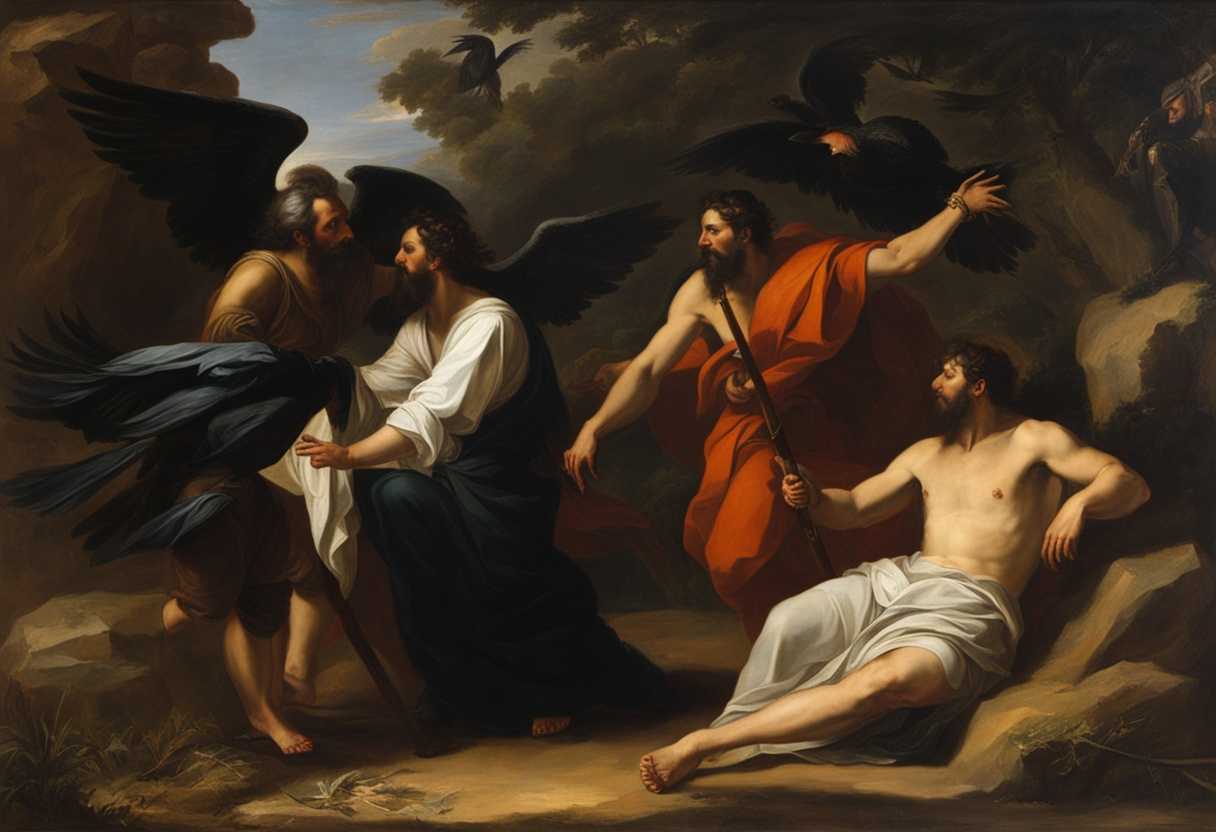
Setting the Scene for 1 Kings 17:1-9
In 1 Kings 17:1-9, we find the prophet Elijah standing before King Ahab in the land of Israel. The scene is set in a time of great drought and famine, a consequence of the people’s disobedience to God. Elijah, a bold and faithful prophet of the Lord, delivers a message to King Ahab, declaring that there will be no rain in the land except at his word. This bold proclamation sets the stage for a showdown between the power of God and the false gods worshipped by the people.
King Ahab, a wicked ruler who led the people into idolatry, is confronted by Elijah, who is guided by the hand of God. The tension is palpable as Elijah stands fearlessly before the king, delivering a message of judgment and warning. The setting is stark and desolate, mirroring the spiritual condition of the land. As the drought intensifies, Elijah is led by God to a place of refuge by the Brook Cherith, where he will be sustained by ravens and later by a widow in Zarephath. This pivotal moment marks the beginning of a series of miraculous events orchestrated by God through his faithful servant Elijah.
What is 1 Kings 17:1-9 about?
This verse is a powerful reminder of God’s faithfulness and provision even in the most dire circumstances. During the crippling drought, when all hope seemed lost, God did not forsake Elijah. Instead, He sent ravens to bring him food, a miraculous display of divine care and intervention.
Furthermore, when Elijah was on the brink of despair, exhausted and hungry, God orchestrated a meeting with a widow who shared her last meal with him. Despite her own scarcity, she selflessly obeyed God’s calling to provide for Elijah, and miraculously, her flour and oil never ran out. This verse illustrates how God can use unexpected sources to meet our needs, demonstrating His unlimited power and ability to provide for His children even in the most challenging circumstances.
Reflecting on this passage prompts us to ponder our own struggles and challenges. Do we trust in God’s provision and timing, even when circumstances seem bleak? Are we willing to step out in faith, like the widow, and be a vessel for God’s provision in the lives of others? Let this story of Elijah’s provision serve as a beacon of hope and a testimony to God’s unfailing love and care for His children.
Understanding what 1 Kings 17:1-9 really means
Introduction to the Passage
In 1 Kings 17:1-9, we are introduced to the prophet Elijah and his encounters with King Ahab, marking the commencement of Elijah’s ministry amidst a time of drought. This passage is rich in themes of faith, obedience, divine provision, and the sovereignty of God.
Verse Breakdown and Commentary
In verse 1, Elijah boldly declares his allegiance to the living God of Israel, setting himself apart from the idolatry prevalent under King Ahab’s reign. This declaration showcases Elijah’s unwavering faith and commitment to God, as seen in James 5:17-18, emphasizing the power of a righteous person’s prayer.
Verses 2-4 reveal God’s command for Elijah to hide in the Kerith Ravine, demonstrating God’s protective care and foreknowledge. This instruction highlights God’s provision and echoes the sentiments of Psalm 91:1-2, which speaks of God’s shelter for those who trust in Him.
Elijah’s obedience in verses 5-6 serves as a model of faith in action. His immediate compliance with God’s directive showcases trust and demonstrates God’s miraculous provision through ravens, illustrating His ability to provide in unexpected ways. This provision is reminiscent of Jesus’ words in Matthew 6:26, encouraging trust in God’s care.
In verses 7-9, God commands Elijah to go to Zarephath of Sidon, a foreign land, where a widow will provide for him. This directive underscores God’s sovereignty over all nations and His plan to provide through unexpected sources, emphasizing humility and trust. This event is referenced in Luke 4:25-26, illustrating God’s concern for Gentiles and the marginalized.
Relevance to People Today
The narrative of Elijah’s faith and obedience during a time of crisis resonates with modern-day believers facing uncertainty. Just as Elijah trusted in God’s provision, individuals today can find solace in God’s care and guidance during personal or global challenges. For instance, someone losing their job may discover unexpected support and opportunities through faith and community, akin to Elijah’s experience of divine provision.
God’s Sovereignty and Care
1 Kings 17:1-9 reassures readers of God’s sovereignty and His attentive care, even in the midst of dire circumstances. Trusting in God’s plan, even when it leads to unfamiliar or challenging situations, can result in growth and unforeseen blessings.
Meaningful Phrases and Detailed Explanation
The phrase “As the Lord, the God of Israel, lives…” emphasizes the living nature of God, contrasting with the lifeless idols worshipped in Israel. “I have ordered the ravens to feed you there” highlights God’s miraculous provision and His authority over creation, showcasing His ability to care for His people through unconventional means. “Go at once to Zarephath of Sidon and stay there” demonstrates God’s inclusive care, extending beyond Israel to a Gentile widow, foreshadowing the universal reach of the Gospel.
By reflecting on these verses, readers can draw encouragement to trust in God’s provision, maintain obedience in faith, and acknowledge His sovereignty in all aspects of life.
What provisions are we trusting in during scarcity?
During times of scarcity, we trust in the provision and guidance of God. We trust that God will provide for our needs, just as the Lord provided for Elijah during the drought by sending him to the Kerith Ravine and commanding ravens to bring him bread and meat. This story reminds us that God is aware of our circumstances and is able to sustain us even in the midst of scarcity.
Additionally, we trust in the sovereignty of God during times of lack. The fact that God sent ravens to feed Elijah shows that He can use unconventional means to provide for His people. This teaches us to rely not on our own understanding or resources, but to have faith that God is in control and will meet our needs according to His perfect plan. We are encouraged to trust in the faithfulness and provision of God during times of scarcity. We are called to trust in God’s promises and remain faithful to Him even when resources are scarce, just as Elijah obeyed the word of the Lord and was provided for. This story serves as a reminder that God is able to sustain us in the most challenging circumstances, and we can find hope and security in His abundant provision.
Application
Let’s draw inspiration from Elijah’s story in 1 Kings 17:1-9 and embrace unwavering faith and obedience in our own lives. Like Elijah, let’s trust in God’s timing and provision, stepping out in faith without hesitation. Just as God guided and sustained Elijah, He will do the same for us if we take that leap of faith. Will you embrace God’s calling today and walk the path of faith just like Elijah did?

Reverend Michael Johnson is an experienced Church Minister with a profound expertise in spirituality and guidance. With a serene presence and a compassionate heart, he has faithfully served his congregation for over 20 years, leading them on a spiritual journey towards inner peace and enlightenment. Reverend Johnson’s extensive knowledge of religious philosophies and profound understanding of human nature have made him a trusted confidant and mentor to many, as he seamlessly weaves his profound wisdom into life teachings. Reverend Johnson’s calming demeanor and empathetic nature continue to uplift and heal souls, nurturing a sense of unity and tranquility within his community.