
1 Kings 17:10-16 is about the faith and obedience of a widow in Zarephath who generously provides for the prophet Elijah during a time of drought, demonstrating God’s faithfulness and provision even in times of scarcity.
10 So he arose and went to Zarephath. And when he came to the gate of the city, behold, a widow was there gathering sticks. And he called to her and said, “Bring me a little water in a vessel, that I may drink.”
11 And as she was going to bring it, he called to her and said, “Bring me a morsel of bread in your hand.”
12 And she said, “As the Lord your God lives, I have nothing baked, only a handful of flour in a jar and a little oil in a jug. And now I am gathering a couple of sticks that I may go in and prepare it for myself and my son, that we may eat it and die.”
13 And Elijah said to her, “Do not fear; go and do as you have said. But first make me a little cake of it and bring it to me, and afterward make something for yourself and your son.
14 For thus says the Lord, the God of Israel, ‘The jar of flour shall not be spent, and the jug of oil shall not be empty, until the day that the Lord sends rain upon the earth.’”
15 She went and did as Elijah said. And she and he and her household ate for many days.
16 The jar of flour was not spent, neither did the jug of oil become empty, according to the word of the Lord that he spoke by Elijah.
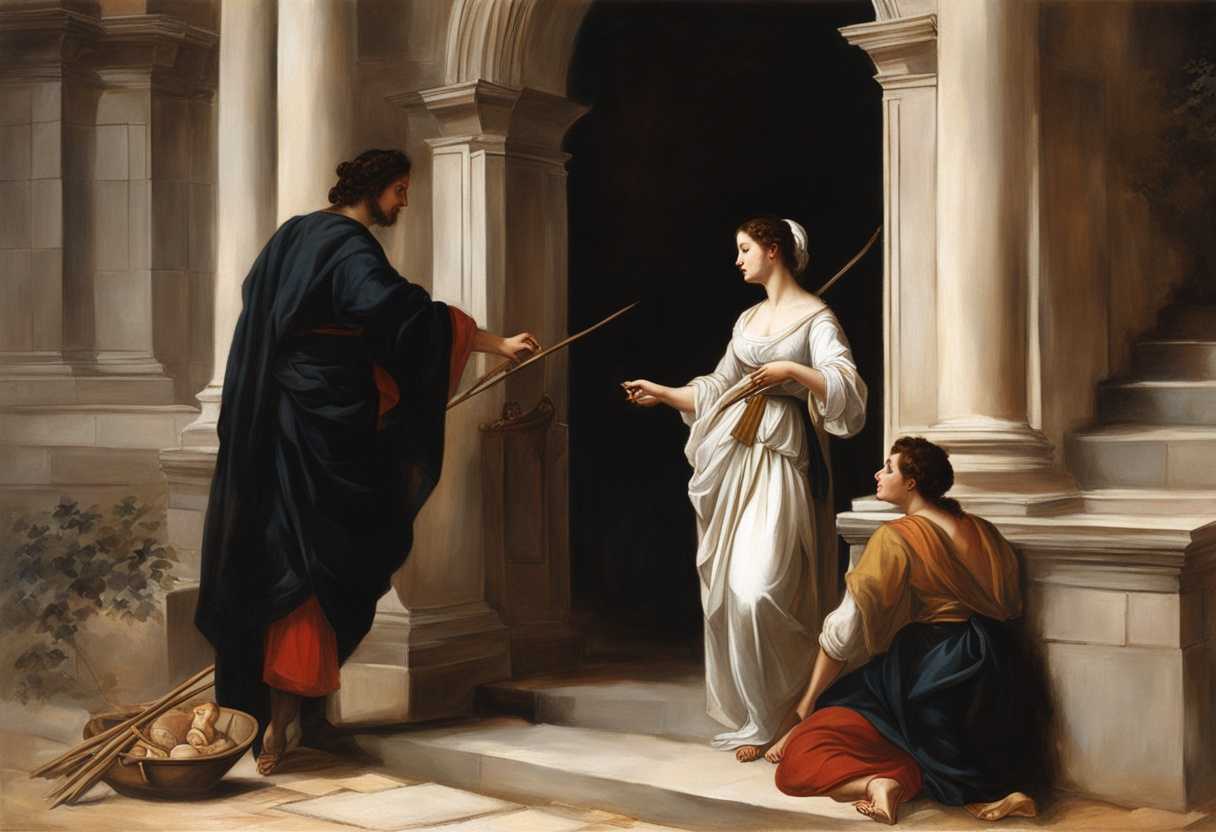
Setting the Scene for 1 Kings 17:10-16
In 1 Kings chapter 17, we find the prophet Elijah being led by the Lord to the town of Zarephath. As he arrives at the town gate, he sees a widow gathering sticks. This widow is in a desperate situation, as she is preparing to make a final meal for herself and her son before they succumb to starvation. The land is in the midst of a severe drought, and resources are scarce.
Elijah approaches the widow and asks her for some water and a piece of bread. The widow explains her dire circumstances, expressing her lack of resources and her belief that she and her son are facing imminent death. Despite her own desperate situation, she agrees to Elijah’s request and promises to make a small cake for him first. In an incredible display of faith, Elijah assures her that the Lord will provide, and miraculously, the widow’s jar of flour and jug of oil do not run out until the drought ends.
The scene is one of desperation and hopelessness, with the widow and her son facing starvation. Elijah’s arrival brings a glimmer of hope and faith into their lives, as he demonstrates the power of God’s provision in the midst of scarcity. The dusty streets of Zarephath are filled with a sense of anticipation as the widow prepares the last meal, unaware of the miraculous abundance that is about to unfold before her eyes.
What is 1 Kings 17:10-16 about?
Isn’t it amazing how in times of desperation and need, God shows His miraculous provision? God provides for the widow and Elijah in a way that defies human understanding, showing incredible kindness and care in this verse. The widow was facing the daunting reality of preparing her last meal for herself and her son before succumbing to hunger and poverty. However, God intervenes in a remarkable manner by multiplying the meager resources of flour and oil, ensuring that they would not run out until the drought ended.
This narrative teaches us valuable lessons about God’s faithfulness, compassion, and ability to provide for His children in the most unexpected ways. It challenges us to trust in God’s provision, even when circumstances seem bleak and resources are scarce. God can also meet our needs and provide for us beyond our wildest expectations, just as He sustained the widow and Elijah. We are reminded that God is not limited by human constraints and that His love knows no bounds. Let this verse be a source of encouragement and a reminder that God’s provision is abundant and never-ending for those who put their trust in Him.
Understanding what 1 Kings 17:10-16 really means
In the narrative of Elijah in 1 Kings 17:10-16, we witness a poignant encounter between the prophet and a destitute widow in the midst of a severe famine. Elijah, guided by God, approaches the widow in Zarephath, where she is gathering sticks to prepare a final meal for herself and her son before succumbing to starvation. The desperation of the widow’s situation is palpable, highlighting the dire circumstances faced by many during times of scarcity and hardship.
Amidst this backdrop of despair, the widow’s response to Elijah’s presence is marked by a profound declaration of faith: “As surely as the Lord your God lives.” This acknowledgment not only reveals her recognition of Elijah’s God but also underscores her unwavering trust in the midst of adversity. Despite possessing only “a handful of flour in a jar and a little olive oil in a jug,” symbols of scarcity and impending lack, the widow’s faith shines through as she prepares to share her meager provisions with Elijah.
Elijah, acting as a vessel of God’s promise, assures the widow that her act of faith will not go unrewarded. He proclaims that “the jar of flour will not be used up and the jug of oil will not run dry,” a miraculous pledge of God’s provision and faithfulness in the face of scarcity. This divine intervention serves as a testament to God’s ability to sustain His people even in the most challenging circumstances, reaffirming the widow’s faith and obedience as catalysts for experiencing God’s abundant blessings.
The timeless message encapsulated in this passage resonates with contemporary audiences, offering a beacon of hope and reassurance in times of uncertainty and need. Just as the widow’s unwavering faith led to miraculous provision, we are reminded of God’s faithfulness in meeting our needs, even when resources seem scarce and solutions appear elusive. The narrative challenges us to emulate the widow’s trust and obedience, demonstrating that steadfast faith in God’s promises can lead to unexpected blessings and sustenance in our lives.
Reflecting on related biblical passages such as Matthew 6:25-34, Philippians 4:19, and Psalm 37:25 further reinforces the overarching theme of God’s provision and care for His people. These scriptures echo the sentiment that God is aware of our needs and will supply abundantly according to His riches and faithfulness. By internalizing these truths and drawing strength from the widow’s example of faith, we are encouraged to lean on God’s promises with unwavering trust, knowing that He is a faithful provider who sustains us through every trial and tribulation.
In a world fraught with uncertainties and challenges, the narrative of Elijah and the widow in 1 Kings 17:10-16 stands as a timeless testament to the enduring power of faith, obedience, and God’s unfailing provision. It beckons us to trust in God’s promises, to step out in faith even when circumstances seem bleak, and to witness firsthand the miraculous ways in which God meets our needs beyond our expectations. May this story serve as a source of inspiration and encouragement, reminding us that in God’s economy, even the smallest act of faith can yield bountiful blessings beyond measure.
How can we trust God’s provision in times of lack?
We can trust in God’s provision in times of lack by remembering the example of the widow at Zarephath. Despite facing a situation of extreme scarcity, the widow chose to step out in faith and obey the word of the prophet Elijah. She gave the little that she had, trusting God to provide for her and her son. God miraculously multiplied the flour and oil so that they did not run out during the entire time of drought. This story serves as a powerful reminder that when we trust in God’s provision and act in obedience to His word, He is faithful to provide for our needs in ways that surpass our understanding.
Furthermore, this passage highlights the importance of seeking God’s guidance and acting in faith even when the circumstances seem dire. The widow’s willingness to trust in God’s provision, even when faced with lack, ultimately led to a miraculous outpouring of His blessings. God, a loving and compassionate provider who cares for His children, can bring us comfort in times of scarcity. We can trust that He will sustain us and meet our needs according to His glorious riches, just as He provided for the widow at Zarephath. God is able to work miracles and provide for us even in the midst of lack, ultimately reminding us of the account of the widow at Zarephath. We can rest assured that He will supply all our needs according to His perfect timing and in ways that bring glory to His name as we lean on Him and trust in His faithfulness. Our job is to remain faithful, obedient, and to always seek God’s guidance in every situation, believing that He is a God of abundance who will never leave us nor forsake us.
Application
In the story of the widow of Zarephath, we see faith and obedience leading to God’s provision. Let’s ponder on our own faith and openness to follow divine guidance amidst life’s challenges. Like a skilled juggler balancing work and family, can we also juggle faith and obedience in God’s path? Will you take a leap of faith, trusting in God’s provision as the widow did, and watch miracles unfold in your life?

Reverend Michael Johnson is an experienced Church Minister with a profound expertise in spirituality and guidance. With a serene presence and a compassionate heart, he has faithfully served his congregation for over 20 years, leading them on a spiritual journey towards inner peace and enlightenment. Reverend Johnson’s extensive knowledge of religious philosophies and profound understanding of human nature have made him a trusted confidant and mentor to many, as he seamlessly weaves his profound wisdom into life teachings. Reverend Johnson’s calming demeanor and empathetic nature continue to uplift and heal souls, nurturing a sense of unity and tranquility within his community.