
1 Kings 17:7-24 is about the prophet Elijah demonstrating the power of God by resurrecting a widow’s son, showcasing divine compassion and the fulfillment of God’s promises.
7 And after a while the brook dried up, because there was no rain in the land.
8 Then the word of the Lord came to him,
9 “Arise, go to Zarephath, which belongs to Sidon, and dwell there. Behold, I have commanded a widow there to feed you.”
10 So he arose and went to Zarephath. And when he came to the gate of the city, behold, a widow was there gathering sticks. And he called to her and said, “Bring me a little water in a vessel, that I may drink.”
11 And as she was going to bring it, he called to her and said, “Bring me a morsel of bread in your hand.”
12 And she said, “As the Lord your God lives, I have nothing baked, only a handful of flour in a jar and a little oil in a jug. And now I am gathering a couple of sticks that I may go in and prepare it for myself and my son, that we may eat it and die.”
13 And Elijah said to her, “Do not fear; go and do as you have said. But first make me a little cake of it and bring it to me, and afterward make something for yourself and your son.
14 For thus says the Lord, the God of Israel, ‘The jar of flour shall not be spent, and the jug of oil shall not be empty, until the day that the Lord sends rain upon the earth.’”
15 She went and did as Elijah said. And she and he and her household ate for many days.
16 The jar of flour was not spent, neither did the jug of oil become empty, according to the word of the Lord that he spoke by Elijah.
17 After this the son of the woman, the mistress of the house, became ill. And his illness was so severe that there was no breath left in him.
18 And she said to Elijah, “What have you against me, O man of God? You have come to me to bring my sin to remembrance and to cause the death of my son!”
19 And he said to her, “Give me your son.” And he took him from her arms and carried him up into the upper chamber where he lodged, and laid him on his own bed.
20 Then he cried to the Lord, “O Lord my God, have you brought calamity even upon the widow with whom I sojourn, by killing her son?”
21 Then he stretched himself upon the child three times and cried to the Lord, “O Lord my God, let this child’s life come into him again.”
22 And the Lord listened to the voice of Elijah. And the life of the child came into him again, and he revived.
23 And Elijah took the child and brought him down from the upper chamber into the house and delivered him to his mother. And Elijah said, “See, your son lives.”
24 And the woman said to Elijah, “Now I know that you are a man of God, and that the word of the Lord in your mouth is truth.”
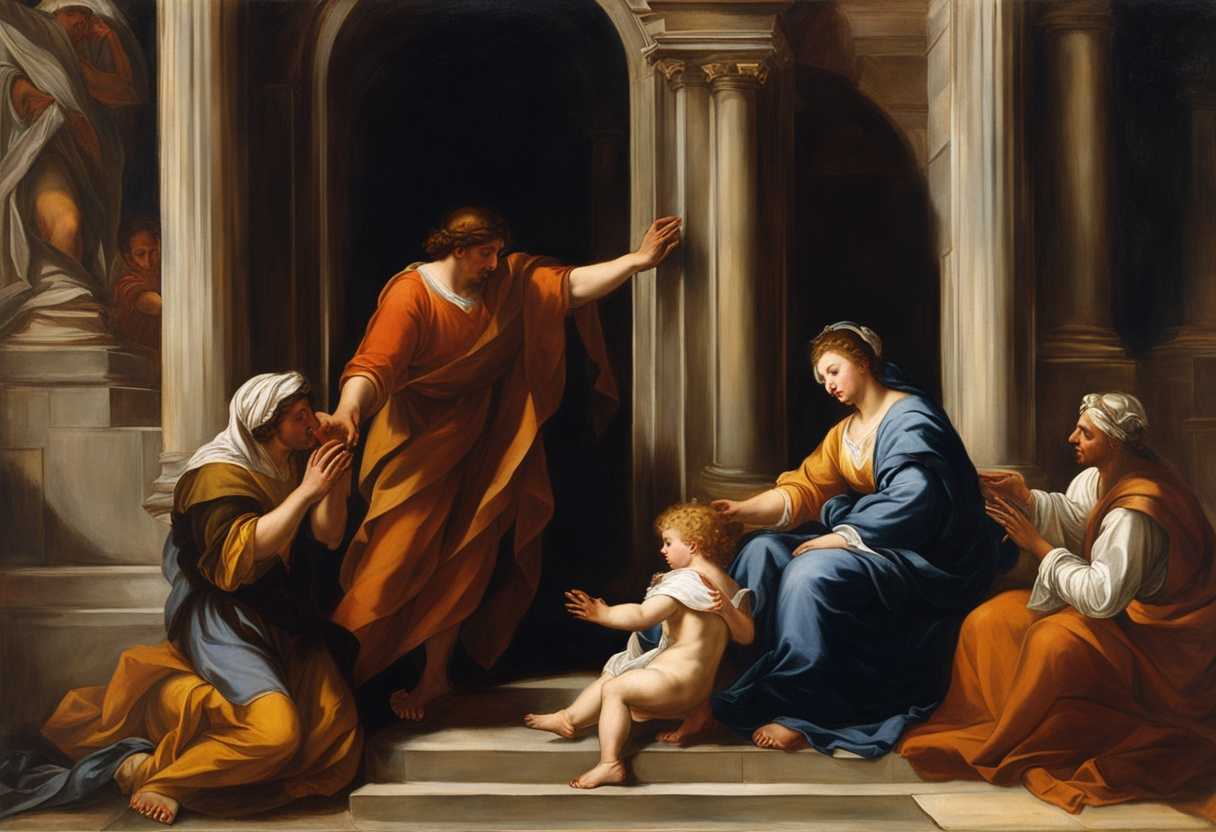
Setting the Scene for 1 Kings 17:7-24
In 1 Kings 17:7-24, the scene is set in the town of Zarephath, a Phoenician city located along the Mediterranean coast. The main characters in this scene are the prophet Elijah, a widow, and her son. Elijah had been directed by God to go to Zarephath during a severe drought that had affected the land. As he arrived at the city gate, he saw a widow gathering sticks and asked her for some water and bread. The widow explained that she only had a handful of flour and a little oil left, and she was preparing a final meal for herself and her son before they expected to die due to the famine.
Elijah, in response to the widow’s hospitality, assured her that the flour and oil would not run out until the drought ended. The widow, showing faith in Elijah’s words, prepared a meal for him first. Miraculously, as Elijah had promised, the flour and oil did not run out, providing sustenance for the widow, her son, and Elijah throughout the duration of the drought. This event showcased God’s provision and faithfulness in the midst of scarcity and demonstrated the power of faith and obedience in the face of adversity.
What is 1 Kings 17:7-24 about?
We witness the divine intervention of God through his faithful servant Elijah raising a widow’s son from the dead in this powerful and miraculous event. The story not only showcases God’s power over death but also highlights his compassion for the vulnerable and grieving. Here, we see the intersection of divine sovereignty and human need, emphasizing that God is intimately involved in our lives, especially during our darkest moments.
This striking narrative challenges us to reflect on the depths of God’s mercy and love for each one of us. It prompts us to consider how God can bring forth life and hope even in the most hopeless situations. Through Elijah’s act, we are reminded that God is the ultimate source of life and that his compassion extends to all, regardless of their background or circumstances. God’s power invites us to trust in overcoming even the seemingly insurmountable challenges we face as we ponder on this story, knowing that he is always working for our good.
Pause and consider the incredible implications of this miraculous event. How does it speak to your own understanding of God’s power and compassion in your life? Reflect on how this story can deepen your trust in God’s ability to bring forth life and restoration in times of despair and loss. Let the profound message of this verse resonate within you and ignite a stronger faith in the boundless love and mercy of our Creator.
Understanding what 1 Kings 17:7-24 really means
In the narrative of Elijah, a prophet during King Ahab’s reign in Israel, we encounter a pivotal moment during a severe drought. Elijah, following God’s guidance, meets a widow in Zarephath, illustrating themes of divine provision, faith, and the power of prayer. The phrase “The word of the Lord came to him” underscores the importance of obedience to God’s direction, highlighting Elijah’s divine guidance. God’s command for the widow to provide for Elijah showcases His ability to use unexpected sources for provision, emphasizing His sovereignty over circumstances.
The miraculous sustenance of the never-ending flour and oil jars symbolizes God’s abundant provision even in times of scarcity, reinforcing the theme of trust in His care. Elijah’s request for the widow’s son and his subsequent prayer for the boy’s life to return demonstrate the power of faith and intercessory prayer. The widow’s declaration of Elijah as a man of God after her son is revived affirms the authenticity of his ministry and God’s truth. These themes resonate with believers today, reminding us of God’s faithfulness in providing for our needs, the importance of faith and obedience, and the efficacy of prayer in desperate situations.
Drawing parallels to other biblical passages such as Matthew 6:25-34 and James 5:17-18, we see consistent themes of God’s provision, the power of prayer, and the faithfulness of those who trust in Him. Jesus’ reference to Elijah’s encounter with the widow in Luke 4:25-26 emphasizes God’s care for all, including Gentiles and the marginalized. In contemporary times, this passage encourages us to trust in God’s provision during uncertainty, emulate the widow’s faith and obedience, and rely on the power of prayer to intervene in challenging circumstances.
An anecdote illustrating someone’s act of generosity in dire circumstances leading to unexpected blessings mirrors the widow’s experience, showcasing the principle of trusting in God’s provision. The detailed explanation of key phrases like “The word of the Lord came to him” emphasizes seeking and following divine guidance, while the miracle of the never-ending flour and oil jars serves as a reminder of God’s limitless resources. Elijah’s bold prayer for the widow’s son exemplifies the role of faith and intercessory prayer in witnessing God’s miraculous intervention. The widow’s acknowledgment of Elijah as a man of God underscores the transformative power of experiencing God’s truth firsthand, deepening faith and recognition of His sovereignty.
What does it mean to trust in God’s provision?
Trusting in God’s provision, as shown in the passage from 1 Kings, means relying on God to provide for our needs even in seemingly desperate situations. God provides food and sustenance to Elijah in the midst of a severe drought by sending ravens to bring him bread and meat in the story. Despite the scarcity of resources around him, Elijah trusted that God would fulfill his promises and provide for him.
Trusting in God’s provision also involves a deep faith that God is able to work miracles on our behalf. God multiplies the widow’s meager supply of flour and oil in the same passage so that she, Elijah, and her son can survive through the remaining days of the drought. This demonstrates that God’s provision goes beyond what we can imagine or see, and when we trust Him wholeheartedly, He is faithful to provide in ways that are beyond our understanding. Trusting in God’s provision ultimately requires surrendering control and having faith that He will meet our needs according to His perfect will and timing. It involves acknowledging God’s sovereignty and believing that He is always aware of our situation and orchestrating events for our good. We can experience peace and security by trusting in God’s provision, knowing that He is our provider and will never fail us.
Application
Take a moment to dive into 1 Kings 17:7-24 and feel the strength of faith and obedience. Like the widow of Zarephath, we too can overcome difficulties by trusting in God’s plan. Let’s embrace challenges with courage and believe in the unexpected miracles that await us. Are you ready to challenge your own doubts and fears, and take a leap of faith today?

Reverend Michael Johnson is an experienced Church Minister with a profound expertise in spirituality and guidance. With a serene presence and a compassionate heart, he has faithfully served his congregation for over 20 years, leading them on a spiritual journey towards inner peace and enlightenment. Reverend Johnson’s extensive knowledge of religious philosophies and profound understanding of human nature have made him a trusted confidant and mentor to many, as he seamlessly weaves his profound wisdom into life teachings. Reverend Johnson’s calming demeanor and empathetic nature continue to uplift and heal souls, nurturing a sense of unity and tranquility within his community.