
1 Kings 17:8 is about how God provides for his faithful followers even in times of drought and scarcity, demonstrating his infinite care and provision for those who trust in him.
8 Then the word of the Lord came to him,
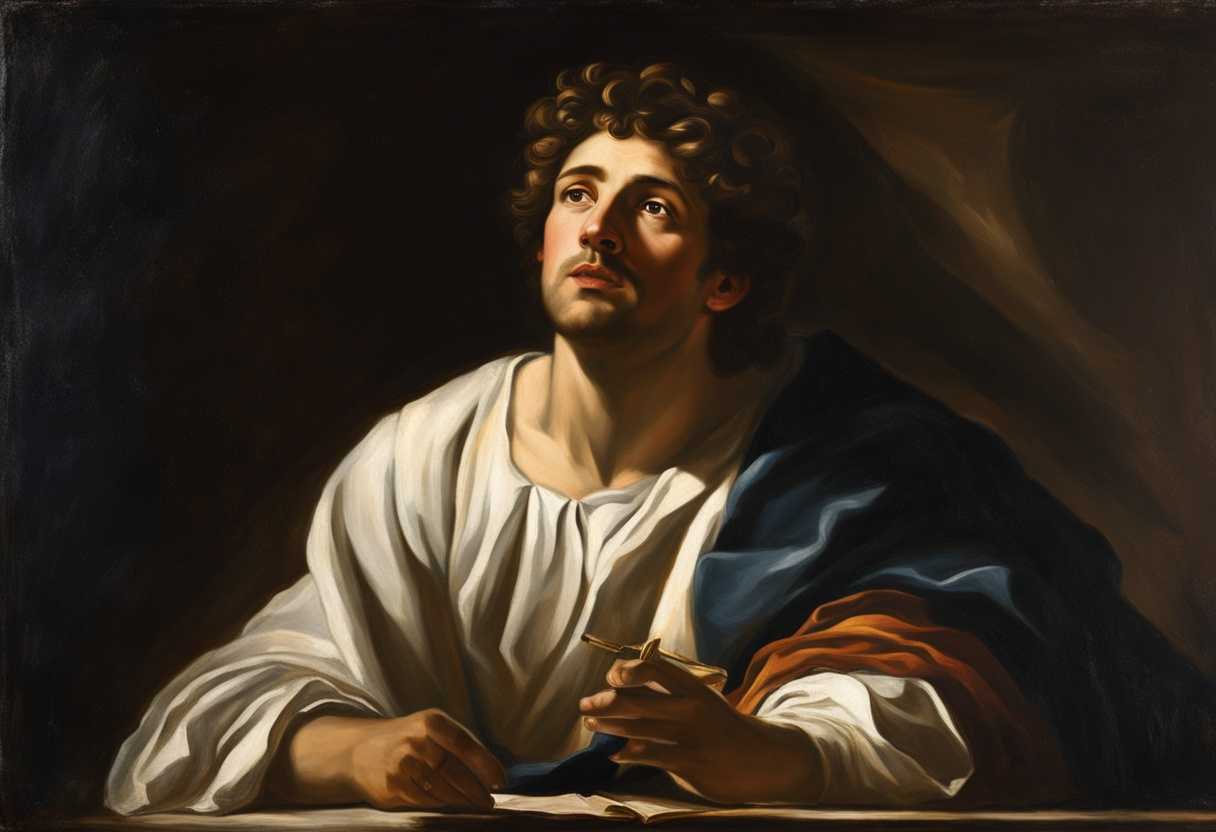
Setting the Scene for 1 Kings 17:8
In 1 Kings 17, we find the prophet Elijah being directed by God to go to Zarephath, a town in Sidon. As Elijah arrives at the town gate, he sees a widow gathering sticks. This widow is in a desperate situation, as she is preparing to make a final meal for herself and her son before they succumb to starvation. The land is in the midst of a severe drought, and resources are scarce.
Elijah approaches the widow and asks her for some water and a piece of bread. The widow explains her dire circumstances, but Elijah reassures her, telling her not to be afraid and to trust in the Lord. He asks her to first make a small cake of bread for him and then make something for herself and her son. The widow, despite her initial hesitation, obeys Elijah’s instructions, and miraculously, her jar of flour and jug of oil do not run out until the drought ends.
The scene at the town gate of Zarephath is one of desperation and hopelessness, but it is also a scene of faith and miraculous provision. Elijah, the widow, and her son are brought together by divine intervention, and through their obedience and trust in God, they witness His power and provision in the midst of scarcity.
What is 1 Kings 17:8 about?
An incredible demonstration of compassion and faith is seen in this verse. Despite the scarcity of food and resources during a time of drought, the widow selflessly provides for Elijah, a stranger in need. This act of generosity showcases the widow’s character and faith in God’s provision, as she trusts that there will be enough for not only herself but also for Elijah. It is a beautiful example of how kindness and generosity can create abundance even in the midst of scarcity.
Reflecting on this verse, we can ask ourselves: How often do we extend a helping hand to those in need, even when resources are limited? Do we trust in God’s provision and step out in faith to support others, like the widow did for Elijah? This story challenges us to examine our own hearts and actions, encouraging us to be open-handed and compassionate towards the needs of others, even when it may seem challenging. It reminds us that God can work miracles through our acts of kindness and generosity, multiplying blessings for both the giver and the receiver.
Understanding what 1 Kings 17:8 really means
In the narrative of Elijah, a prophet amidst a severe drought in Israel, 1 Kings 17:8 marks a pivotal moment where divine guidance leads him to Zarephath. Having just witnessed the miraculous provision of food by ravens at the now-dried brook Cherith, Elijah receives a new directive from the Lord. This shift in location sets the stage for a profound encounter with a widow who becomes instrumental in God’s ongoing provision for Elijah. The interconnectedness of these events underscores the theme of divine care and unexpected sources of sustenance in times of scarcity.
The subsequent verses in 1 Kings 17 further illuminate the unfolding of God’s plan as Elijah meets the widow of Zarephath, emphasizing the miraculous nature of God’s provision through her. This story is echoed in the New Testament, with Jesus referencing it to highlight the faith of the widow and God’s unwavering provision for His people. The parallels drawn between Elijah’s experience and the teachings of Jesus in passages like Luke 4:25-26 and Matthew 6:25-34 underscore the timeless relevance of trusting in God’s provision and obeying His guidance.
For contemporary audiences, the account of Elijah’s journey to Zarephath serves as a poignant reminder of the importance of trusting in God’s provision, especially during times of uncertainty. Elijah’s immediate obedience to God’s command to go to Zarephath exemplifies a model of faithfulness and underscores the significance of following God’s guidance without hesitation. Moreover, the inclusion of the widow of Zarephath in God’s plan highlights His care for the marginalized and the unexpected ways in which He chooses to provide for His people.
Consider a modern-day parallel where someone facing job loss finds themselves nudged to volunteer at a local food bank. Through obedience to this prompting, they not only discover support and community but also encounter a job opportunity. This contemporary anecdote mirrors Elijah’s experience of finding provision in unexpected places through obedience to God’s direction, illustrating the enduring relevance of trusting in divine guidance.
Key phrases in 1 Kings 17:8, such as “The word of the Lord came to him,” “Arise, go to Zarephath,” and “I have commanded a widow there to provide for you,” offer profound insights into the nature of divine communication, the call to action in response to God’s word, and the demonstration of God’s sovereignty in orchestrating provision through unlikely sources. These phrases encapsulate the themes of faith, obedience, and God’s care for all people, inviting readers to reflect on their own lives and the ways in which God may be guiding them towards unexpected sources of provision and support.
By delving into the nuances of 1 Kings 17:8 and its surrounding context, we are encouraged to trust in God’s provision, obey His guidance, and recognize His care for all individuals, especially those who may be marginalized or overlooked. Just as Elijah’s journey to Zarephath unfolded with divine precision, so too can our lives be guided by faith and obedience, leading us to unexpected sources of blessing and sustenance in the midst of life’s challenges.
What can we learn from Elijah’s trust in God?
From Elijah’s trust in God, we can learn the importance of obeying God’s instructions without question. Elijah’s faith and obedience in God’s guidance led him to a place where God provided for his needs and the needs of others miraculously. It teaches us that when we trust in God and follow His will, He will always provide for us and take care of us, even in the most challenging circumstances.
Elijah’s trust in God also demonstrates the power of prayer and the profound impact it can have. Throughout his journey, Elijah relied on prayer as a way to communicate with God, seek His guidance, and witness His miraculous provision. This serves as a reminder for us to trust in God’s faithfulness, seek His help through prayer, and be confident that He will answer our prayers in His perfect timing and way. Faith in God can give us the courage and strength to face difficult situations and stand firm in our beliefs, as Elijah’s story shows us. Despite the odds stacked against him, Elijah remained steadfast in his trust in God, which ultimately led to the manifestation of God’s power and glory. It encourages us to have unwavering faith in God and trust that He is always in control, working all things for our good.
Application
Fellow believers, let’s heed the lesson from 1 Kings 17:8, and embrace unwavering faith in the face of challenges. Like a well-oiled machine, let us align our trust in God’s provision with the belief that he will fulfill our needs. It’s time to step into the light of certainty and cast aside the shadows of fear and doubt. So, are you ready to entrust your well-being to the ultimate provider?

Reverend Michael Johnson is an experienced Church Minister with a profound expertise in spirituality and guidance. With a serene presence and a compassionate heart, he has faithfully served his congregation for over 20 years, leading them on a spiritual journey towards inner peace and enlightenment. Reverend Johnson’s extensive knowledge of religious philosophies and profound understanding of human nature have made him a trusted confidant and mentor to many, as he seamlessly weaves his profound wisdom into life teachings. Reverend Johnson’s calming demeanor and empathetic nature continue to uplift and heal souls, nurturing a sense of unity and tranquility within his community.