
1 Kings 18:18 is about the prophet Elijah confronting King Ahab and calling him to account for abandoning the true worship of God.
18 And he answered, “I have not troubled Israel, but you have, and your father’s house, because you have abandoned the commandments of the Lord and followed the Baals.
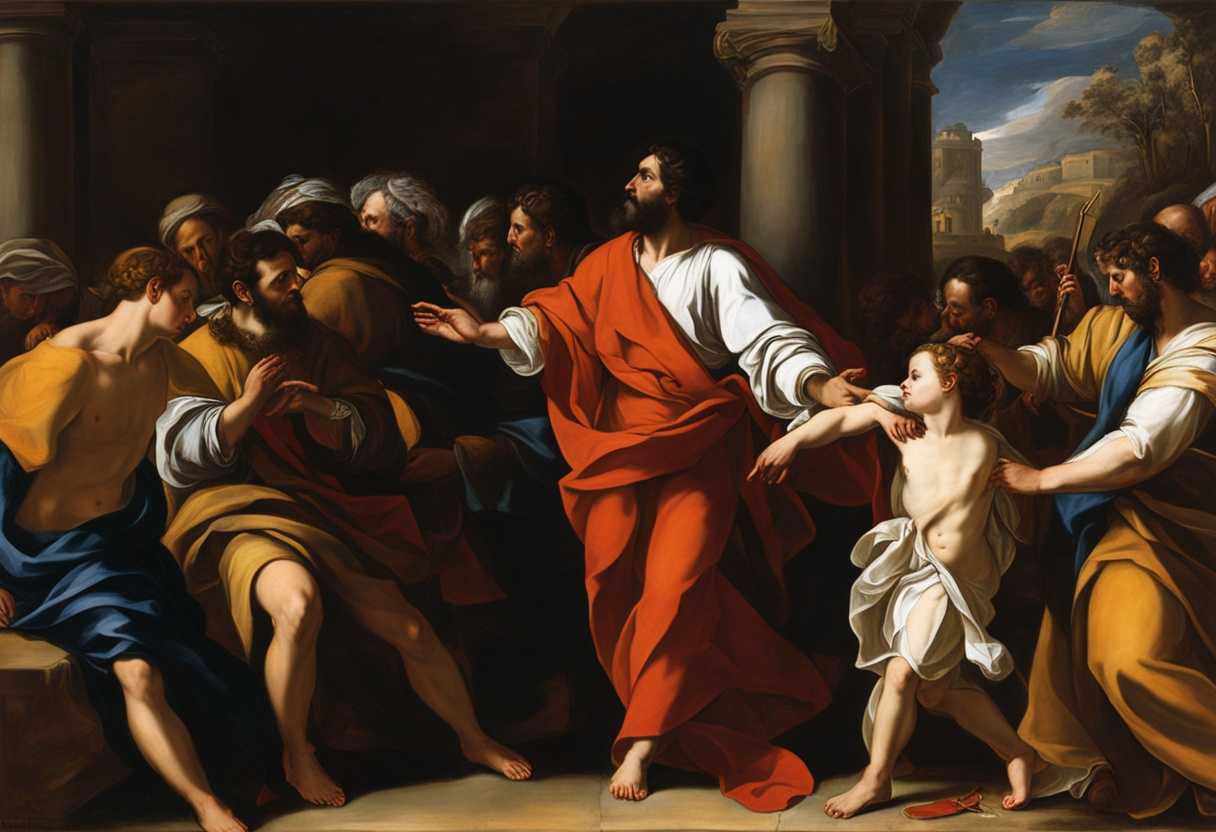
Setting the Scene for 1 Kings 18:18
In 1 Kings chapter 18, we find ourselves on Mount Carmel, a prominent mountain in Israel overlooking the Mediterranean Sea. The scene is set with the prophet Elijah standing boldly before King Ahab, who had been led astray by his wife Queen Jezebel to worship the false god Baal. The atmosphere crackles with tension as Elijah challenges the prophets of Baal to a showdown to prove the power of the one true God.
Surrounding Elijah are 450 prophets of Baal, who had been summoned by King Ahab to Mount Carmel for this dramatic confrontation. The prophets of Baal had been given the task of calling down fire from their god to consume a sacrifice, while Elijah would do the same for the Lord. The stage is set for a dramatic display of divine power as the prophets of Baal frantically cry out to their god, but to no avail.
As the sun beats down on the mountain, the showdown intensifies, with Elijah confidently preparing his altar and sacrifice. The onlookers hold their breath as Elijah calls upon the Lord, who answers with a consuming fire that not only devours the sacrifice but also licks up the water in the trench around the altar. In this moment, the power and glory of the one true God are unmistakably displayed, leaving all who witness it in awe of His majesty.
What is 1 Kings 18:18 about?
Elijah’s confrontation with King Ahab in this verse signifies a powerful moment of speaking truth to power. It demonstrates the courage and conviction of a prophet standing up against injustice and holding those in authority accountable for their actions. Elijah’s boldness in confronting King Ahab shows the importance of speaking out against wrongdoing, even when it may be difficult or risky.
This interaction between Elijah and King Ahab also emphasizes the prophet’s role as a messenger of God, tasked with challenging the powerful and advocating for righteousness. Elijah is upholding the values of justice, truth, and fidelity to God’s commandments by confronting the king for causing trouble in Israel. This verse reminds us of the need to stand up against oppression and corruption, regardless of the consequences, in order to uphold the principles of morality and righteousness.
What do you think enabled Elijah to speak truth to power in this situation? How does this confrontation inspire you to address injustice in your own life and community?Reflecting on this verse, how can you embody the courage and conviction demonstrated by Elijah when standing up against wrongdoing?
Understanding what 1 Kings 18:18 really means
To understand the depth of 1 Kings 18:18, we will break down the commentary into several structured parts: Context, Key Phrases, Cross-References, Relevance Today, and Personal Reflection.
Context:
1 Kings 18:18 comes during a dramatic confrontation between Elijah and King Ahab. The northern kingdom of Israel is in turmoil, suffering from a severe drought. Elijah, the prophet of God, challenges the widespread worship of Baal, which Ahab and his queen, Jezebel, have encouraged. Elijah directly addresses the source of Israel’s troubles in this verse.
Key Phrases:
The phrase “you have abandoned the Lord’s commands and have followed the Baals” is central. This statement identifies the root cause of the nation’s suffering: a departure from God’s commandments and the turn to idol worship. The word “abandoned” signifies a deliberate decision to forsake a known path, emphasizing the conscious choice to neglect God’s laws. “Followed the Baals” points to an active pursuit of false gods, highlighting the seriousness of their spiritual infidelity.
Cross-References:
To deepen our understanding, let’s look at Deuteronomy 11:16-17, where God warns Israel about turning to other gods, stating that such actions would lead to His anger and the withholding of rain. This prophecy aligns with the drought in Elijah’s time, demonstrating God’s consistent expectations and the consequences of disobedience. Another relevant passage is Joshua 24:15, where Joshua urges the Israelites to choose whom they will serve, underscoring the theme of choice and allegiance.
Relevance Today:
This verse speaks volumes even now. While we may not worship Baal, modern idols can take various forms—money, power, or even personal ambitions. These distractions can lead us away from our spiritual commitments and cause personal or communal strife, just as in ancient Israel. Reflecting on our own lives, what “Baals” might we be following? Are there areas where we have abandoned God’s guidance for worldly pursuits? You might have prioritized something over your spiritual responsibilities at a certain time. I recall a church member who was deeply involved in their career, often missing worship and fellowship. They later shared how this imbalance led to a sense of emptiness and disconnection. Only when they realigned their priorities did they find true fulfillment and peace, similar to how Israel needed to return to God. 1 Kings 18:18 is a powerful reminder of the consequences of turning away from God and the importance of remaining faithful to His commandments. We can avoid the pitfalls of idolatry and experience the fullness of His blessings by examining our lives and making conscious choices to follow God’s path.
How can we serve God wholeheartedly in times of uncertainty?
We can serve God wholeheartedly in times of uncertainty by remaining steadfast in our faith and trusting in His plan. We can rely on the strength of our relationship with God to guide us through challenging times, just as the prophet Elijah boldly declared his loyalty to God amidst a conflicted and uncertain situation. We can find peace and purpose even when circumstances are unclear by putting our trust in God and seeking His will above our own.
To serve God wholeheartedly during times of uncertainty, we can also turn to prayer and seek His guidance. We can approach God in prayer with our concerns, fears, and uncertainties, just as Elijah prayed fervently and humbly sought God’s intervention. Through prayer, we can strengthen our faith, find comfort in His presence, and gain clarity on how to navigate uncertain situations in a way that honors Him.
Additionally, serving God wholeheartedly in times of uncertainty involves cultivating a spirit of obedience and surrender. Like Elijah modeled obedience to God’s commands despite the uncertainty of the outcome, we too can demonstrate our devotion by following God’s leading, even when the way forward seems unclear. We can serve God wholeheartedly and experience His peace and provision in the midst of uncertainty by prioritizing His will above our own desires and trusting in His faithfulness.
Application
Just like you show up every day for your job or your family, stand firm in your faith. Elijah took a bold stand on Mount Carmel, and now it’s your turn to declare your loyalty to God even when the world challenges you. Let your faith shine through your actions and words, showing an unshakable trust in Him. Can you step up and boldly live out your faith in every corner of your life?

Reverend Michael Johnson is an experienced Church Minister with a profound expertise in spirituality and guidance. With a serene presence and a compassionate heart, he has faithfully served his congregation for over 20 years, leading them on a spiritual journey towards inner peace and enlightenment. Reverend Johnson’s extensive knowledge of religious philosophies and profound understanding of human nature have made him a trusted confidant and mentor to many, as he seamlessly weaves his profound wisdom into life teachings. Reverend Johnson’s calming demeanor and empathetic nature continue to uplift and heal souls, nurturing a sense of unity and tranquility within his community.