
1 Kings 18:19 is about the confrontation between the prophet Elijah and King Ahab, highlighting the struggle between faithfulness to God and the allure of false idols.
19 Now therefore send and gather all Israel to me at Mount Carmel, and the 450 prophets of Baal and the 400 prophets of Asherah, who eat at Jezebel’s table.”
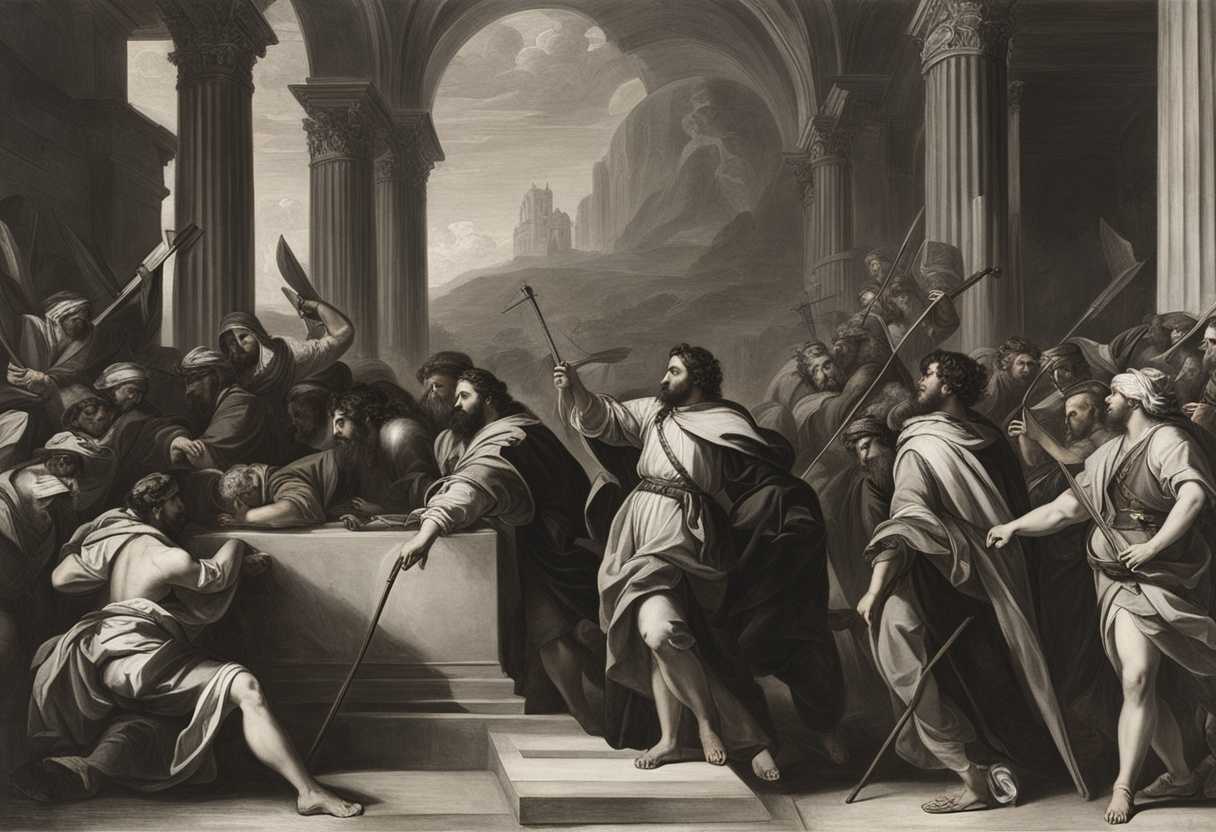
Setting the Scene for 1 Kings 18:19
In 1 Kings chapter 18, we find ourselves on Mount Carmel, a prominent mountain in Israel overlooking the Mediterranean Sea. The scene is set with the prophet Elijah standing boldly before King Ahab, who had been led astray by his wife Queen Jezebel to worship the false god Baal. Alongside King Ahab are the prophets of Baal, who had been challenged by Elijah to a showdown to prove the power of the one true God.
The prophets of Baal had constructed an altar and called upon their god to send fire to consume their sacrifice, but to no avail. Elijah, in a dramatic display of faith, then rebuilds the altar of the Lord that had been torn down, and prepares his sacrifice. The tension is palpable as Elijah calls upon the Lord to send fire from heaven, showcasing the power and glory of the one true God in front of all the people of Israel, including King Ahab and the prophets of Baal.
As the onlookers hold their breath, a miraculous fire descends from heaven, consuming not only the sacrifice but also the altar itself. This powerful display of divine intervention solidifies the faith of the people in the Lord and marks a significant victory for Elijah in his mission to turn the hearts of the Israelites back to God.
What is 1 Kings 18:19 about?
The prophet Elijah demonstrates great courage and unwavering faith in the one true God in this verse. Elijah challenges the prophets of Baal to a showdown on Mount Carmel, standing up for his beliefs and boldly proclaiming the power and sovereignty of God. This act of challenging the false prophets reflects Elijah’s deep conviction and trust in the supremacy of the Lord.
Imagine the scene on Mount Carmel – the tension in the air, the anticipation of the spectators, and the boldness of Elijah as he confronts the prophets of Baal. This showdown is not just a physical display of power but a symbolic battle between good and evil, truth and deception. Elijah’s challenge serves as a powerful reminder that when we stand firm in our faith and confront falsehood with courage, God will always prevail. Let Elijah’s example inspire us to courageously stand up for our beliefs, even in the face of opposition as we reflect on this verse. We can remember that with God on our side, we can overcome any challenge and boldly proclaim His truth in a world filled with falsehood. We should be willing to confront the forces of darkness and shine the light of God’s love and truth, just as Elijah challenged the prophets of Baal on Mount Carmel.
Understanding what 1 Kings 18:19 really means
To understand the significance of 1 Kings 18:19, we must first establish a clear structure for our commentary. Let’s break it down into the following sections: Context, Key Phrases and Analysis, Cross-References, Relevance Today, and Personal Reflection.
Context:
The verse in question is set within the larger narrative of Elijah’s confrontation with King Ahab and the prophets of Baal. At this point, Israel under Ahab’s rule has largely turned away from Yahweh and embraced Baal worship, influenced heavily by Queen Jezebel. Elijah, a prophet of the Lord, challenges this apostasy and calls for a decisive moment on Mount Carmel to prove the true God.
Key Phrases and Analysis:
The verse mentions “summon the people from all over Israel to meet me on Mount Carmel” and “bring the 450 prophets of Baal and the 400 prophets of Asherah, who eat at Jezebel’s table.” Here, Elijah is orchestrating a public demonstration. The phrase “summon the people” indicates a call to national repentance and accountability. “Mount Carmel” symbolizes a place of spiritual confrontation—where truth will be revealed. The mention of prophets “who eat at Jezebel’s table” underscores the deep-seated corruption and the influence of Jezebel over Israel’s spiritual direction.
Cross-References:
To deepen our understanding, we can look at other biblical passages. For example, Exodus 20:3, “You shall have no other gods before me,” underscores the fundamental breach of the first commandment by Israel. Additionally, in Joshua 24:15, Joshua challenges the people, “choose for yourselves this day whom you will serve,” echoing Elijah’s call for a decision between Yahweh and Baal.
Relevance Today:
This narrative is strikingly relevant in today’s context. We live in a world with myriad competing ideologies and “gods” that vie for our allegiance—be it materialism, nationalism, or even personal ambition. Elijah’s challenge to the people of Israel to choose whom they will serve resonates with our own need to make deliberate choices about what or whom we worship. Are we influenced more by the cultural “Jezebels” around us, or are we committed to following God’s will?
Personal Reflection:
I remember a time when I faced a significant career decision. The options before me seemed equally viable, but I felt a nudge to consider where my choices would lead me spiritually. It was akin to standing on my own “Mount Carmel”—a moment of truth where I had to decide what values and principles I would prioritize. This verse reminds us that such moments of decision are not just historical but very much a part of our spiritual journey today. 1 Kings 18:19 invites us to reflect on our allegiances and the influences that shape our faith. Elijah’s call to gather and witness God’s power is a timeless reminder of the importance of choosing whom we serve. We must ask ourselves: In the arenas of our lives, are we willing to stand firm in our faith, even when faced with overwhelming opposition?
Do we truly worship God with all our heart?
True worship of God requires wholehearted devotion and sincerity when reflecting on the verse. The verse emphasizes the importance of serving God with everything we have, without any reservations or divided loyalties. This means putting God above all else in our lives, giving Him our full attention, love, and commitment. It calls for a deep, genuine relationship with God that permeates every aspect of our being. The message of the verse prompts us to examine our own hearts and lives. Are we truly worshiping God with all our heart, or are there areas where we hold back or let other priorities take precedence? Do we approach worship as a routine or obligation, or do we engage with God with passion and sincerity? This verse challenges us to strive for a deeper level of devotion and connection with God, where our worship is characterized by wholehearted love, reverence, and surrender.
Application
Think of life as a fierce boardroom meeting or a busy family dinner. Sometimes you need to stand up for what matters most, even when it’s tough. 1 Kings 18:19 challenges us to keep our faith strong, no matter the obstacles. Will you stand firm and be the voice of truth when it feels like the world is against you?

Reverend Michael Johnson is an experienced Church Minister with a profound expertise in spirituality and guidance. With a serene presence and a compassionate heart, he has faithfully served his congregation for over 20 years, leading them on a spiritual journey towards inner peace and enlightenment. Reverend Johnson’s extensive knowledge of religious philosophies and profound understanding of human nature have made him a trusted confidant and mentor to many, as he seamlessly weaves his profound wisdom into life teachings. Reverend Johnson’s calming demeanor and empathetic nature continue to uplift and heal souls, nurturing a sense of unity and tranquility within his community.