
1 Kings 22:29-33 is about the deceptive spirit that influenced the false prophets to give Ahab a misleading message which led to his demise in the battle of Ramoth Gilead.
29 So the king of Israel and Jehoshaphat the king of Judah went up to Ramoth-gilead.
30 And the king of Israel said to Jehoshaphat, “I will disguise myself and go into battle, but you wear your robes.” And the king of Israel disguised himself and went into battle.
31 Now the king of Syria had commanded the thirty-two captains of his chariots, “Fight with neither small nor great, but only with the king of Israel.”
32 And when the captains of the chariots saw Jehoshaphat, they said, “It is surely the king of Israel.” So they turned to fight against him. And Jehoshaphat cried out.
33 And a certain man drew his bow at random and struck the king of Israel between the scale armor and the breastplate. So he said to the driver of his chariot, “Turn around and carry me out of the battle, for I am wounded.”
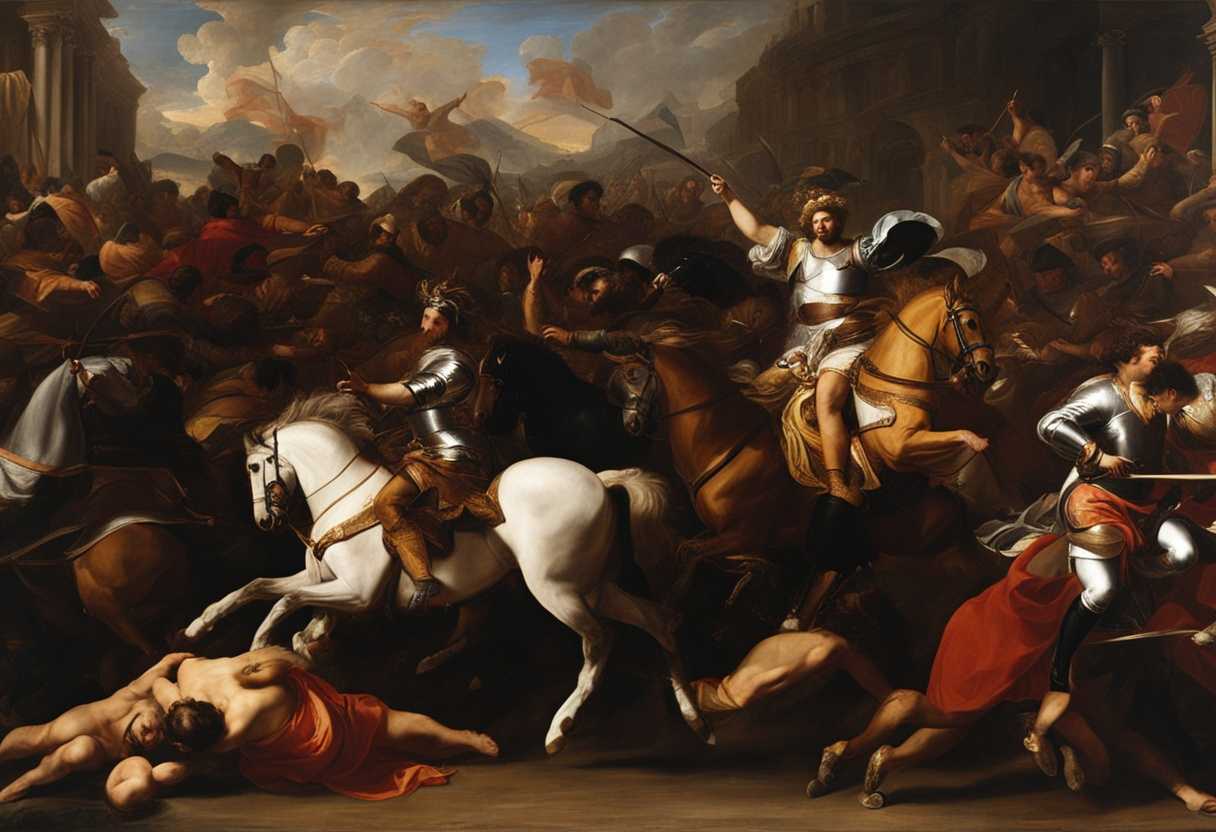
Setting the Scene for 1 Kings 22:29-33
In 1 Kings chapter 22, we find ourselves in the grand throne room of King Ahab of Israel. The room is adorned with rich tapestries, golden candelabras, and intricate carvings depicting scenes of battle and victory. King Ahab is seated on his ornate throne, surrounded by his courtiers and advisors, all dressed in luxurious robes and jewels.
Among the courtiers is the prophet Micaiah, who has been summoned to give counsel to the king. Micaiah stands out in the opulent room with his simple attire and unwavering gaze. The atmosphere is tense as the king seeks advice on whether to go to war against Ramoth Gilead. The court prophets have all given favorable predictions, but Micaiah, speaking on behalf of the Lord, warns of impending disaster.
As the scene unfolds, tension mounts as Micaiah’s prophecy clashes with the king’s desires. The clash of power, pride, and prophecy fills the room with an electric energy, setting the stage for a dramatic confrontation between the prophet of God and the earthly ruler.
What is 1 Kings 22:29-33 about?
Let’s dive into the significance of Ahab’s death in battle in relation to the prophecy of judgment for his wickedness. Ahab, the king of Israel, was known for his disobedience to God’s commandments and his indulgence in idolatry in this context. The prophecy of judgment against him was a consequence of his persistent wrongdoing and a warning of the repercussions he would face.
Ahab’s death in battle serves as a culmination of his defiance towards God and a realization of the promised judgment. It showcases the inevitability of God’s justice and reiterates the consequences of turning away from His ways. The fulfillment of this prophecy underscores the principle that actions have consequences, especially when they go against divine will.
Reflecting on Ahab’s story prompts us to consider our own actions and the potential consequences they may entail. It challenges us to align our choices with righteousness and to remain steadfast in our faith, lest we face a similar fate. Ahab’s death in battle ultimately serves as a powerful reminder of the importance of staying true to our beliefs and the significance of accountability in the eyes of God.
Understanding what 1 Kings 22:29-33 really means
In the account of 1 Kings 22:29-33, we witness the unfolding of a pivotal moment in the lives of King Ahab of Israel and King Jehoshaphat of Judah as they prepare for battle against Ramoth Gilead. Despite the prophet Micaiah’s warning that Ahab would not return alive, Ahab chose to disguise himself, attempting to outwit the divine decree. This act of deception reflects a common human inclination to evade or manipulate circumstances to avoid facing the consequences of our actions.
On the other hand, Jehoshaphat, in stark contrast, boldly wore his royal robes, displaying his identity openly. When the enemy mistakenly targeted him instead of Ahab, Jehoshaphat cried out for help, demonstrating his reliance on God in the face of imminent danger. This moment captures the essence of trust and dependence on the divine providence, contrasting Ahab’s futile attempt to alter his destiny with Jehoshaphat’s faith-driven response.
The phrase “disguised himself” symbolizes Ahab’s misguided belief that he could outsmart God’s plan, a poignant reminder of the limitations of human schemes in the face of divine will. Similarly, Jehoshaphat’s cry for help underscores the importance of seeking God’s intervention in times of crisis, acknowledging our need for His guidance and protection.
Drawing parallels from related biblical passages such as Proverbs 19:21 and Psalm 34:17, we are reminded of the overarching theme of God’s sovereignty and His faithfulness to deliver those who call upon Him. Just as Ahab’s disguise proved futile in the grand scheme of God’s purpose, our attempts to manipulate circumstances or evade consequences are ultimately in vain when they run counter to God’s will.
In our contemporary lives, the narrative of Ahab and Jehoshaphat serves as a poignant reminder to trust in God’s plan, even when it seems at odds with our desires or expectations. Like Jehoshaphat, we are encouraged to seek God’s help without hesitation, knowing that He hears the cries of the righteous and delivers them from their troubles. This timeless lesson challenges us to relinquish our illusions of control and instead place our faith in the unchanging and benevolent will of God.
Consider a scenario in your own life where you may have tried to manipulate a situation to your advantage, only to realize the futility of such efforts in the face of divine providence. Reflect on moments when calling out to God in times of distress has brought about unexpected deliverance and guidance, mirroring Jehoshaphat’s reliance on God’s intervention. May this passage inspire us to embrace humility, trust in God’s unfailing plan, and seek His help wholeheartedly in every circumstance we encounter.
Are we accepting false prophets in our lives?
King Ahab listened to the false prophets who only spoke what he wanted to hear, rather than seeking the true word of God, and we see the consequences in the passage. Ahab faced dire consequences by accepting the false prophets into his life and surrounding himself with those who would only tell him what he desired. This serves as a cautionary tale to us, warning against placing our faith and trust in those who would deceive us with false teachings or empty promises.
It is important for us to discern the truth and be vigilant against false prophets in our own lives. We must seek the guidance of God’s word and those who speak the truth, even when it may not align with what we want to hear. We can protect ourselves from being led astray by those who seek to deceive us by surrounding ourselves with faithful and wise counsel. We, as followers of God, must test the spirits and ensure that we are not being swayed by false prophets but staying true to the teachings of the Lord.
Application
In this digital age, let’s sift through the noise like we would vital emails at work, prioritizing only the truth in our daily endeavors. Just as we safeguard our family from harm, let’s also protect our hearts from false influences. Let’s navigate the waves of misinformation with the moral compass of God’s teachings. Will you choose clarity over confusion and truth over deception in your journey today?

Reverend Michael Johnson is an experienced Church Minister with a profound expertise in spirituality and guidance. With a serene presence and a compassionate heart, he has faithfully served his congregation for over 20 years, leading them on a spiritual journey towards inner peace and enlightenment. Reverend Johnson’s extensive knowledge of religious philosophies and profound understanding of human nature have made him a trusted confidant and mentor to many, as he seamlessly weaves his profound wisdom into life teachings. Reverend Johnson’s calming demeanor and empathetic nature continue to uplift and heal souls, nurturing a sense of unity and tranquility within his community.