
1 Peter 3:5 is about the reverence and beauty in a gentle and quiet spirit, which is precious in the sight of God.
5 For this is how the holy women who hoped in God used to adorn themselves, by submitting to their own husbands,
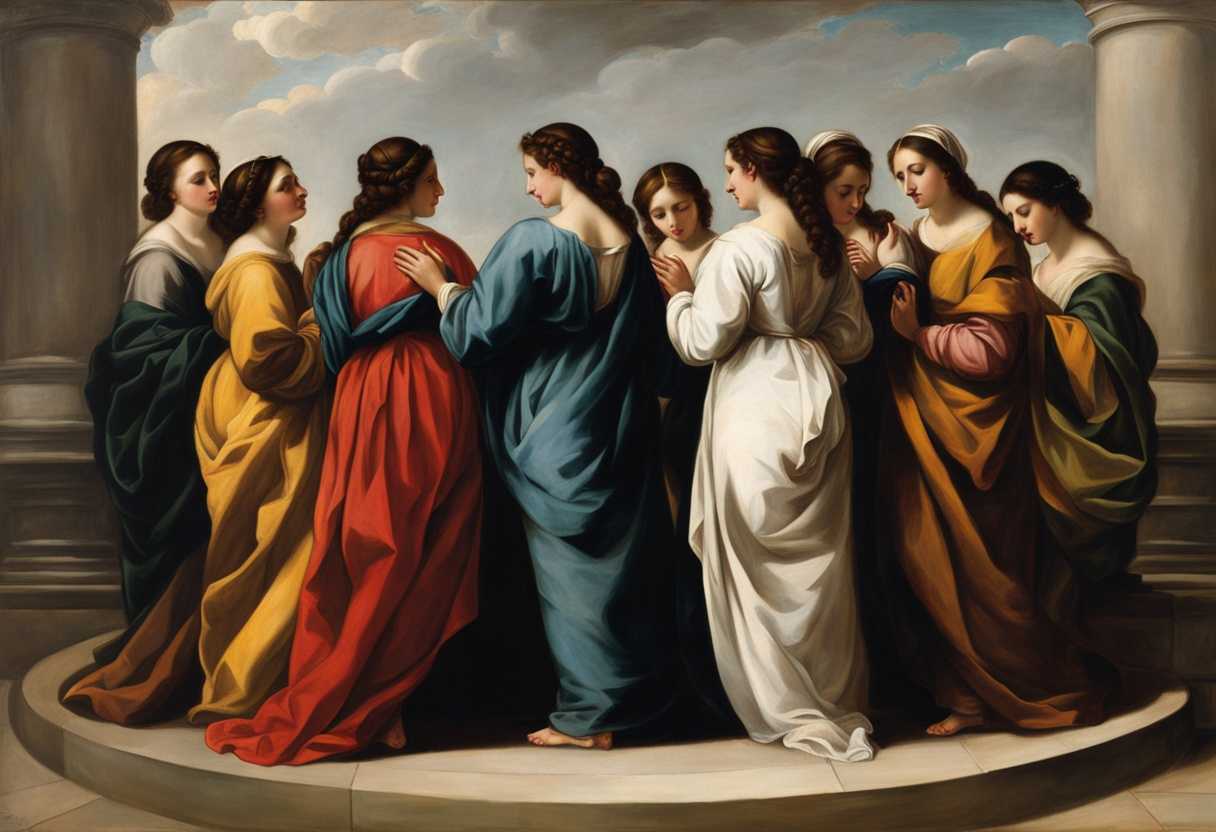
Setting the Scene for 1 Peter 3:5
In 1 Peter chapter 3, we find a scene where Peter is addressing a group of early Christian women who are married to unbelieving husbands. The setting is likely a gathering of believers, perhaps in a home or a meeting place where they have come together to study the teachings of the apostles. The women in the scene have likely faced challenges and struggles in their marriages due to their faith in Christ.
Peter, the author of the letter, is speaking to these women, encouraging them to continue living out their faith with gentleness, respect, and a quiet spirit, even in the face of opposition or mistreatment from their husbands. He uses examples from the lives of holy women in the past, such as Sarah, to illustrate the beauty and power of a godly woman’s character.
The atmosphere in the room is one of solemnity and reverence as Peter imparts his wisdom and guidance to these women, reminding them of the importance of their witness and the impact they can have on their unbelieving husbands through their conduct and faith. The women listen attentively, taking to heart Peter’s words and finding strength and encouragement to persevere in their marriages despite the challenges they face.
What is 1 Peter 3:5 about?
The verse emphasizes the importance of inner beauty for wives. Rather than solely focusing on outward appearance, such as physical attractiveness or material possessions, the verse highlights the significance of cultivating qualities like kindness, compassion, humility, and wisdom. It encourages wives to prioritize building a strong character and moral values that shine through their actions and interactions with others.
Think about it this way – what truly makes a person beautiful? Is it just their looks, or is it also their kindness, empathy, and strength of character? The verse suggests that a person’s true radiance comes from within, from the depths of their heart and soul, by emphasizing inner beauty. It challenges us to look beyond the surface and value the qualities that make someone truly admirable and inspiring.
So, as wives (and as individuals), let’s strive to enhance our inner beauty – to nurture qualities that not only make us pleasing to the eye but also make us kinder, more loving, and more compassionate beings. Let’s focus on developing virtues that will not fade with time, virtues that will leave a lasting impact on those around us. True beauty lies in the goodness of our hearts and the kindness of our actions.
Understanding what 1 Peter 3:5 really means
Commentary Structure
- Introduction to the Verse
- Context and Background
- Meaningful Phrases and Their Significance
- Cross-References to Other Biblical Texts
- Relevance to Modern Life
- Anecdote for Practical Understanding
- Conclusion and Reflection
Commentary
Introduction to the Verse
This verse is part of a broader discourse in 1 Peter that addresses how Christians should live their lives, particularly in the context of relationships and personal conduct. It speaks to the virtues of inner beauty and godly behavior, especially in the lives of women.
Context and Background
To fully understand this verse, we should consider the cultural and historical context in which it was written. Peter was addressing believers who were living in a society with distinct social norms and expectations, including the roles and behavior of women. He calls them to live in a way that reflects their faith and trust in God, transcending societal standards.
Meaningful Phrases and Their Significance
The passage mentions “holy women of the past” who “put their hope in God.” This phrase holds deep significance. It emphasizes that their beauty and worth were not found in outward adornment but in their trust and faith in God. The term “holy” suggests a life set apart for God, one that exemplifies purity, devotion, and righteousness.
Cross-References to Other Biblical Texts
Proverbs 31:30 reinforces this idea: “Charm is deceptive, and beauty is fleeting; but a woman who fears the Lord is to be praised.” Similarly, 1 Samuel 16:7 states, “The Lord does not look at the things people look at. People look at the outward appearance, but the Lord looks at the heart.” These passages collectively affirm that God values inner beauty and a heart devoted to Him over external appearances. This verse serves as a powerful reminder of what truly matters in today’s world, where there is immense pressure to conform to certain standards of beauty and success. It calls us to focus on cultivating a heart that trusts in God and embodies His virtues rather than being preoccupied with external appearances. Sarah, a woman who worked tirelessly in her community to help those in need, is the subject of the story. Despite not fitting society’s conventional standards of beauty, her kindness, and unwavering faith left a lasting impact on everyone she encountered. Her life exemplified the inner beauty that 1 Peter 3:5 speaks of, showing that true worth comes from a heart devoted to God and service to others.
Conclusion and Reflection
Reflecting on this verse, we are invited to examine our own lives and values. Are we placing our hope in God and striving to cultivate inner beauty? This passage challenges us to shift our focus from external appearances to the qualities of the heart that are precious in God’s sight. The holy women of the past lived lives marked by faith, hope, and love, and we should aspire to do the same. You can cultivate inner beauty in your own life in various ways. How can you encourage others to value what God values? These questions invite us to deeper reflection and action, aligning our lives more closely with God’s eternal perspective.
What does it mean to have a gentle and quiet spirit?
Having a gentle and quiet spirit refers to possessing a calm and peaceful demeanor in the face of trials or difficult situations. It involves remaining composed, not easily agitated or stirred up by external circumstances. This kind of spirit is marked by grace, humility, and patience, as well as a trusting and unshakeable faith in God’s provision and care.
A gentle and quiet spirit does not mean being passive or weak, but rather demonstrates inner strength and character. It shows the ability to respond to challenges with a gentle and peaceful attitude, rather than with anger, anxiety, or aggression. This kind of spirit reflects a deep sense of security in one’s identity and purpose in Christ, enabling one to navigate life’s challenges with a sense of peace and tranquility.
Application
Think of your daily grind at work or the hustle at home. 1 Peter 3:5 calls us to remember the power in quiet strength and unwavering hope in God, qualities that spoke volumes in the lives of holy women before us. Imagine wearing humility and grace as your daily attire, influencing your actions and words. How will you choose to embody such quiet resilience and faith today?

Reverend Michael Johnson is an experienced Church Minister with a profound expertise in spirituality and guidance. With a serene presence and a compassionate heart, he has faithfully served his congregation for over 20 years, leading them on a spiritual journey towards inner peace and enlightenment. Reverend Johnson’s extensive knowledge of religious philosophies and profound understanding of human nature have made him a trusted confidant and mentor to many, as he seamlessly weaves his profound wisdom into life teachings. Reverend Johnson’s calming demeanor and empathetic nature continue to uplift and heal souls, nurturing a sense of unity and tranquility within his community.