
1 Samuel 16:1-3 is about God instructing Samuel to anoint David as the future king of Israel, highlighting the importance of God’s divine selection and the fulfillment of His plans despite human expectations and standards.
16 The Lord said to Samuel, “How long will you grieve over Saul, since I have rejected him from being king over Israel? Fill your horn with oil, and go. I will send you to Jesse the Bethlehemite, for I have provided for myself a king among his sons.”
2 And Samuel said, “How can I go? If Saul hears it, he will kill me.” And the Lord said, “Take a heifer with you and say, ‘I have come to sacrifice to the Lord.’
3 Invite Jesse to the sacrifice, and I will show you what you shall do. And you shall anoint for me him whom I declare to you.”
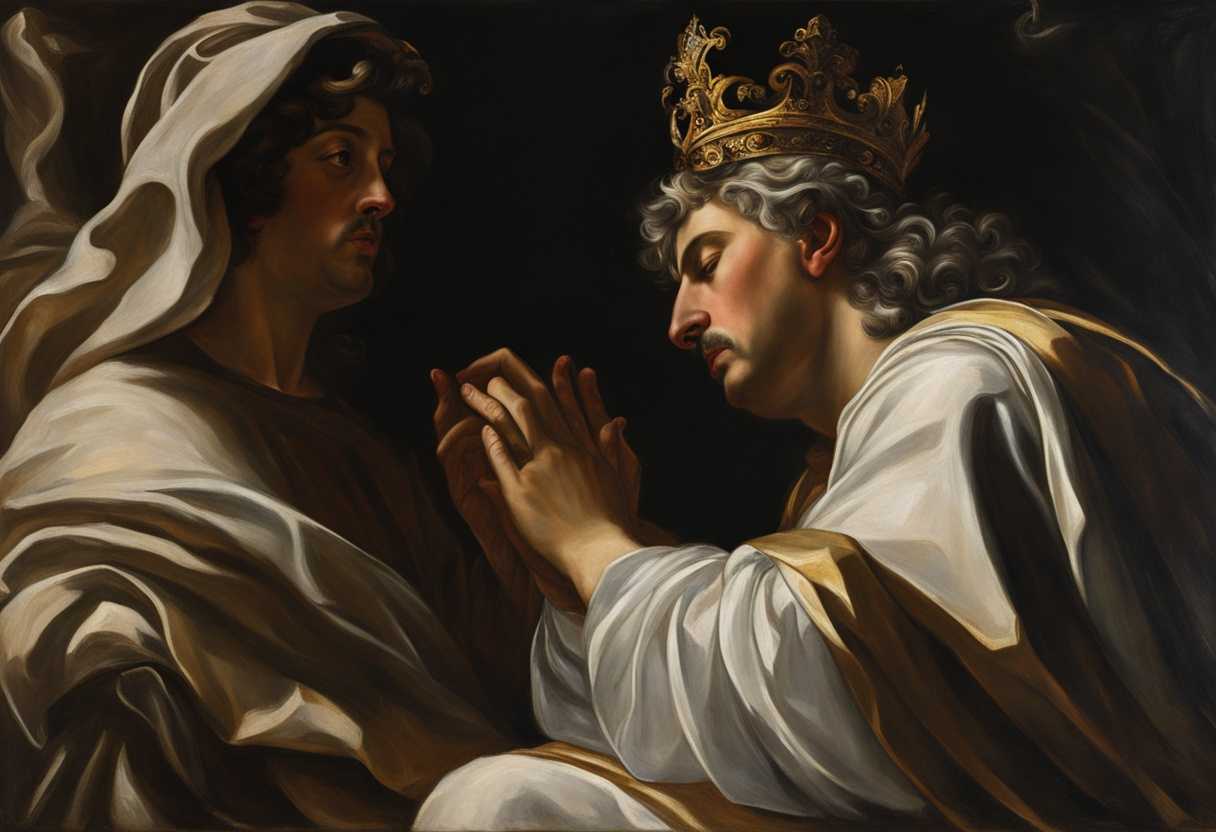
Setting the Scene for 1 Samuel 16:1-3
In 1 Samuel chapter 16, we find the prophet Samuel on a mission from God to anoint a new king over Israel. The scene is set in the town of Bethlehem, a small and humble village known for its fields and shepherds. Samuel arrives in Bethlehem under the instruction of the Lord, tasked with selecting a new king from among the sons of Jesse.
Jesse, a respected man in Bethlehem, is called upon to present his sons before Samuel. As Jesse’s sons gather before the prophet, the atmosphere is tense with anticipation and curiosity. The sons, including the eldest Eliab, Abinadab, Shammah, and others, stand before Samuel, unaware of the divine purpose unfolding before them.
Surrounded by the rolling hills and fields of Bethlehem, Samuel is guided by God to look beyond the outward appearances of Jesse’s sons and to focus on the heart. The scene is filled with the tension of the unknown, as Samuel prepares to anoint the one chosen by God to be the future king of Israel, a decision that will shape the course of history.
What is 1 Samuel 16:1-3 about?
A powerful lesson about the importance of inner qualities over external ones is seen in this verse. When God selected David as king instead of his older and seemingly more impressive brothers, He emphasized the significance of the heart and character. David’s selection highlights that God looks beyond superficial appearances and values sincerity, humility, and faithfulness. This decision challenges us to reflect on our own biases and assumptions about leadership and worth, reminding us that true value lies in what is in our hearts.
Have you ever overlooked someone because they didn’t fit the “typical” mold of success or leadership? This verse shows us that God’s perspective is different from our human standards. It prompts us to reevaluate how we judge others and ourselves, encouraging us to focus on cultivating inner virtues like integrity and compassion. God illustrates that a heart devoted to Him is the most valuable quality one can possess by choosing David. We should seek to nurture our hearts and cultivate virtues that reflect God’s love and grace in our lives as we strive to follow His example.
Understanding what 1 Samuel 16:1-3 really means
Structure for Commentary:
1. Introduction and Context
2. Key Phrases and Their Meanings
3. Cross-References with Other Passages
4. Relevance to Modern Life
5. Anecdote for Practical Understanding
6. God commands Samuel to anoint a new king over Israel in these verses from 1 Samuel, as He has rejected Saul due to his disobedience. Samuel is initially fearful, but God provides specific instructions on how to proceed. This passage is pivotal, marking a significant transition in Israel’s leadership and reflecting deeper themes of divine guidance and obedience.
Key Phrases and Their Meanings:
One key phrase is “How long will you mourn for Saul,” which underscores the necessity of moving forward despite past disappointments. It suggests that holding onto the past can impede progress. Another significant phrase is “Fill your horn with oil and be on your way,” symbolizing readiness and divine provision for new tasks. This oil represents God’s anointing and blessing.
Cross-References with Other Passages:
This passage parallels other instances where God directs individuals to new missions. For example, in Genesis 12:1, God tells Abraham to leave his country for a land He will show him. Similarly, in Acts 9:15, God instructs Ananias to visit Saul (later Paul), despite his fears. These instances emphasize trust in God’s plans and the importance of obedience.
Relevance to Modern Life:
The themes of divine direction and obedience remain highly relevant. People often face unexpected changes and challenges in today’s fast-paced world. This passage reassures us that God provides guidance and resources for new ventures, even when we feel unprepared or fearful. It invites us to trust in God’s timing and plans. A young professional loses their job unexpectedly. Initially, they might feel disheartened and anxious about the future. However, reflecting on this passage can bring comfort and direction. Like Samuel, they might find that this setback is a divine redirection towards a more fulfilling career path. Embracing this perspective can transform their outlook, turning a period of mourning into one of anticipation and action.
Reflection and Engagement:
How often do we cling to past failures or disappointments, hindering our ability to move forward? This passage challenges us to trust in God’s ongoing plan for our lives. Reflect on a time when you felt stuck or fearful about the future. How did you navigate that period? Did you seek God’s guidance? What new opportunities emerged from that experience? Engaging with these questions can deepen our understanding and application of this passage in our daily lives.
How can we trust God’s timing and plan?
We can trust God’s timing and plan by understanding that He sees the bigger picture and knows what is best for us. Just like in the verse where Samuel was sent by God to anoint a new king, God’s timing was perfect even though it may not have made sense to Samuel at first. Similarly, we may not always understand why things are happening a certain way or why we have to wait, but we can trust that God’s timing is always right.
Furthermore, the verse reminds us that God’s plan is always better than our own. Even though Samuel thought one of Jesse’s sons would be the next king, God had a different plan. This teaches us that even when things don’t go as we expect or hope, we can trust that God’s plan is ultimately for our good. We can have faith that He is guiding us in the right direction, even if we can’t see the full picture at that moment. We can see that God’s timing and plan are always perfect by looking at the example in the verse. We can trust in His wisdom and faithfulness, knowing that He is in control and works everything for our best interest. These truths can help us have faith and patience as we wait for God’s timing in our lives.
Application
Imagine being at work, faced with an unexpected project that seems daunting but could lead to amazing opportunities. Just like Samuel anointed David, who seemed an unlikely choice, sometimes the most surprising paths lead to the greatest outcomes. Are you ready to trust that unexpected nudge and take bold steps, even if it feels unconventional? Step up and act in faith. Are you prepared to seize the moment when it truly matters?

Reverend Michael Johnson is an experienced Church Minister with a profound expertise in spirituality and guidance. With a serene presence and a compassionate heart, he has faithfully served his congregation for over 20 years, leading them on a spiritual journey towards inner peace and enlightenment. Reverend Johnson’s extensive knowledge of religious philosophies and profound understanding of human nature have made him a trusted confidant and mentor to many, as he seamlessly weaves his profound wisdom into life teachings. Reverend Johnson’s calming demeanor and empathetic nature continue to uplift and heal souls, nurturing a sense of unity and tranquility within his community.