
1 Samuel 19:1 is about King Saul’s malice towards David, symbolizing the ongoing struggle between good and evil, and the challenges faced by those chosen by God.
1 And Saul spoke to Jonathan his son and to all his servants, that they should kill David.
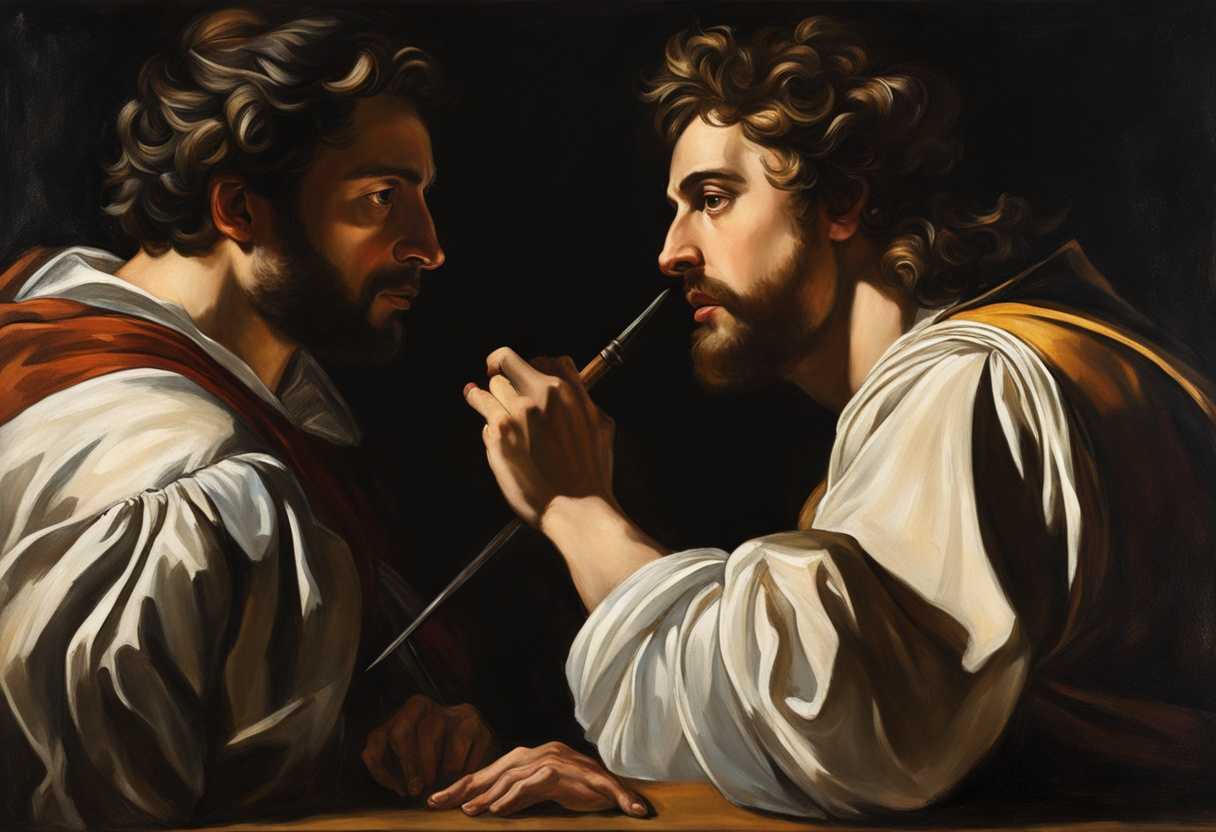
Setting the Scene for 1 Samuel 19:1
In 1 Samuel chapter 19, we find King Saul, his son Jonathan, and David in a tense and dramatic scene. King Saul, consumed by jealousy and fear of David’s rising popularity and favor with the people, is plotting to kill David. Jonathan, who is deeply loyal to David and also Saul’s son, warns David of his father’s intentions.
The scene takes place in the royal palace, a grand and opulent structure adorned with rich tapestries and ornate decorations. As Jonathan discreetly informs David of the danger he faces, the two friends strategize on how to keep David safe from Saul’s wrath. David, a young shepherd who had risen to fame after defeating Goliath, is now caught in the midst of court intrigue and power struggles.
The tension in the room is palpable as Jonathan and David work out a plan for David’s escape, knowing that Saul’s jealousy knows no bounds. The flickering torches cast eerie shadows on the walls as the two friends speak in hushed tones, their hearts heavy with the weight of betrayal and impending danger. This pivotal moment sets the stage for David’s eventual flight from the palace and his journey into the wilderness, where he will face numerous trials and tribulations on his path to becoming the greatest king in Israel’s history.
What is 1 Samuel 19:1 about?
This verse illustrates a powerful display of loyalty and friendship. Despite being Saul’s son and knowing that his father seeks to harm David, Jonathan chooses to warn and protect David. This act shows Jonathan’s courage, integrity, and faithfulness to his friend, even at the cost of potential conflict with his own family. It embodies the theme of selflessness and sacrifice for the sake of others, even in the face of difficult circumstances. We can ask ourselves: What does true friendship look like as we reflect on this verse? How far are we willing to go to stand up for and protect those we care about? Jonathan’s actions serve as a reminder of the importance of loyalty, trust, and standing up for what is right, even when it may not be easy. It challenges us to consider our own relationships and the depth of our commitments to others. Let us strive to emulate Jonathan’s unwavering support and protection for those we hold dear in our lives.
Understanding what 1 Samuel 19:1 really means
To provide a structured commentary on 1 Samuel 19:1, let’s break it down into several key sections: Introduction, Context, Key Phrases and Their Meanings, Relevant Cross-References, Modern-Day Relevance, and a Concluding Anecdote.
Introduction
1 Samuel 19:1 is a crucial verse that highlights a significant moment in the relationship between Saul and David. It marks a turning point where Saul’s jealousy and fear culminate in a direct order to kill David. This verse opens up a rich tapestry of themes such as jealousy, loyalty, divine protection, and the complexities of human relationships.
Context
To understand this verse, we need to grasp the broader narrative of 1 Samuel. Saul, the first king of Israel, has become increasingly unstable and envious of David, who is gaining popularity and God’s favor. Saul’s son, Jonathan, is David’s close friend, creating a poignant conflict of loyalties. This context sets the stage for Saul’s drastic decision.
Key Phrases and Their Meanings
The phrase “Saul told his son Jonathan and all the attendants to kill David” is laden with implications. Saul’s command not only reveals his murderous intent but also places Jonathan in a moral and emotional dilemma. Jonathan, who loves David as himself, is now forced to choose between his father and his friend. This phrase underscores the destructive power of jealousy and the difficult choices it forces upon individuals.
Relevant Cross-References
To gain deeper insight, we can look at other biblical texts. For instance, Proverbs 27:4 states, “Anger is cruel and fury overwhelming, but who can stand before jealousy?” This proverb mirrors Saul’s uncontrollable envy. Additionally, James 3:16 says, “For where you have envy and selfish ambition, there you find disorder and every evil practice.” These verses reinforce the destructive nature of Saul’s jealousy and its repercussions.
Modern-Day Relevance
This verse is highly relevant today as it speaks to the human condition. Jealousy and rivalry aren’t confined to ancient times; they permeate our workplaces, social circles, and even families. How often do we see relationships strained by envy and competition? This verse challenges us to confront these feelings and seek healthier ways to manage them. Jane excels and receives recognition in a workplace scenario. Her colleague, Tom, feels threatened and begins to undermine her. This creates a toxic environment, much like Saul’s court. However, a mutual friend, Alex, steps in to mediate, much like Jonathan did for David. Alex’s intervention helps to resolve the conflict, highlighting the power of loyalty and peacemaking in overcoming jealousy. 1 Samuel 19:1 is a poignant reminder of the destructive power of jealousy and the redemptive power of loyalty and divine protection. It encourages us to examine our own hearts and relationships, urging us to act with integrity and compassion.
How can we trust God’s plan in difficult relationships?
Trusting God’s plan can be challenging in difficult relationships. However, by looking at the context of the verse, we can see that God’s plan often involves protection and deliverance. God was ultimately working behind the scenes to protect David and fulfill His purposes in David’s life despite the challenges and threats faced by David from Saul in the story of 1 Samuel 19.
Trusting God’s plan in difficult relationships means surrendering our control and understanding to His wisdom and sovereignty. We too can find comfort and strength in knowing that God is always working for the good of those who love Him, just as David had to trust God’s plan for his life, even when facing betrayal and danger from Saul. We can navigate difficult relationships with grace and faith by leaning on God’s understanding and trusting in His promises, knowing that His plan for us is ultimately for our welfare and not harm.
When we face challenges in relationships, we can hold onto the assurance that God’s plan is perfect and His timing is always right. We can trust that even in the midst of difficult circumstances, God is working all things together for our good by seeking His guidance, praying for wisdom and discernment, and leaning on His promises. We too can have confidence that God’s plan for our relationships will ultimately bring about His purposes and glory, just as David experienced God’s faithfulness and protection in the midst of adversity.
Application
Think about a time at work when standing by a colleague mattered. Picture Jonathan risking everything to protect David. Would you do the same for family or friends? Let this guide you—be the shield for those who need you. When storms hit, will you stand firm and defend what’s right?

Reverend Michael Johnson is an experienced Church Minister with a profound expertise in spirituality and guidance. With a serene presence and a compassionate heart, he has faithfully served his congregation for over 20 years, leading them on a spiritual journey towards inner peace and enlightenment. Reverend Johnson’s extensive knowledge of religious philosophies and profound understanding of human nature have made him a trusted confidant and mentor to many, as he seamlessly weaves his profound wisdom into life teachings. Reverend Johnson’s calming demeanor and empathetic nature continue to uplift and heal souls, nurturing a sense of unity and tranquility within his community.