
1 Samuel 21:1 is about David seeking help and provision from the priest Ahimelek when he was in need and on the run from King Saul, highlighting the importance of seeking refuge and assistance in times of trouble.
1 Then David came to Nob to Ahimelech the priest. And Ahimelech came to meet David trembling and said to him, “Why are you alone, and no one with you?”
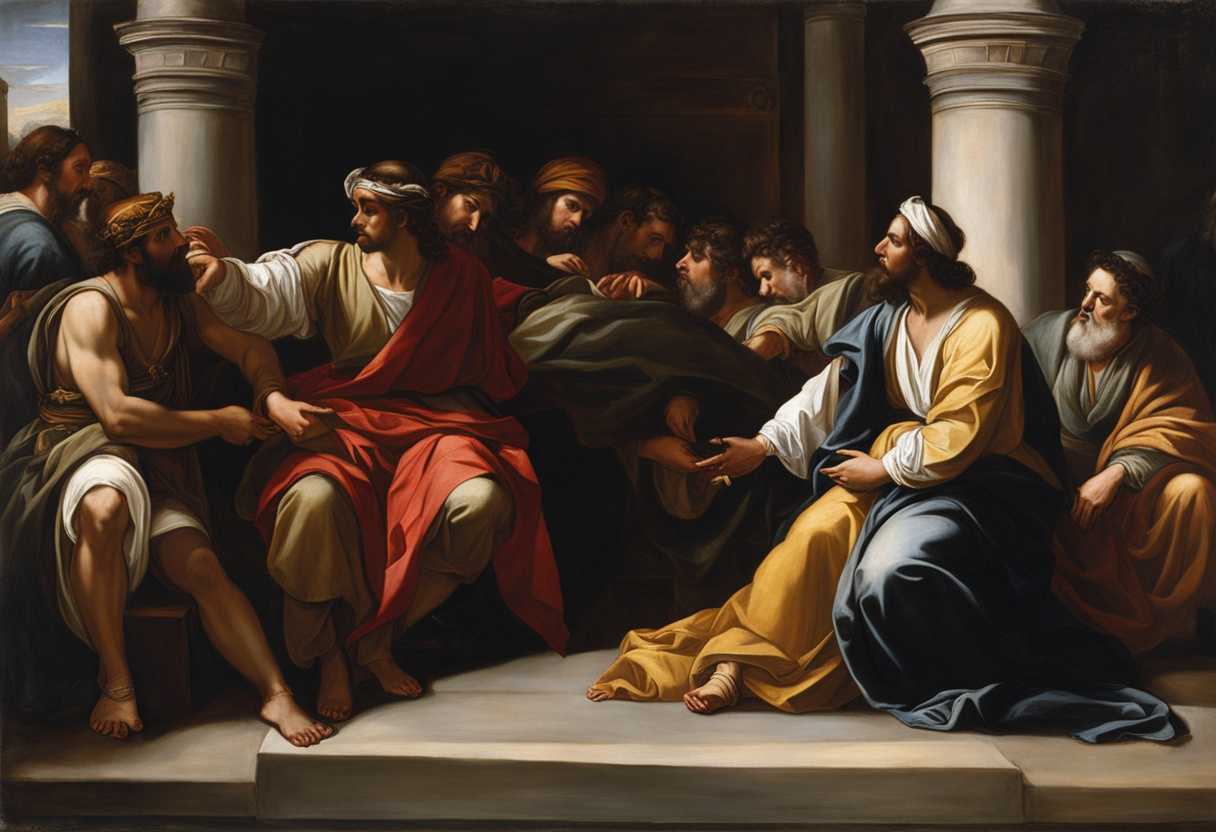
Setting the Scene for 1 Samuel 21:1
In 1 Samuel chapter 21, we find David on the run from King Saul, who is seeking to kill him out of jealousy and fear of David’s rising popularity. Fleeing for his life, David arrives at the town of Nob, where he seeks refuge and supplies from Ahimelech the priest. The scene is tense and filled with uncertainty as David, a young shepherd who has been anointed by the prophet Samuel to be the future king of Israel, finds himself in a vulnerable position.
As David enters the town, he is accompanied by a small group of loyal followers who have chosen to stand by him in his time of need. The group is weary from their journey, their clothes dusty and worn from the road. The sun is setting, casting long shadows over the town as they approach the sanctuary where Ahimelech serves. The air is filled with a sense of urgency and danger, as they know that Saul’s men could be close behind, ready to capture David and bring him to harm.
Ahimelech, a respected priest who serves the Lord faithfully, greets David and his companions with a mixture of concern and compassion. He senses the gravity of the situation and offers what help he can, providing David with food and even the sword of Goliath, which David had taken as a trophy after defeating the giant in battle. The scene is one of desperation and trust, as David puts his faith in God’s protection and seeks solace in the sanctuary of the Lord’s house.
What is 1 Samuel 21:1 about?
This verse showcases the importance of seeking help from unexpected sources in times of need. David, a powerful figure, humbles himself to approach Ahimelek, a priest, for assistance. This act of seeking support from someone outside of his usual circle highlights the value of community and the idea that help can come from unlikely places. David demonstrates his openness to receiving aid in any form it may come by accepting bread and Goliath’s sword from Ahimelek. This verse serves as a reminder that help can be found in various ways, and we should always be willing to accept it, even if it means stepping out of our comfort zones. It challenges us to reevaluate our preconceived notions of where support may come from and encourages us to be open-minded and receptive to assistance from unexpected sources.
Understanding what 1 Samuel 21:1 really means
To provide a structured and insightful commentary on 1 Samuel 21:1, I will break down the passage into several key themes: Context and Setting, Character Analysis, Underlying Meaning, Biblical Cross-References, Relevance Today, and Personal Application.
Context and Setting:
First, let’s set the scene. David, fleeing from King Saul, arrives at Nob, where he meets Ahimelech the priest. Nob was a priestly city, and David was desperate, seeking refuge and sustenance. This context is crucial because it highlights David’s vulnerability and the beginning of his life as a fugitive.
Character Analysis:
The main characters here are David and Ahimelech. David, anointed by God yet hunted by Saul, represents the persecuted righteous man. Ahimelech, unaware of David’s true circumstances, is initially fearful but willing to help. This interaction sets the stage for themes of trust, deception, and divine provision.
Underlying Meaning:
A significant phrase is “David went to Nob.” This simple statement carries a wealth of meaning. Nob was not just a geographical location; it was a place of sanctuary, symbolizing God’s provision in times of need. David’s journey to Nob indicates a search for divine intervention and sustenance. Similarly, Ahimelech’s fear upon meeting David suggests the pervasive tension and uncertainty in Israel due to Saul’s erratic behavior.
Biblical Cross-References:
David’s reliance on God in dire circumstances resonates with other biblical narratives. For instance, in Matthew 12:3-4, Jesus references this very event to explain the importance of mercy over ritual. Additionally, Psalm 34, traditionally attributed to David during his flight, emphasizes God’s deliverance and faithfulness. These cross-references reinforce the theme of divine aid amid human struggles.
Relevance Today:
What does this mean for us today? Many people face situations where they feel pursued by troubles or uncertainties. David’s journey to Nob teaches us that in our distress, we can seek refuge in God. We too can find peace and provision in spiritual sanctuaries, whether through prayer, community, or scripture, just as David found sustenance and support in a place dedicated to God. You sought help when you felt overwhelmed. Perhaps you were hesitant, like Ahimelech, unsure of the outcome. Yet, often, these moments become testimonies of God’s faithfulness and provision. For instance, a woman in our congregation once shared how she found unexpected support from a church group during a financial crisis, much like David finding sustenance in Nob. Her story echoes the timeless truth that God provides, even through unexpected channels.
Conclusion:
Engaging with 1 Samuel 21:1 invites us to reflect on our own journeys and the places we seek refuge. It challenges us to trust in God’s provision and to be open to His guidance, even in uncertain times. Consider how you might find or offer support within your faith community as you ponder where your “Nob” is—a place of sanctuary and provision.
How can we show hospitality and kindness to others?
We can demonstrate hospitality and kindness to others by being generous and offering assistance when someone is in need. We should always be willing to share what we have with others, whether it be food, shelter, or resources. We reflect the love and compassion that God has shown us by showing kindness and hospitality to those around us.
It is important to remember that hospitality goes beyond just providing for basic needs; it also involves treating others with respect, dignity, and warmth. We can show hospitality by welcoming others into our homes, listening to their concerns, and offering a helping hand whenever possible. These acts of kindness not only make a positive impact on others but also reflect our gratitude for the blessings we have received. We, as followers of God, have a duty to show hospitality and kindness to others, just as He has shown us. We embody the spirit of love and compassion that is at the core of Christian values by being open-hearted and generous towards those in need. Our actions can serve as a beacon of hope and light in a world that often lacks these qualities, creating a ripple effect of positivity and goodwill.
Application
Think about how busy life gets with work and family. Yet, even in our rushed world, Ahimelek took time to help David in his need. What small act of kindness can you offer today to someone struggling? Just like a quick but heartfelt email can brighten a coworker’s day, a little effort can make a big difference. What will you do today to spread compassion and support?

Reverend Michael Johnson is an experienced Church Minister with a profound expertise in spirituality and guidance. With a serene presence and a compassionate heart, he has faithfully served his congregation for over 20 years, leading them on a spiritual journey towards inner peace and enlightenment. Reverend Johnson’s extensive knowledge of religious philosophies and profound understanding of human nature have made him a trusted confidant and mentor to many, as he seamlessly weaves his profound wisdom into life teachings. Reverend Johnson’s calming demeanor and empathetic nature continue to uplift and heal souls, nurturing a sense of unity and tranquility within his community.