
1 Samuel 25:4-9 is about David sending messengers to a wealthy man named Nabal to request provisions, showcasing David’s humility and respect despite Nabal’s lack of courtesy, which ultimately leads to a righteous and merciful intervention by Abigail, Nabal’s wise and virtuous wife.
4 David heard in the wilderness that Nabal was shearing his sheep.
5 So David sent ten young men. And David said to the young men, “Go up to Carmel, and go to Nabal and greet him in my name.
6 And thus you shall greet him: ‘Peace be to you, and peace be to your house, and peace be to all that you have.
7 I hear that you have shearers. Now your shepherds have been with us, and we did them no harm, and they missed nothing all the time they were in Carmel.
8 Ask your young men, and they will tell you. Therefore let my young men find favor in your eyes, for we come on a feast day. Please give whatever you have at hand to your servants and to your son David.
9 When David’s young men came, they said all this to Nabal in the name of David, and then they waited.
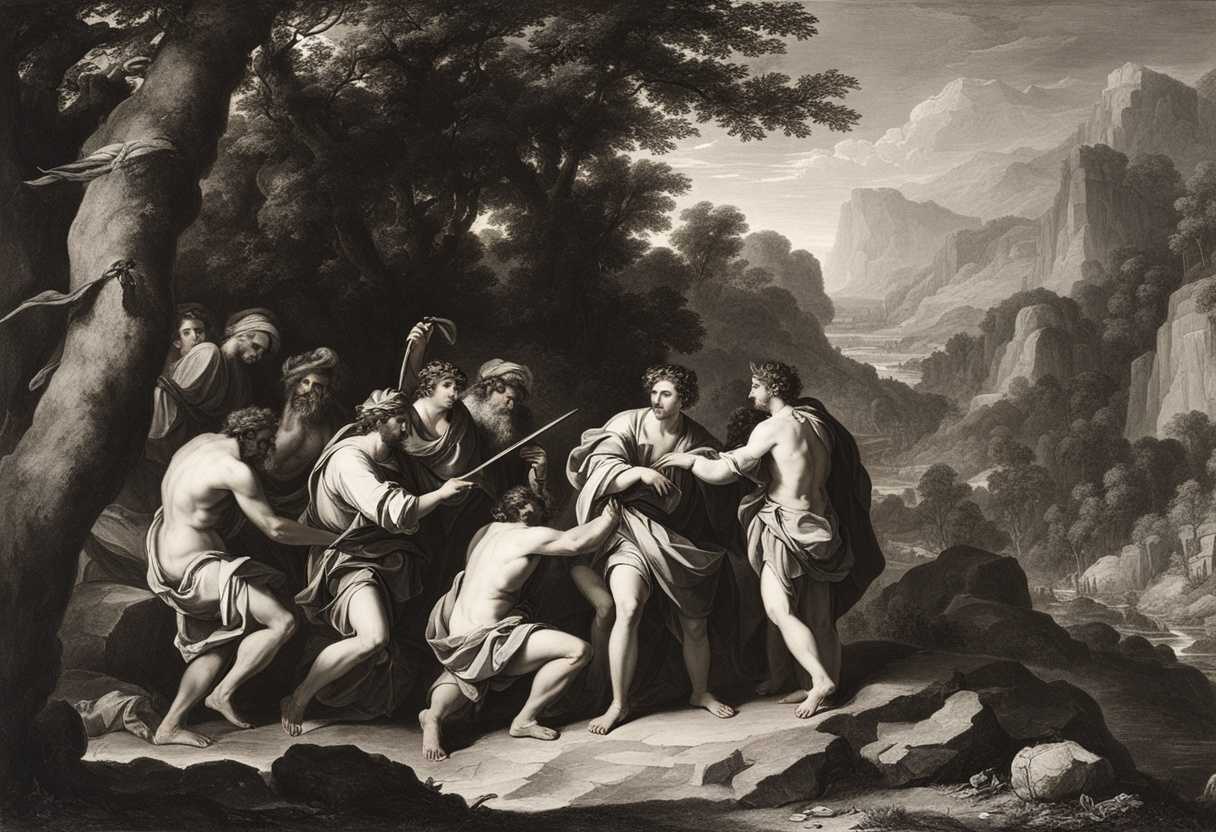
Setting the Scene for 1 Samuel 25:4-9
In 1 Samuel 25:4-9, we find ourselves in the wilderness of Maon, a rugged and arid region in ancient Israel. The scene is set at the estate of Nabal, a wealthy but harsh man known for his arrogance and ill-temper. Nabal’s shepherds have been in the area, tending to his vast flocks, while David and his men, who have been on the run from King Saul, have been providing protection to Nabal’s shepherds.
As the story unfolds, we see David sending messengers to Nabal, requesting provisions and kindness in return for the protection his men have provided. Nabal, living up to his reputation, responds rudely and refuses to offer any assistance to David and his men. This sets the stage for a confrontation between David and Nabal, with tensions running high in the wilderness of Maon.
The characters in this scene include David, a young shepherd who has been anointed by the prophet Samuel to be the future king of Israel, Nabal, a wealthy but foolish landowner, and their respective followers. The wilderness of Maon provides a stark backdrop to the unfolding drama, with its rocky terrain and sparse vegetation adding to the sense of isolation and danger in this remote location.
What is 1 Samuel 25:4-9 about?
Kindness and wisdom have the capacity to overcome rash actions fueled by anger and pride, as we witness in this verse. Nabal’s insulting and disrespectful behavior towards David could have easily escalated into a violent retaliation, mirroring the cycle of vengeance that often perpetuates conflict. However, Abigail’s intervention serves as a beacon of hope, showcasing the transformative power of empathy and rational thinking in defusing tensions and promoting peace. We ponder as we reflect on this verse: How often do we let our emotions and ego dictate our reactions in moments of conflict? Are we willing to set aside our need for vengeance and instead seek understanding and reconciliation, even when we have been wronged? Abigail’s courageous act of defusing the situation through compassion and diplomacy challenges us to consider the long-term consequences of our actions and the profound impact that a gesture of kindness can have in breaking the cycle of violence and fostering harmony. Let us strive to emulate Abigail’s wisdom and generosity in our own interactions.
Understanding what 1 Samuel 25:4-9 really means
In the narrative of 1 Samuel 25:4-9, we find David, on the run from King Saul, extending a gesture of goodwill towards a wealthy man named Nabal. The setting is in the wilderness, where David and his men had been safeguarding Nabal’s flocks. David, aware of Nabal’s sheep-shearing festivities, sends his men to request provisions as a token of appreciation for the protection they had provided. This act showcases David’s humility and respect in seeking assistance during a time of celebration for Nabal.
The key phrases in this passage hold significant meanings that shed light on the characters’ intentions and actions. David’s peaceful greeting of “Peace be to you, and peace be to your house, and peace be to all that you have” exemplifies his desire for harmony and goodwill. By highlighting the integrity and safety his men ensured for Nabal’s shepherds, David appeals to Nabal’s sense of reciprocity and generosity. His humble request for provisions during a feast day reflects a respectful approach that seeks to maintain positive relations.
Drawing parallels from related biblical passages, we see the contrast between David’s actions and Nabal’s response. Proverbs 11:25 emphasizes the virtue of generosity, which Nabal fails to exhibit towards David and his men. In Matthew 5:9, the blessing upon peacemakers resonates with David’s peaceful approach, contrasting with Nabal’s ungracious behavior. Galatians 6:9’s encouragement to persist in doing good aligns with David’s consistent protection of Nabal’s shepherds, despite Nabal’s lack of gratitude.
The relevance of this passage extends to contemporary society, emphasizing the importance of gratitude, generosity, and humility. In a world often driven by self-interest, the story of David and Nabal serves as a poignant reminder to acknowledge and appreciate the kindness and support others offer. It underscores the value of respectful communication and humble requests, fostering positive interactions and mutual respect.
An anecdote can further illustrate the message of this passage. Picture a scenario where a volunteer group diligently cleans a neighborhood for the community’s benefit. When they seek support from a wealthy resident, their efforts are met with rudeness and ingratitude. This mirrors David’s respectful request and Nabal’s ungrateful response, highlighting the significance of recognizing and supporting those who contribute positively to our lives.
In conclusion, 1 Samuel 25:4-9 encapsulates timeless lessons on gratitude, generosity, and humility. It prompts us to acknowledge the good others do for us, respond with kindness, and cultivate a community built on mutual respect and care. As we reflect on David’s actions and Nabal’s reactions, we are challenged to embody virtues that promote harmony and goodwill in our interactions with others.
How can we use our resources to bless others?
We can use our resources to bless others by being generous and compassionate, just like how Nabal was approached by David’s men for help in the Bible verse mentioned. We can make a positive impact in their lives and show them the love and provision of God by sharing what we have with those in need. It’s important to keep in mind that we are called to be good stewards of the resources entrusted to us and to use them to help those around us who may be in need. Nabal had the opportunity to bless David and his men by providing food and support in the story from 1 Samuel. Similarly, we can look for ways to support and uplift others through our own resources, whether it be through our time, money, talents, or material goods. We not only make a difference in their lives but also demonstrate God’s goodness and love for all His people by being willing to help and bless others.
Application
Be like Abigail today. Nestle into the chaos of conflict and softly untangle the web of chaos with your wisdom and grace. Answer the call to be a peacemaker in your world. How will you choose to handle conflict today?

Reverend Michael Johnson is an experienced Church Minister with a profound expertise in spirituality and guidance. With a serene presence and a compassionate heart, he has faithfully served his congregation for over 20 years, leading them on a spiritual journey towards inner peace and enlightenment. Reverend Johnson’s extensive knowledge of religious philosophies and profound understanding of human nature have made him a trusted confidant and mentor to many, as he seamlessly weaves his profound wisdom into life teachings. Reverend Johnson’s calming demeanor and empathetic nature continue to uplift and heal souls, nurturing a sense of unity and tranquility within his community.