
1 Samuel 28:7 is about King Saul seeking guidance from a medium, which ultimately highlights his desperation and lack of trust in God’s help, leading to his downfall.
7 Then Saul said to his servants, “Seek out for me a woman who is a medium, that I may go to her and inquire of her.” And his servants said to him, “Behold, there is a medium at En-dor.”
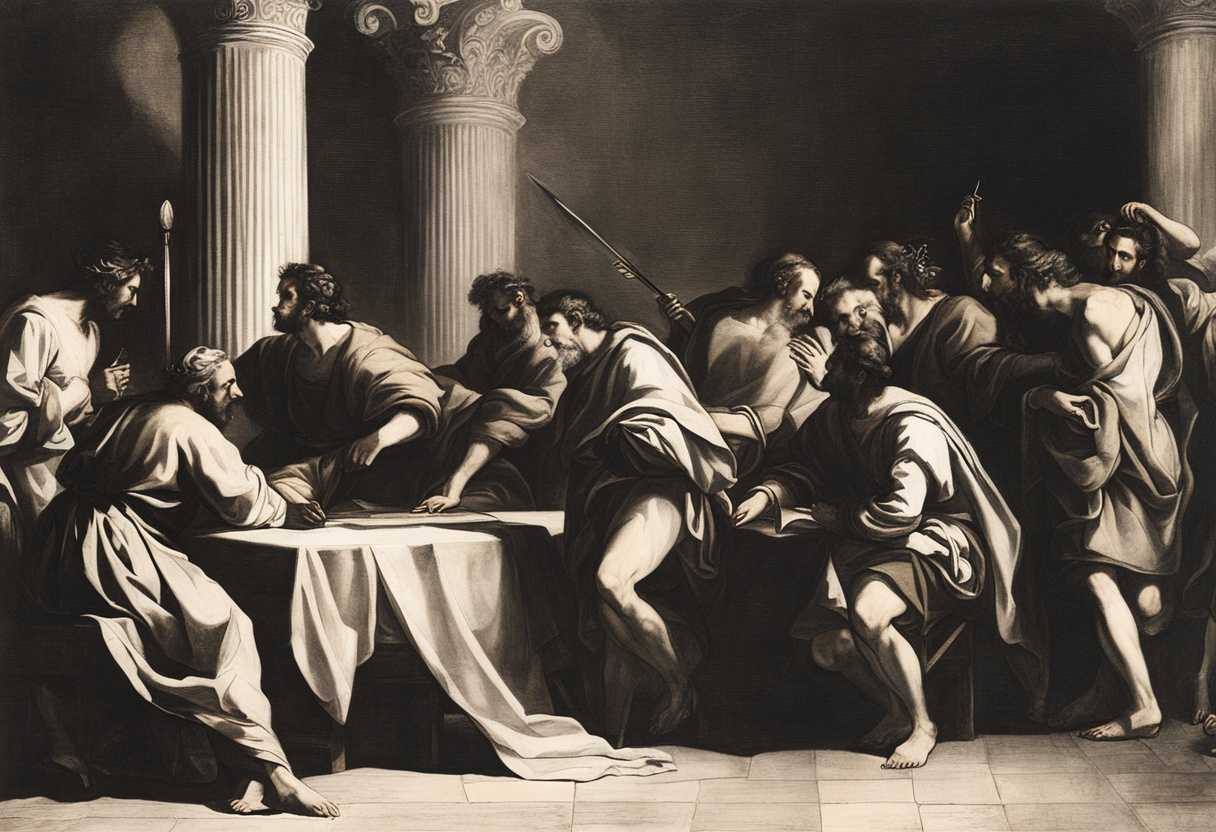
Setting the Scene for 1 Samuel 28:7
In 1 Samuel chapter 28, we find King Saul in a desperate situation. The Philistine army has gathered for war against Israel, and Saul is filled with fear and anxiety as he seeks guidance from the Lord. However, the Lord remains silent, refusing to answer Saul through dreams, prophets, or the Urim and Thummim. Feeling abandoned and desperate for direction, Saul makes a fateful decision to consult a medium, a practice strictly forbidden by God.
The scene is set in the dark and eerie surroundings of Endor, a town located in the territory of Issachar. Saul disguises himself and, under the cover of night, seeks out the medium to summon the spirit of the deceased prophet Samuel. The medium, known for her ability to communicate with the dead, is initially hesitant but eventually agrees to help Saul. As the spirit of Samuel is summoned, a sense of foreboding fills the room, setting the stage for a haunting and consequential encounter between the living and the dead.
Surrounded by flickering candlelight and the musty scent of incense, Saul and the medium nervously await the appearance of Samuel’s spirit. The tension in the room is palpable as they brace themselves for the words of the prophet, unsure of what consequences this forbidden act may bring. The scene is fraught with a sense of impending doom and the weight of Saul’s disobedience hangs heavy in the air, setting the stage for a pivotal moment in Saul’s reign as king of Israel.
What is 1 Samuel 28:7 about?
This verse highlights the desperate and misguided actions of Saul, who seeks a medium to consult the spirit of Samuel even though God had explicitly forbidden consulting mediums. Saul’s decision to resort to a medium shows his lack of faith in God and his desperation for guidance. Saul demonstrates his rebellion against God’s commands and his increasing separation from divine guidance by seeking Samuel’s spirit through a forbidden practice.
We can see from Saul’s actions the dangers of turning away from God’s guidance and seeking answers through illegitimate means. Instead of trusting in God and seeking his guidance through prayer and repentance, Saul chooses to pursue a quick fix through a medium. This verse serves as a cautionary tale, reminding us of the consequences of straying from God’s path and seeking answers outside of his will. It prompts us to reflect on our own actions and decisions, encouraging us to always seek God’s guidance and trust in his plan, even when faced with uncertainty or challenges.
Understanding what 1 Samuel 28:7 really means
Structure of the Commentary:
- Introduction to the Verse
- Context and Background
- Explanation of Key Phrases
- Cross-Referencing with Other Passages
- Relevance to Modern Life
- Personal Anecdote
- Conclusion and Reflection
Introduction to the Verse:
This verse marks a critical moment in the life of King Saul when he seeks guidance in a manner that starkly contrasts with his earlier actions and God’s commandments. The underlying meaning of this verse offers profound lessons about faith, obedience, and the consequences of our choices.
Context and Background:
To understand the gravity of this verse, we must consider Saul’s spiritual and emotional state. At this point, Saul is desperate and feeling abandoned by God. He has previously disobeyed God’s commands and now finds himself in a dire situation. This verse captures the moment he decides to seek out a medium, which is strictly forbidden in the Mosaic Law (Leviticus 19:31). Saul’s actions reveal his desperation and loss of faith, which can serve as a sobering reminder for us.
Explanation of Key Phrases:
One key phrase in this verse is Saul’s directive to find “a woman who is a medium.” This phrase underscores Saul’s willingness to forsake God’s laws to find answers. The term “medium” refers to someone who claims to communicate with the dead, an act explicitly condemned in Deuteronomy 18:10-12. Saul’s choice to seek a medium shows a significant departure from his earlier reliance on God and highlights the consequences of straying from divine guidance.
Cross-Referencing with Other Passages:
Looking at other passages, such as Isaiah 8:19, we see a clear warning against seeking out mediums and spiritists instead of God. Isaiah questions, “Why consult the dead on behalf of the living?” This rhetorical question emphasizes the futility and spiritual danger of turning away from God for guidance. James 1:5 encourages believers to ask God for wisdom, promising that He gives generously to all without finding fault.
Relevance to Modern Life:
Today, people might not seek out mediums in the same way, but the underlying temptation to turn to questionable sources for guidance remains. We might be tempted to seek quick fixes or answers from unreliable or unethical sources in moments of desperation. This verse serves as a reminder to remain steadfast in our faith and seek God’s wisdom, even when He seems silent.
Personal Anecdote:
I recall a time when I felt utterly lost in my own life. Facing a significant career decision, I found myself tempted to follow advice that contradicted my values. Instead, I chose to spend time in prayer and seek counsel from trusted, godly friends. The clarity and peace I received reaffirmed my faith in God’s timing and guidance. This personal experience resonates with the message of this verse, illustrating the importance of turning to God rather than succumbing to desperation. This verse from 1 Samuel 28:7 challenges us to examine where we turn for guidance. It serves as a cautionary tale about the dangers of abandoning God’s commandments in times of distress. Reflect on your own life: Where do you seek guidance when the path ahead seems unclear? God promises to be our ever-present help in times of trouble, so let us remember to trust in Him.
Can communication with spirits provide true guidance?
The Bible verse 1 Samuel 28:7 recounts the story of Saul seeking guidance from a medium to communicate with the deceased prophet Samuel. This act was an act of disobedience to God, as seeking guidance from spirits or the dead is condemned in Scripture. The passage illustrates the dangers of seeking guidance from spirits or the dead, as it can lead one away from God’s will and teachings. Samuel ultimately delivers a message of judgment and doom to Saul in this story, leading to his downfall. The narrative serves as a cautionary tale about the consequences of turning to mediums and spirits for guidance instead of seeking God’s wisdom and direction. It highlights the importance of relying on God alone for guidance and refraining from practices that go against His commands. Aligning oneself with God’s will and following His word ultimately provide true guidance.
Application
Think about your daily grind, juggling work deadlines and family responsibilities. When you seek guidance, do you turn to quick fixes, or do you root yourself in the true source of wisdom? God’s Word is your ultimate roadmap; prayer is your compass. Commit to this path, ensuring every choice aligns with His teachings. Will you choose the true north in your life journey?

Reverend Michael Johnson is an experienced Church Minister with a profound expertise in spirituality and guidance. With a serene presence and a compassionate heart, he has faithfully served his congregation for over 20 years, leading them on a spiritual journey towards inner peace and enlightenment. Reverend Johnson’s extensive knowledge of religious philosophies and profound understanding of human nature have made him a trusted confidant and mentor to many, as he seamlessly weaves his profound wisdom into life teachings. Reverend Johnson’s calming demeanor and empathetic nature continue to uplift and heal souls, nurturing a sense of unity and tranquility within his community.