
1 Samuel 30:26-31 is about the fair distribution of spoils of war among the Israelites, emphasizing the importance of unity and generosity in times of victory.
26 When David came to Ziklag, he sent part of the spoil to his friends, the elders of Judah, saying, “Here is a present for you from the spoil of the enemies of the Lord.”
27 to those in Bethel, in Ramoth of the Negeb, to those in Jattir,
28 and to those who were in Aroer, and to those who were in Siphmoth, and to those who were in Eshtemoa,
29 and to those in Racal, to those in the cities of the Jerahmeelites, to those in the cities of the Kenites,
30 also to those in Hebron, and to all the places where David and his men had roamed.
31 and to those who were in Hebron, and to all the places where David himself and his men had roamed.
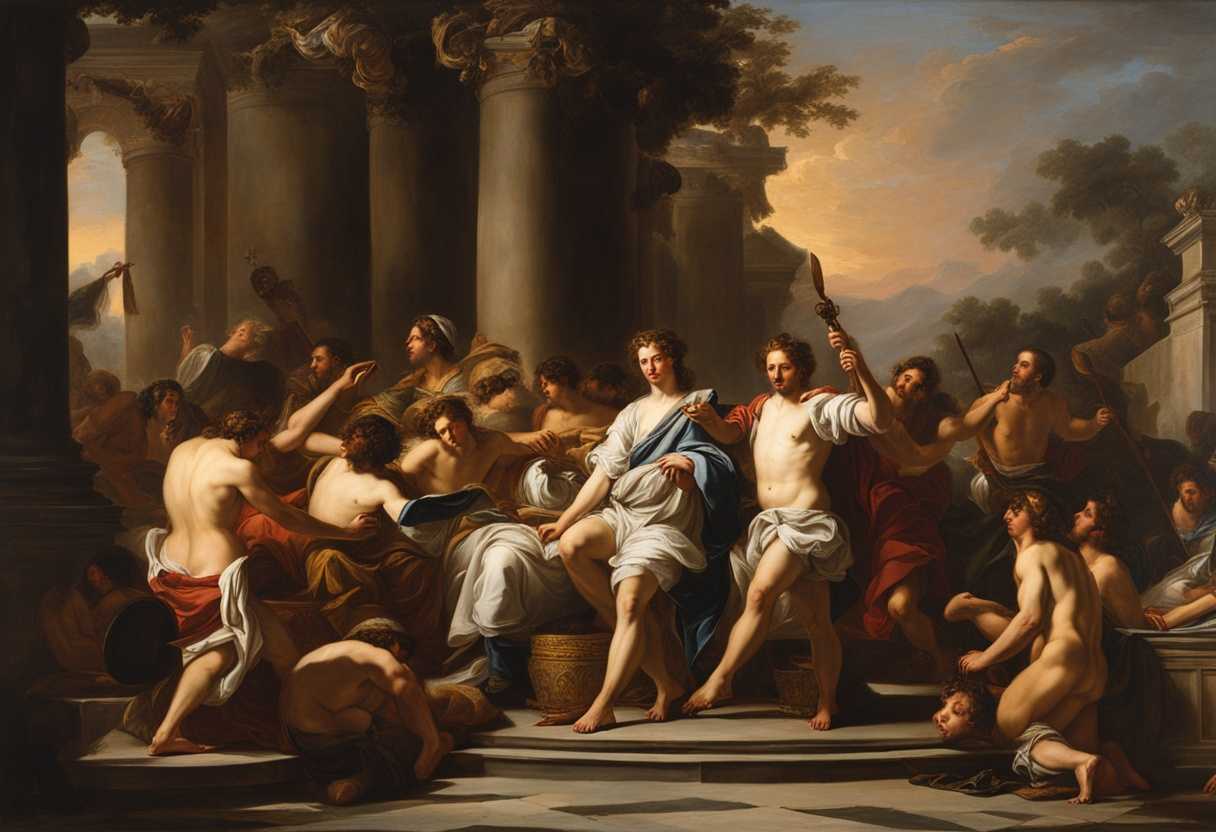
Setting the Scene for 1 Samuel 30:26-31
In 1 Samuel chapter 30, we find David and his men returning to their camp in Ziklag after being rejected by the Philistine commanders. As they approach their home, they see smoke rising in the distance and realize that their camp has been raided and burned by the Amalekites. Distraught and filled with grief, David and his men find that their families have been taken captive, including David’s two wives, Ahinoam and Abigail.
In the scene described in 1 Samuel 30:26-31, David and his men have just successfully rescued their families and recovered all that was taken from them in the raid. They are now returning to Ziklag with their loved ones, along with the spoils of their victory. The atmosphere is one of relief and joy as they make their way back to their camp, grateful for the deliverance they have experienced.
The surroundings are likely a mix of rugged terrain and wilderness, as Ziklag was located in the southern region of Judah. The men are weary but triumphant, their faces lit up with the flickering light of the campfires they have set up along the way. As they march back to Ziklag, the sound of their voices raised in songs of thanksgiving and praise fills the air, echoing off the hills and valleys around them. It is a moment of celebration and unity, as David and his men come together to rejoice in the goodness and faithfulness of the Lord.
What is 1 Samuel 30:26-31 about?
A beautiful depiction of a community united by their faith in God and their commitment to fairness and justice is seen in this verse. When the spoils of battle are distributed among the people, it is done so with the utmost care and equality, ensuring that everyone receives their fair share. This highlights the importance of unity and solidarity among believers, as well as the principles of honesty and equality in their actions.
Think about the significance of this verse in relation to our own lives. How often do we see unity and fairness in our interactions with others? How can we strive to emulate the values portrayed in this verse in our own communities and relationships? Reflecting on this verse reminds us of the importance of treating others with kindness, respect, and fairness, just as God intended for his people.
Let this verse serve as a guiding light for us to embody the principles of unity and justice in our daily lives, creating a community that is bound together by love, compassion, and understanding.
Understanding what 1 Samuel 30:26-31 really means
In 1 Samuel 30:26-31, we witness a significant moment in David’s life as he deals with the aftermath of recovering his loved ones and possessions from the Amalekites. After this victorious event, David displays a heart of gratitude and generosity by sending part of the plunder to the elders of Judah. This act is not merely a distribution of wealth but a recognition that their success and spoils are blessings from God, emphasizing the importance of acknowledging the source of our victories.
David’s words, “Here is a gift for you from the plunder of the Lord’s enemies,” reveal his deep understanding that their triumph was not solely due to their own strength or strategies but was ultimately orchestrated by God. This acknowledgment shifts the focus from self-pride to gratitude towards the divine source of their success, setting a profound example for us to recognize and appreciate God’s hand in our achievements.
Furthermore, David’s intentional distribution of the plunder to various towns like Bethel, Ramoth Negev, and Jattir underscores his sense of community and gratitude. By sharing the spoils with those who had supported him during his time of need, David exemplifies the importance of reciprocating kindness and acknowledging the contributions of others in our lives. This act of generosity not only strengthens bonds within the community but also fosters a culture of mutual support and appreciation.
The passage resonates with timeless principles that transcend its historical context, reminding us of the enduring values of generosity and gratitude. In a world often consumed by individual success and self-centered pursuits, David’s actions serve as a poignant reminder of the significance of sharing our blessings with others. By extending a hand of generosity to those around us, especially to those who have stood by us in challenging times, we not only uplift others but also cultivate a spirit of unity and reciprocity within our communities.
Reflecting on David’s actions prompts us to consider our own attitudes towards success and blessings. Are we quick to attribute our achievements solely to our efforts, or do we recognize the divine hand guiding us? Do we share our blessings with others, acknowledging the support we have received along the way? These questions challenge us to adopt a mindset of gratitude and generosity, fostering a culture of mutual blessing and support in our interactions with others.
In conclusion, the narrative of David’s generosity in 1 Samuel 30:26-31 serves as a timeless example for us to emulate in our lives. By acknowledging God’s role in our victories, sharing our blessings with others, and expressing gratitude for the support we receive, we not only build stronger communities but also cultivate a spirit of generosity and appreciation that enriches our relationships and fosters a culture of mutual blessing.
How can we show compassion and share with others?
One way we can show compassion and share with others is by recognizing that everyone deserves to benefit from the blessings we receive. We can look out for those who may be struggling or in need around us, just as David shared the spoils of victory with those who were too exhausted to keep up. We can spread compassion and show that we care for the well-being of those around us by intentionally including others and being generous with what we have. Helping others and sharing resources can help build a sense of community and unity. When we are willing to give to others in times of need, we create a bond of empathy and support. This not only lifts up those who are receiving help but also strengthens relationships and fosters a sense of togetherness. We can create a network of support that transcends individual needs and promotes collective well-being by practicing compassion and sharing with others.
Lastly, showing compassion and sharing with others are actions that reflect the love and kindness that we have received from above. We can recognize that our ability to help others and show compassion comes from a place of gratitude and humility, just as David acknowledged that the success of the battle was ultimately from God. We demonstrate our faith and gratitude for the blessings we have received by being generous and compassionate towards others, and we honor the source of all goodness by passing on that love and care to those around us.
Application
Let’s embrace the spirit of sharing and unity from 1 Samuel 30:26-31, embodying David’s generosity towards others. Like granting spoils to all, let’s extend compassion and support to those in our community. Today, let’s be the beacon of light and kindness in a world that needs it. How will you inspire and uplift others today?

Reverend Michael Johnson is an experienced Church Minister with a profound expertise in spirituality and guidance. With a serene presence and a compassionate heart, he has faithfully served his congregation for over 20 years, leading them on a spiritual journey towards inner peace and enlightenment. Reverend Johnson’s extensive knowledge of religious philosophies and profound understanding of human nature have made him a trusted confidant and mentor to many, as he seamlessly weaves his profound wisdom into life teachings. Reverend Johnson’s calming demeanor and empathetic nature continue to uplift and heal souls, nurturing a sense of unity and tranquility within his community.