
1 Samuel 4:1-3 is about the Israelites being defeated in battle by the Philistines due to their lack of faith and reliance on the ark of the covenant as a mere token of power rather than genuine trust in God.
1 And the word of Samuel came to all Israel. Now Israel went out to battle against the Philistines. They encamped at Ebenezer, and the Philistines encamped at Aphek.
2 And the Philistines drew up to meet Israel, and when the battle spread, Israel was defeated by the Philistines, who killed about four thousand men on the field of battle.
3 And when the troops came to the camp, the elders of Israel said, “Why has the Lord defeated us today before the Philistines? Let us bring the ark of the covenant of the Lord here from Shiloh, that it may come among us and save us from the power of our enemies.”
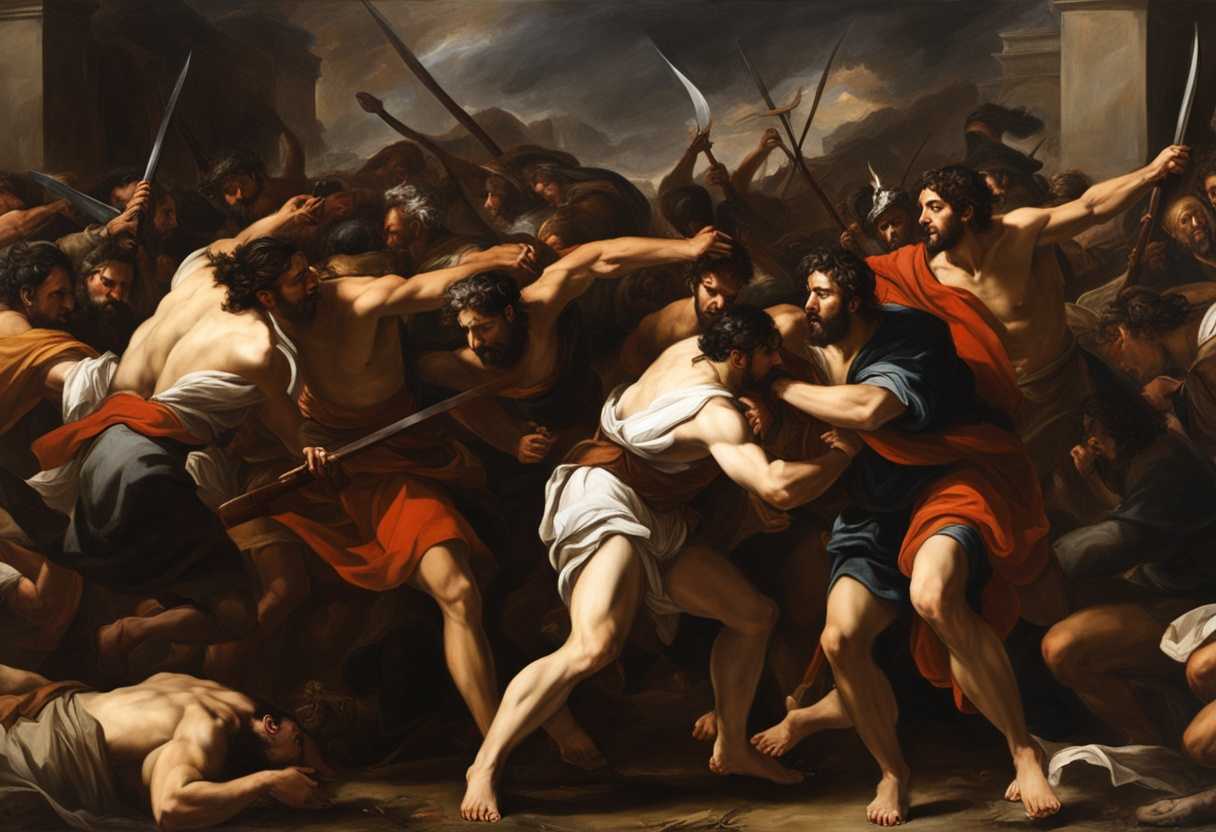
Setting the Scene for 1 Samuel 4:1-3
The scene in 1 Samuel chapter 4 opens with the Israelites preparing for battle against the Philistines. The Israelites had suffered a defeat in a previous battle, and now they were regrouping and strategizing for the upcoming conflict. The Israelite army was camped at Ebenezer, a location near Aphek, while the Philistines were encamped at Aphek.
Among the key figures in this scene are the high priest Eli and his two sons, Hophni and Phinehas, who were also priests. The Israelites had brought the Ark of the Covenant with them to the battlefield, believing that its presence would ensure their victory. The Ark was a sacred chest containing the stone tablets of the Ten Commandments and was seen as a symbol of God’s presence among the Israelites.
The atmosphere in the camp was tense as the Israelites prepared for the battle ahead, with both soldiers and priests seeking divine intervention and guidance. The stage was set for a significant confrontation between the Israelites and the Philistines, with the outcome hanging in the balance as both sides readied themselves for the impending conflict.
What is 1 Samuel 4:1-3 about?
The people of Israel, having been defeated by their enemies, the Philistines, decide to bring the ark of the covenant into battle with them in this verse, showing a tragic event. The ark of the covenant was a sacred object symbolizing the presence of God among the Israelites. The Israelites may have hoped for divine intervention and victory by bringing it into battle. However, their actions show a lack of faith and trust in God’s power, relying instead on a physical object.
The consequence of their decision was a devastating loss, demonstrating that God cannot be manipulated or used as a tool for human gain. This verse serves as a powerful reminder of the importance of genuine faith and reliance on God, rather than relying on external symbols or rituals. It prompts us to reflect on our own beliefs and actions, encouraging us to trust in God’s plan and timing, rather than seeking quick fixes or shortcuts to success. What does this verse teach us about the nature of true faith? How can we apply this lesson in our own lives, ensuring that our trust in God is genuine and unwavering?
Understanding what 1 Samuel 4:1-3 really means
In 1 Samuel 4:1-3, we find the Israelites engaged in a fierce battle with their perennial foes, the Philistines. The Israelites, unfortunately, suffer a devastating defeat, losing around four thousand men in the conflict. This defeat prompts the elders of Israel to question the reasons behind their loss, leading them to contemplate the will of the Lord in allowing such a defeat to occur. In their search for divine intervention, they decide to bring the Ark of the Covenant from Shiloh, believing that its presence will secure their victory in the ongoing battle.
The phrase “The word of Samuel came to all Israel” highlights Samuel’s pivotal role as a prophet and judge, recognized as a messenger of God among the people. The elders’ query, “Why has the Lord defeated us today before the Philistines?” reflects a moment of introspection and a desire to comprehend God’s actions and intentions in the face of adversity. Their decision to bring the Ark of the Covenant from Shiloh underscores their belief in the Ark as a symbol of God’s presence and power, with the expectation that it will ensure their triumph over their enemies.
Drawing parallels from related biblical passages, such as Joshua 6:6-7 and Numbers 10:35-36, we see the significance attributed to the Ark of the Covenant in past victories and as a symbol of God’s guidance and protection. However, in 1 Samuel 7:3-4, we learn from Samuel’s counsel to the Israelites that true victory stems from genuine repentance and faith, emphasizing the importance of heartfelt devotion over mere reliance on symbols or rituals.
The narrative in 1 Samuel 4:1-3 holds relevance for contemporary audiences by highlighting the distinction between faith and symbols. While religious symbols like the Ark hold significance, the passage underscores that true victory and divine favor come from authentic faith and obedience to God, rather than from relying solely on external representations of faith. In times of defeat or hardship, the passage encourages individuals to seek God’s guidance and discern His will, emphasizing the importance of a genuine relationship with God over superficial displays of religiosity.
To illustrate this point further, consider a sports team that attributes their success to a lucky charm. When faced with a critical loss despite having the charm, the team reflects on their strategies and teamwork rather than solely relying on the charm for victory. Similarly, the Israelites’ defeat serves as a reminder for us to look beyond symbols and rituals, focusing instead on cultivating a deep and meaningful connection with God.
Applying the lessons from 1 Samuel 4:1-3 to our lives today involves engaging in self-examination during challenging times, prioritizing genuine faith over external displays of religiosity, and recognizing that God’s presence and power transcend physical symbols. By delving into the nuances of this passage and extracting its timeless truths, we can glean valuable insights to enrich our spiritual journey and deepen our relationship with the Divine.
What idols are we placing above God in our lives?
We often unknowingly place different idols above God in our lives. These idols can take various forms, such as material possessions, personal ambitions, relationships, or even forms of entertainment. When we prioritize these idols over our relationship with God, we are essentially placing them above Him in our lives. Just like the Israelites who put their trust in the ark of the covenant rather than trusting in God, we can sometimes rely on our own resources and abilities instead of seeking God’s guidance and strength.
This verse serves as a reminder for us to examine our hearts and identify any idols that may be taking precedence over God. It challenges us to reevaluate our priorities and ensure that God holds the rightful place of honor and authority in our lives. We can deepen our relationship with God and experience true fulfillment in Him alone by recognizing and dethroning these idols. May we seek to constantly align our hearts with God’s will and strive to serve Him wholeheartedly, putting Him above all else in our lives.
Application
Let’s learn from 1 Samuel 4:1-3 and avoid the repercussions of ignoring God’s guidance. It’s a wake-up call to always seek and obey His plan for us. Don’t settle for routine or superficial gestures; strive for a meaningful connection with the Divine. How will you choose to honor this call and stay devoted to God every step of the way?

Reverend Michael Johnson is an experienced Church Minister with a profound expertise in spirituality and guidance. With a serene presence and a compassionate heart, he has faithfully served his congregation for over 20 years, leading them on a spiritual journey towards inner peace and enlightenment. Reverend Johnson’s extensive knowledge of religious philosophies and profound understanding of human nature have made him a trusted confidant and mentor to many, as he seamlessly weaves his profound wisdom into life teachings. Reverend Johnson’s calming demeanor and empathetic nature continue to uplift and heal souls, nurturing a sense of unity and tranquility within his community.