
1 First of all, then, I urge that supplications, prayers, intercessions, and thanksgivings be made for all people,
2 for kings and all who are in high positions, that we may lead a peaceful and quiet life, godly and dignified in every way.
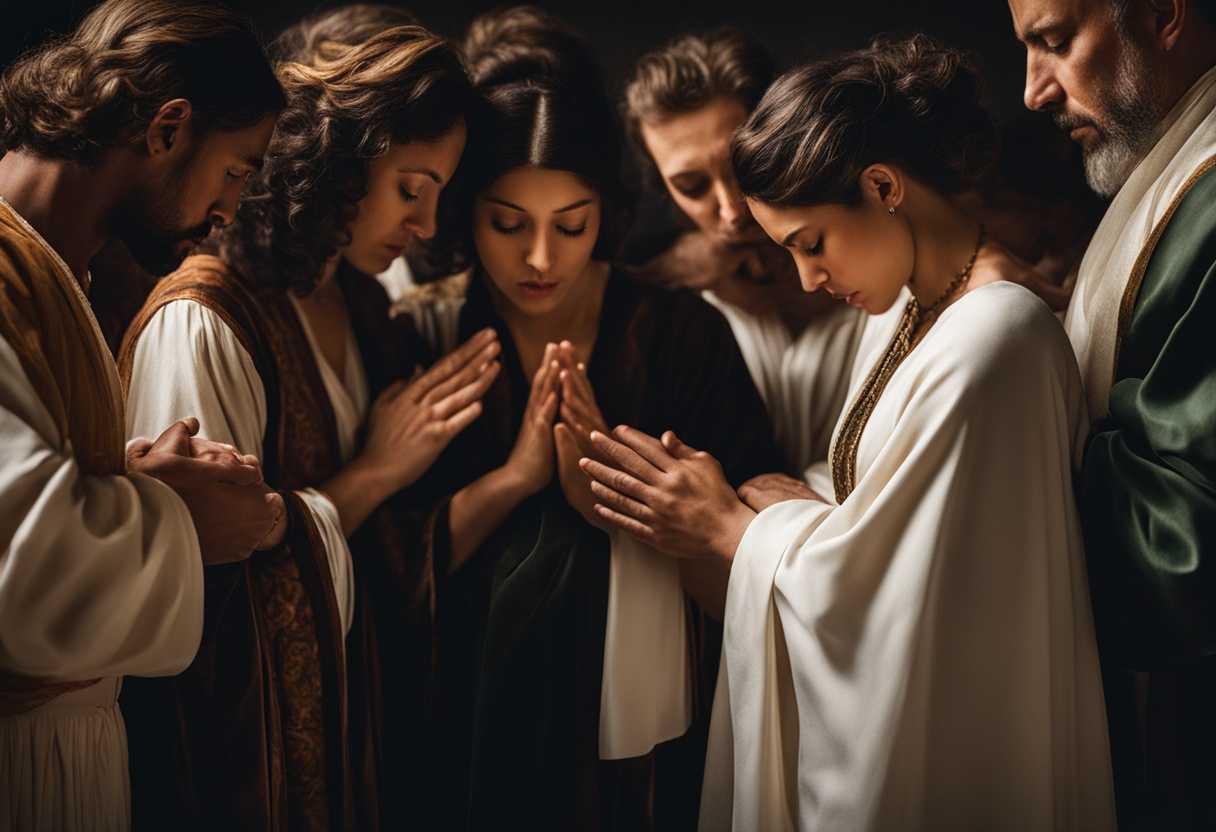
Setting the Scene for 1 Timothy 2:1-2
In the bustling city of Ephesus, a diverse group of believers has gathered in a dimly lit room for a bible study session. The room is adorned with flickering oil lamps, casting a warm glow on the faces of those present. The air is filled with the scent of burning incense, creating a sense of reverence and peace.
Among the attendees are Lydia, a wealthy merchant known for her generosity, and Priscilla, a skilled tentmaker who is passionate about sharing the gospel. They are joined by Aquila, Priscilla’s husband, a knowledgeable teacher of the scriptures. Also present is Timothy, a young and zealous disciple of Paul, who has been entrusted with the task of leading and guiding this group of believers.
As they settle in, Timothy stands up and opens a scroll containing the writings of Paul. He begins to read from 1 Timothy chapter 2, exhorting the group to pray for all people, including those in positions of authority, so that they may lead peaceful and quiet lives in all godliness and holiness. The room is filled with a sense of unity and purpose as they bow their heads in prayer, lifting up their voices in intercession for the city and its leaders.
What is 1 Timothy 2:1-2 about?
This verse is a powerful reminder of the importance of prayer in our lives. It encourages us to pray not just for ourselves, but for all people, including those in positions of power and authority. We show love and compassion towards others and contribute to the peace and godliness in our community by lifting them up in prayer.
Think about it this way – when we pray for our leaders and those around us, we are actively participating in shaping a more peaceful and harmonious world. Our prayers have the potential to bring about positive changes not just in their lives but in ours as well. We invite God’s guidance and wisdom to flow through us by connecting with Him through prayer, helping us make better decisions and promoting godly behavior in all aspects of our lives.
So, let us take this verse to heart and commit to praying for all people, especially those in leadership roles, so that we may contribute to the establishment of peace and godliness in our communities. Let us remember the power of prayer and how it can bring about transformation in the world around us.
Understanding what 1 Timothy 2:1-2 really means
Structure for Commentary:
- Introduction to the Verse
- Explanation of Key Phrases
- Connection to Other Biblical Passages
- Contemporary Relevance
- Anecdote for Illustration
- Paul urges the community in 1 Timothy 2:1-2 to offer prayers, intercessions, and thanksgivings for everyone, particularly for kings and all in authority. This directive is given so that believers may lead quiet and peaceful lives marked by godliness and dignity. The counsel is both practical and spiritual, offering a pathway to societal harmony and personal piety.
Explanation of Key Phrases
The phrases “supplications, prayers, intercessions, and thanksgivings” encompass a broad spectrum of communication with God. Supplications refer to earnest requests, prayers are more general conversations with God, intercessions involve standing in the gap for others, and thanksgivings denote gratitude. Paul emphasizes the inclusivity of God’s love and the community’s responsibility to care for others through spiritual practices by urging these actions for “all men.”
Focusing on “kings and all in authority,” Paul highlights the importance of praying for leaders. This is not just for their benefit but for the well-being of society as a whole. When leaders are guided by wisdom and integrity, it often results in a more just and peaceful community. The outcome Paul envisions is a life that is “quiet and peaceable,” filled with “godliness and dignity.”
Connection to Other Biblical Passages
This call to prayer aligns with other biblical teachings. For instance, in Jeremiah 29:7, the Israelites are instructed to seek the peace of the city where they have been exiled and to pray to the Lord on its behalf, for in its peace, they will find peace. Similarly, Romans 13:1-7 emphasizes the role of governing authorities and the Christian’s duty to respect and pray for them. These passages collectively underscore the importance of interceding for societal leaders to foster an environment where godly living can flourish. This exhortation to pray for all leaders remains profoundly relevant in today’s world, marked by political division and social unrest. Regardless of personal political leanings, praying for those in power can promote a more unified and peaceful society. It encourages believers to rise above partisanship and seek the common good, aligning their actions with divine will. A community faced severe political turmoil. A small congregation in the midst of this decided to commit to daily prayers for their leaders, regardless of party affiliation. Over time, not only did they notice a change in their own attitudes, becoming less cynical and more hopeful, but they also witnessed a gradual, positive shift in local governance. This experience mirrors the transformative power of collective prayer and how it can bring about both personal and communal peace.
Call to Reflection and Action
Reflect on your own prayer life. Do you include leaders and people in authority in your supplications? How might your community change if everyone committed to praying earnestly for those in power? This passage challenges us to move beyond our personal biases and to seek God’s guidance for all who hold authority. We contribute to a more peaceful and godly world, fulfilling the vision Paul set forth. Let us commit to making prayer a regular part of our lives, not just for ourselves and our loved ones, but for everyone, especially those in positions of power. Through this, we can embody the quiet, peaceable, and dignified life that Paul envisions for us all.
How can we pray effectively for all people?
To pray effectively for all people, we should first approach God with a heart of compassion and love for others. We must remember that every individual is created in the image of God and deserving of our prayers. Our prayers should be sincere, with a genuine desire for the well-being and peace of all people, regardless of their background or beliefs.
Additionally, our prayers should be inclusive and encompassing, covering a wide range of needs and circumstances that people may be facing. We can lift up prayers for those in positions of authority, for their wisdom and guidance, as well as for those in need, for their provision and protection. We fulfill the command to intercede on behalf of others and demonstrate our love for our neighbors as ourselves by praying for all people with humility and a spirit of unity.
Application
Imagine your daily grind at work; you tackle challenges head-on, but sometimes you need guidance from above. Now, think about your family, thriving when you invest your time and love. Just like that, prayer can powerfully influence our leaders and the world. Don’t underestimate your ability to create change. Will you take a moment today to uplift our leaders and seek a better future for all?

Reverend Michael Johnson is an experienced Church Minister with a profound expertise in spirituality and guidance. With a serene presence and a compassionate heart, he has faithfully served his congregation for over 20 years, leading them on a spiritual journey towards inner peace and enlightenment. Reverend Johnson’s extensive knowledge of religious philosophies and profound understanding of human nature have made him a trusted confidant and mentor to many, as he seamlessly weaves his profound wisdom into life teachings. Reverend Johnson’s calming demeanor and empathetic nature continue to uplift and heal souls, nurturing a sense of unity and tranquility within his community.