
2 Chronicles 10:16-19 is about the consequences of King Rehoboam’s pride and unwillingness to listen to wise counsel, leading to the division of Israel and Judah.
16 And when all Israel saw that the king did not listen to them, the people answered the king, “What portion do we have in David? We have no inheritance in the son of Jesse. Each of you to your tents, O Israel! Look now to your own house, David.” So all Israel went to their tents.
17 But Rehoboam reigned over the people of Israel who lived in the cities of Judah.
18 Then King Rehoboam sent Hadoram, who was taskmaster over the forced labor, and the people of Israel stoned him to death with stones. And King Rehoboam quickly mounted his chariot to flee to Jerusalem.
19 So Israel has been in rebellion against the house of David to this day.
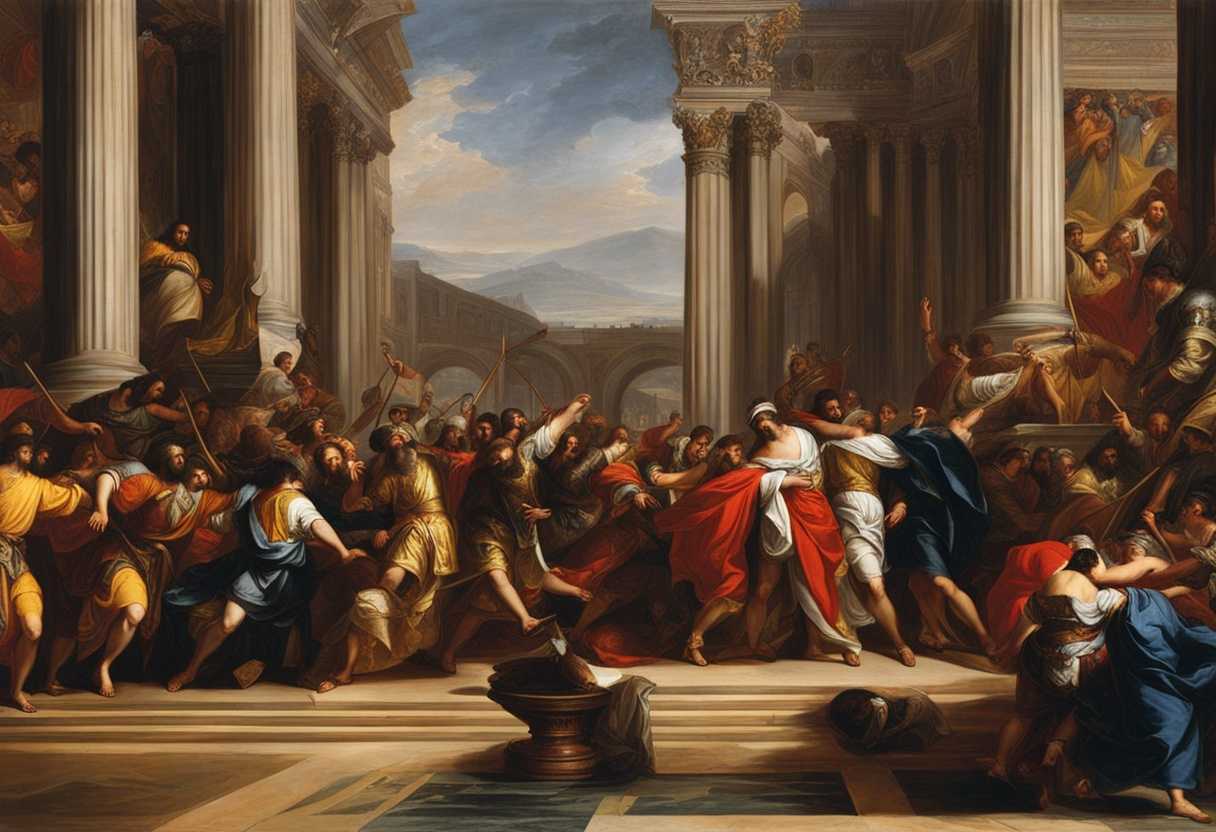
Setting the Scene for 2 Chronicles 10:16-19
In 2 Chronicles chapter 10, we find ourselves in the kingdom of Israel after the death of King Solomon. Rehoboam, Solomon’s son, has just ascended to the throne. The people of Israel, feeling burdened by the heavy yoke of taxation and labor imposed by Solomon, come to Rehoboam requesting relief. Rehoboam seeks counsel from the elders who advised his father, as well as from his peers who grew up with him.
The scene is set in the royal palace, with Rehoboam seated on his throne, surrounded by his advisors and court officials. The elders, wise and experienced, urge Rehoboam to show humility and compassion towards the people, advising him to lighten their load. On the other hand, the younger advisors, influenced by pride and arrogance, counsel Rehoboam to assert his authority even more firmly than his father.
Tensions rise as Rehoboam, swayed by the counsel of his peers, responds harshly to the people’s plea for relief. This pivotal moment sets the stage for the division of the kingdom, with ten tribes breaking away to form the northern kingdom of Israel under Jeroboam. The scene is filled with intrigue, political maneuvering, and the consequences of leadership decisions, illustrating the complexities of power and governance in ancient Israel.
What is 2 Chronicles 10:16-19 about?
Rehoboam’s prideful actions as the king of Israel show the consequences in this verse. His refusal to listen to wise counsel and his harsh treatment of the people resulted in the division of the kingdom of Israel, fulfilling God’s plan for the nation. This serves as a powerful reminder of the importance of humility and wise decision-making, especially for those in positions of leadership. Our own pride and stubbornness can often lead to negative outcomes in our lives and the lives of those around us as we reflect on this verse. Are we open to receiving wise counsel and feedback, or do we insist on our own way like Rehoboam did? The story of Rehoboam serves as a cautionary tale about the dangers of arrogance and the value of humility and listening to others. We should learn from Rehoboam’s mistakes and strive to approach our decisions with humility, seeking wisdom and guidance from others. We can avoid unnecessary division and conflict by doing so, and instead, work towards fulfilling God’s plans for peace and unity in our lives and communities.
Understanding what 2 Chronicles 10:16-19 really means
The passage in 2 Chronicles 10:16-19 recounts a pivotal moment in the history of Israel, where the kingdom is divided following King Solomon’s death. The rejection of Rehoboam’s rule by the northern tribes and the subsequent formation of the separate kingdom of Israel under Jeroboam mark a significant turning point. The phrases used in this passage carry deep meanings, such as the northern tribes’ rejection of the Davidic dynasty and their call to abandon allegiance, symbolized by the phrase “To your tents, Israel!” The emphasis on focusing on their own affairs, as seen in “Look after your own house, David!” underscores the finality of their decision to secede.
Parallel accounts in 1 Kings 12:16-19 provide additional insights into the political and social dynamics at play during this division. Hosea 8:4 and Jesus’ teaching in Matthew 12:25 further illuminate the consequences of rebellion and division, emphasizing the spiritual and practical implications of such actions. These biblical passages resonate with timeless themes of leadership, unity, and the repercussions of division, offering valuable lessons for individuals and societies today.
The relevance of this historical event to contemporary life is striking. The importance of wise and compassionate leadership in families, communities, and nations cannot be overstated. Ignoring the needs and voices of the people, as seen in Rehoboam’s response, can lead to division and strife. Anecdotes from modern organizations where poor leadership results in discontent and fragmentation mirror the consequences of ignoring the concerns of others, highlighting the universal nature of these lessons.
In conclusion, the division of Israel serves as a poignant reminder of the repercussions of neglecting the voices and needs of those under our care. It prompts us to reflect on our own leadership styles and how we can promote unity and understanding in our spheres of influence. By drawing insights from this historical event, we can strive to cultivate empathy, active listening, and servant leadership to build a more harmonious and united future for all.
How do we seek wise counsel in decision-making?
Seeking wise counsel in decision-making involves consulting with individuals who are experienced, knowledgeable, and possess wisdom in the relevant area. It is important to seek advice from those who have proven themselves to make sound decisions and have a track record of success. We can benefit from their perspective, insights, and wisdom by seeking guidance from such individuals, which can help us make better-informed decisions.
Additionally, seeking wise counsel involves humility and a willingness to listen and consider different viewpoints. It is important to approach those we seek advice from with an open mind, ready to receive feedback and guidance without being defensive or closed off. We can make more well-rounded decisions that take into account various factors and considerations by being open to different perspectives and considering alternative viewpoints. Seeking wise counsel in decision-making ultimately reflects a recognition of our own limitations and a desire to make the best choices possible. We can tap into a wealth of knowledge and insights by seeking advice from those who possess wisdom and experience to help guide us towards making decisions that align with our goals and values.
Application
In a world that values independence and self-reliance, it can be easy to fall into the trap of pride and arrogance. Yet, when we open ourselves to seeking guidance and advice from those around us, we grow in wisdom and strength. Let us not be afraid to admit when we need help and lean on the support of others. By embracing humility, we unlock a world of knowledge and understanding that can lead us towards better decisions and outcomes. Are you willing to set aside your pride and embrace the power of seeking wisdom from others?

Reverend Michael Johnson is an experienced Church Minister with a profound expertise in spirituality and guidance. With a serene presence and a compassionate heart, he has faithfully served his congregation for over 20 years, leading them on a spiritual journey towards inner peace and enlightenment. Reverend Johnson’s extensive knowledge of religious philosophies and profound understanding of human nature have made him a trusted confidant and mentor to many, as he seamlessly weaves his profound wisdom into life teachings. Reverend Johnson’s calming demeanor and empathetic nature continue to uplift and heal souls, nurturing a sense of unity and tranquility within his community.