
2 Chronicles 19:8-11 is about King Jehoshaphat appointing judges throughout the land to uphold justice and reminding them that they judge not for man, but for the Lord who is with them in judgement.
8 Moreover, in Jerusalem Jehoshaphat appointed certain Levites and priests and heads of families of Israel, to give judgment for the Lord and to decide disputed cases. They had their seat at Jerusalem.
9 And he charged them: “Thus you shall do in the fear of the Lord, in faithfulness, and with your whole heart:
10 Whenever a case comes to you from your brothers who live in their cities, concerning bloodshed, law or commandment, statutes or rules, then you shall warn them, that they may not incur guilt before the Lord and wrath may not come upon you and your brothers. Thus you shall do, and you will not incur guilt.
11 Behold, Amariah the chief priest is over you in all matters of the Lord; and Zebadiah the son of Ishmael, the governor of the house of Judah, in all the king’s matters, and the Levites will serve you as officers. Deal courageously, and may the Lord be with the upright!
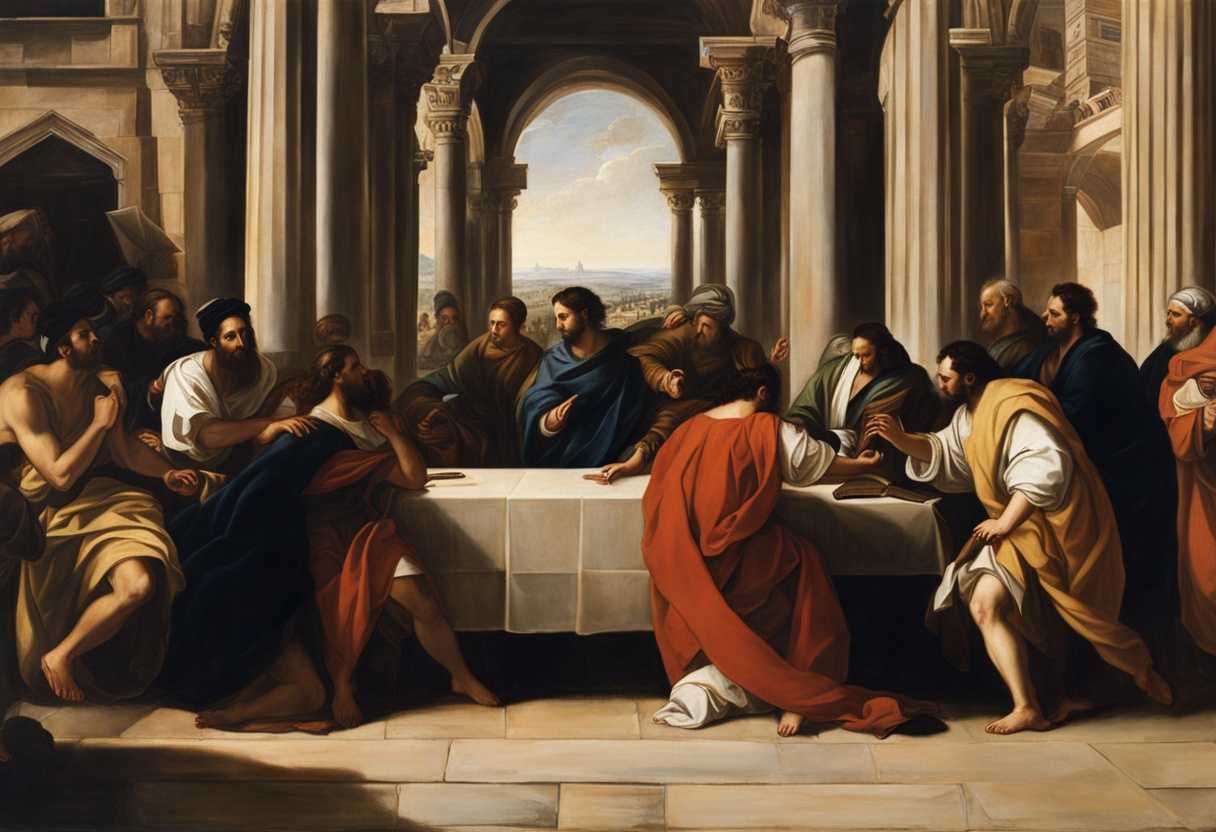
Setting the Scene for 2 Chronicles 19:8-11
In 2 Chronicles 19:8-11, we find ourselves in the ancient kingdom of Judah during the reign of King Jehoshaphat. The scene takes place in Jerusalem, specifically in the courtyard of the king’s palace. King Jehoshaphat has just returned from a victorious battle against the Moabites and Ammonites, where the Lord granted him a great triumph.
As the sun sets over the city, King Jehoshaphat sits on his throne surrounded by his officials, priests, and Levites. Among them are the chief priest, the high officials, and the elders of Judah. The atmosphere is one of solemnity and reflection as the king addresses the assembly. He commends them for their loyalty to the Lord and reminds them of their duty to administer justice with integrity and fear of the Lord.
The courtyard is adorned with flickering torches casting a warm glow on the faces of those gathered. The sound of the city settling for the night can be heard in the distance as King Jehoshaphat’s words resonate with wisdom and authority. The scene captures a moment of unity and reverence as the king and his councilors prepare to uphold the principles of righteousness and faithfulness in their governance.
What is 2 Chronicles 19:8-11 about?
King Jehoshaphat demonstrates wisdom and righteousness in this verse by appointing judges who will administer justice with the fear of God. Jehoshaphat is ensuring that the laws of the land are upheld with integrity and fairness by selecting judges who honor and respect God. This decision reflects his commitment to govern his kingdom in alignment with God’s principles and values.
Imagine a leader who prioritizes righteousness and seeks to establish a just society where people are treated equitably. Jehoshaphat is upholding the importance of justice and setting a powerful example for his people by appointing judges who fear God. This verse serves as a reminder of the significance of integrating faith and moral values into governance, leading to a society where righteousness and justice prevail.
Understanding what 2 Chronicles 19:8-11 really means
In the historical setting of 2 Chronicles 19:8-11, we find King Jehoshaphat of Judah implementing judicial reforms to ensure justice and adherence to God’s laws. By appointing judges from diverse backgrounds, including Levites, priests, and heads of Israelite families, Jehoshaphat emphasizes the importance of a representative judiciary involving religious leaders and community heads. These appointees were tasked with administering the law of the Lord and settling disputes, highlighting their dual role in both religious and civil matters, where God’s law served as the foundation of justice. The call to “act with courage, and may the Lord be with those who do well” encourages integrity and bravery in leadership, with the promise of divine support for righteous actions.
Drawing parallels with related biblical passages such as Deuteronomy 16:18-20, Micah 6:8, and James 1:5, we see a consistent emphasis on appointing just leaders, acting with integrity, and seeking divine wisdom in making decisions. These passages reinforce the importance of justice, mercy, humility, and the need for divine guidance in upholding righteousness. In today’s context, where corruption and injustice are prevalent, this passage resonates as a call for leaders and individuals to prioritize justice and integrity in their actions. The involvement of various community leaders in the judicial process underscores the significance of collective responsibility and accountability in ensuring a just society.
The assurance that God supports those who act justly serves as a source of encouragement for individuals striving to do what is right in a world filled with moral challenges. A modern-day application of this passage can be seen in a scenario where a community leader faces a difficult decision with far-reaching consequences. By seeking wisdom from God and involving trusted advisors, such as teachers, parents, and stakeholders, a fair and just resolution can be reached. For instance, a school principal dealing with a case of bullying might consult various parties to ensure a collaborative and just approach, reflecting the principles highlighted in 2 Chronicles 19:8-11.
In conclusion, this passage serves as a call to action for all individuals to uphold justice, seek wisdom, and act with courage in their daily lives. Whether in positions of leadership or in personal interactions, we are challenged to embody God’s justice and integrity, striving to make decisions that reflect righteousness and fairness. Let us heed this call to emulate the virtues of justice, integrity, and divine guidance in all aspects of our lives.
How can we uphold justice with the fear of God?
We can uphold justice with the fear of God by recognizing that God is the ultimate Judge who sees all and knows all. When we fear God, we are mindful of His commands and seek to align our actions with His will. This fear motivates us to act justly and righteously in all our dealings with others, knowing that we are accountable to Him for our actions.
The fear of God also compels us to seek wisdom and guidance from Him in matters of justice. We understand that true justice is not limited to human laws and judgments, but is rooted in God’s truth and righteousness. With the fear of God in our hearts, we strive to be fair, impartial, and merciful in our decisions, reflecting His perfect justice. The fear of God reminds us of our own fallibility and need for mercy. When we administer justice with humility and compassion, we emulate God’s character and demonstrate the transformative power of His love. Upholding justice with the fear of God enables us to bring light and hope into a world filled with darkness and injustice.
Application
Let’s embrace the call to serve faithfully and act with integrity in everything we do. Let’s strive to be fair and honest, unwavering in our dedication to doing what is right even when faced with temptations. Will you join me in embodying these values every day, embodying the values of honesty and righteousness? Let’s stand firm in our beliefs and convictions, knowing that our actions reflect our commitment to living a life of honor. Will you choose to be a shining example of goodness and righteousness in our modern world?

Reverend Michael Johnson is an experienced Church Minister with a profound expertise in spirituality and guidance. With a serene presence and a compassionate heart, he has faithfully served his congregation for over 20 years, leading them on a spiritual journey towards inner peace and enlightenment. Reverend Johnson’s extensive knowledge of religious philosophies and profound understanding of human nature have made him a trusted confidant and mentor to many, as he seamlessly weaves his profound wisdom into life teachings. Reverend Johnson’s calming demeanor and empathetic nature continue to uplift and heal souls, nurturing a sense of unity and tranquility within his community.