
2 Chronicles 24:4-7 is about the restoration and repair of the temple of the Lord after a time of neglect and abandonment, highlighting the importance of faithfully maintaining one’s spiritual practices and connection to God.
4 Some time afterward, Joash decided to restore the house of the Lord.
5 And he gathered the priests and the Levites and said to them, “Go out to the cities of Judah and gather from all Israel money to repair the house of your God from year to year, and see that you act quickly.” But the Levites did not act quickly.
6 So the king summoned Jehoiada the chief and said to him, “Why have you not required the Levites to bring in from Judah and Jerusalem the tax levied by Moses, the servant of the Lord, and the congregation of Israel for the tent of the testimony?”
7 For the sons of Athaliah, that wicked woman, had broken into the house of God and had also used all the dedicated things of the house of the Lord for the Baals.
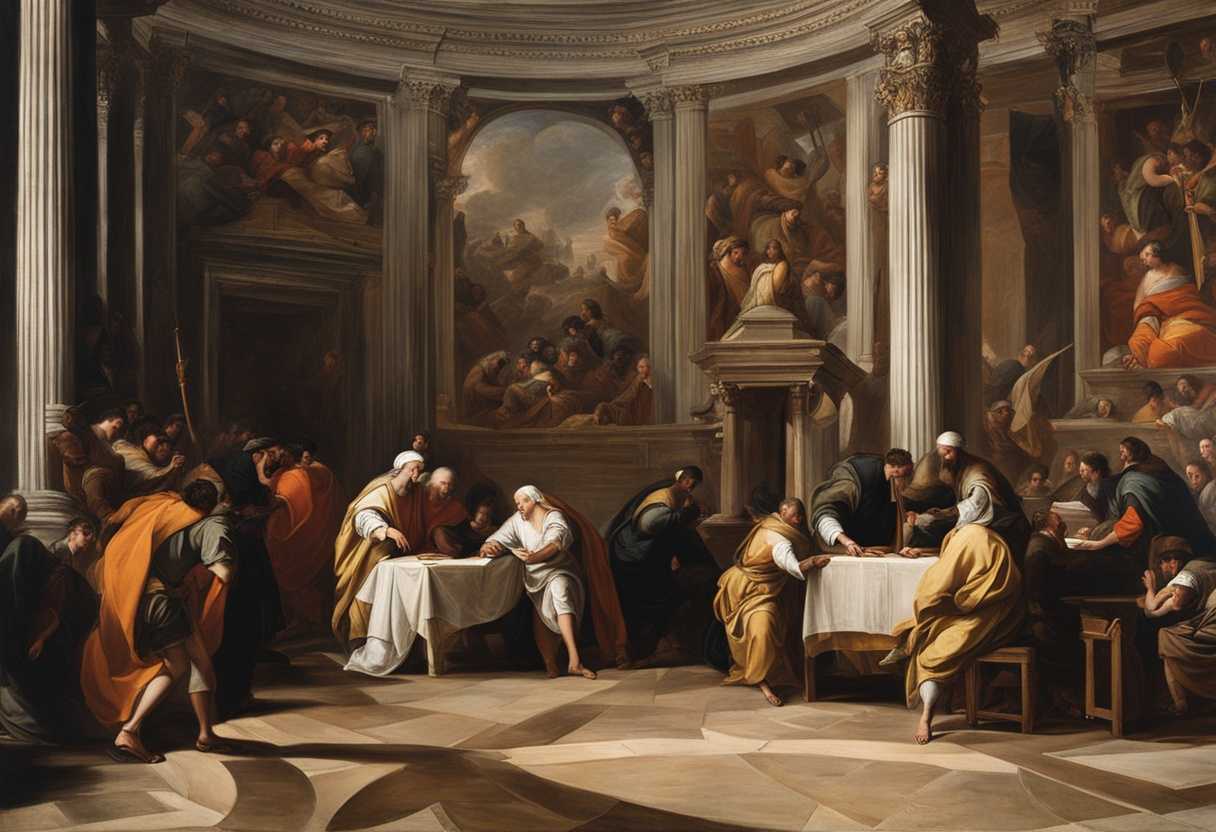
Setting the Scene for 2 Chronicles 24:4-7
The scene in 2 Chronicles 24:4-7 takes place in the temple of the Lord in Jerusalem during the reign of King Joash. King Joash had ascended to the throne at a young age and had been guided by the priest Jehoiada. Under Jehoiada’s influence, Joash had initiated repairs to the temple that had fallen into disrepair.
In this particular moment, King Joash gathers the priests and Levites together to collect funds for the restoration of the temple. The king instructs them to go out to the towns of Judah and collect money from the people to support the rebuilding efforts. The priests and Levites, motivated by their devotion to the Lord and the king, set out to carry out the king’s command.
The surroundings are likely bustling with activity as the priests and Levites travel throughout the towns of Judah, interacting with the people and collecting donations for the temple. The atmosphere is one of unity and purpose as the community comes together to support the restoration of the sacred place of worship. The scene reflects a moment of faith, obedience, and communal effort in the service of God.
What is 2 Chronicles 24:4-7 about?
This verse provides a powerful example of obedience and reverence towards God. King Joash understood the importance of honoring God’s commands and took action to repair the temple through offerings. Joash demonstrated his faith and devotion to God by fulfilling God’s command, setting an example for his people to follow. This act of repairing the temple not only served as a physical restoration but also signified a spiritual renewal and commitment to God. Joash’s actions are significant. How does his willingness to obey God’s commands inspire us in our own faith journeys? What can we learn from Joash about the importance of honoring and respecting sacred spaces and traditions? Reflect on how we can apply Joash’s example of obedience and devotion in our own lives today. Let’s take this verse as a reminder of the importance of staying faithful to God’s teachings and commands, always seeking to uphold and glorify His name in all that we do.
Understanding what 2 Chronicles 24:4-7 really means
In the historical setting of 2 Chronicles 24:4-7, we find King Joash of Judah taking a significant step towards spiritual restoration by deciding to repair the Temple of the Lord. This initiative was crucial as the temple had suffered neglect and desecration under previous rulers, notably the sons of Athaliah, who had even used its sacred objects for pagan worship. Joash’s determination to restore the temple symbolizes a return to true worship and a revival of the spiritual life of Judah.
The phrases used in these verses carry profound meanings that resonate with themes of renewal and righteousness. Joash’s choice to restore the temple reflects his commitment to honoring God and preserving the sanctity of the central place of worship. The mention of Athaliah’s wickedness and the desecration of the temple serves as a stark reminder of the consequences of moral decay and idolatry.
Drawing parallels with other biblical passages, such as Elijah repairing the altar of the Lord in 1 Kings 18:30 and Nehemiah’s call to rebuild Jerusalem’s walls in Nehemiah 2:17, we see a recurring theme of restoration and renewal in the face of spiritual decline. King Hezekiah’s temple repairs in 2 Chronicles 29:3 further emphasize the importance of reviving faith and honoring God through physical restoration.
The relevance of Joash’s actions extends to people today, urging individuals to seek spiritual renewal, uphold righteous leadership, and address past failures. Just as Joash took responsibility for restoring the temple, we are called to renew our commitment to true worship and rectify any spiritual neglect in our lives and communities. The passage serves as a timeless reminder of the power of repentance and restoration in the face of moral decay.
Consider a personal anecdote where a community church undergoes a transformation akin to Joash’s temple restoration. Through the efforts of a new pastor and the congregation, both the physical and spiritual aspects of the church are revitalized, leading to a renewed sense of faith and commitment to God. This narrative illustrates the transformative impact of spiritual renewal and the importance of taking proactive steps towards restoration.
In conclusion, let us reflect on areas in our lives or communities that may require restoration and renewal. Inspired by Joash’s dedication and the examples of biblical figures who pursued revival, let us commit to revitalizing our faith and surroundings. Remember that with God’s guidance and our willingness to take action, restoration and renewal are always within reach.
How can we remain faithful to God?
To remain faithful to God, we can follow the example set in the passage by dedicating our lives to serving Him and obeying His commandments. One way to do this is by prioritizing our relationship with God above all else and committing ourselves to worship and honor Him with our actions. We can stay faithful by consistently seeking spiritual renewal and growth in our faith, just as Joash ordered the repair and restoration of the temple.
Additionally, we can remain faithful to God by continually seeking His guidance and following His will in all aspects of our lives. This involves listening to His word, praying for His wisdom, and actively aligning our thoughts, words, and deeds with His teachings. We can sustain a strong connection with God and deepen our faith through a lifestyle that reflects our commitment to Him.
Lastly, we can remain faithful to God by guarding against distractions and influences that may lead us away from Him. We can resist temptations and stay focused on our commitment to serving and honoring God by staying vigilant and surrounding ourselves with fellow believers who encourage and support our faith journey. Through these efforts, we can uphold our faithfulness to God and experience His blessings and guidance in our lives.
Application
Let’s dig deep within our souls, just like we pour our heart into our work and family, to cultivate our spiritual core. Remember Joash’s dedication to rebuilding the temple? Let us mirror that commitment in nurturing our spiritual foundation. Take action today to shore up your bond with God and His community. How will you lay your bricks of faith and love to fortify your spiritual home?

Reverend Michael Johnson is an experienced Church Minister with a profound expertise in spirituality and guidance. With a serene presence and a compassionate heart, he has faithfully served his congregation for over 20 years, leading them on a spiritual journey towards inner peace and enlightenment. Reverend Johnson’s extensive knowledge of religious philosophies and profound understanding of human nature have made him a trusted confidant and mentor to many, as he seamlessly weaves his profound wisdom into life teachings. Reverend Johnson’s calming demeanor and empathetic nature continue to uplift and heal souls, nurturing a sense of unity and tranquility within his community.