
1 Amaziah was twenty-five years old when he began to reign, and he reigned twenty-nine years in Jerusalem. His mother’s name was Jehoaddan of Jerusalem.
2 And he did what was right in the eyes of the Lord, yet not with a whole heart.
3 Now when the kingdom was firmly established before him, he killed his servants who had struck down the king his father.
4 But he did not put their children to death, according to what is written in the Law, in the Book of Moses, where the Lord commanded, “Fathers shall not die because of their children, nor children die because of their fathers, but each one shall die for his own sin.”
5 Then Amaziah assembled the men of Judah and set them by fathers’ houses under commanders of thousands and of hundreds for all Judah and Benjamin. And he mustered those twenty years old and upward, and found that they were 300,000 choice men, fit for war, able to handle spear and shield.
6 He hired also 100,000 mighty men of valor from Israel for 100 talents of silver.
7 But a man of God came to him and said, “O king, do not let the army of Israel go with you, for the Lord is not with Israel, with all these Ephraimites.
8 But go, act, be strong for the battle. Why should you suppose that God will cast you down before the enemy? For God has power to help or to cast down.”
9 And Amaziah said to the man of God, “But what shall we do about the hundred talents that I have given to the army of Israel?” The man of God answered, “The Lord is able to give you much more than this.”
10 Then Amaziah discharged the army that had come to him from Ephraim, to go home again. And they became very angry with Judah and returned home in fierce anger.
11 But Amaziah took courage and led out his people and went to the Valley of Salt and struck down 10,000 men of Seir.
12 And the men of Judah captured ten thousand alive and brought them to the top of a rock and threw them down from the top of the rock, and they were all dashed to pieces.
13 But the men of the army whom Amaziah sent back, not letting them go with him to battle, raided the cities of Judah, from Samaria to Beth-horon, and struck down 3,000 people in them and took much spoil.
14 Now when Amaziah came from striking down the Edomites, he brought the gods of the men of Seir and set them up as his gods and worshiped them, making offerings to them.
15 Therefore the Lord was angry with Amaziah and sent to him a prophet, who said to him, “Why have you sought the gods of a people who did not deliver their own people from your hand?”
16 But as he was speaking, the king said to him, “Have we made you a royal counselor? Stop! Why should you be struck down?” So the prophet stopped, but said, “I know that God has determined to destroy you, because you have done this and have not listened to my counsel.”
17 Then Amaziah king of Judah took counsel and sent to Joash the son of Jehoahaz, son of Jehu, king of Israel, saying, “Come, let us look one another in the face.”
18 And Joash king of Israel sent word to Amaziah king of Judah, “A thistle on Lebanon sent to a cedar on Lebanon, saying, ‘Give your daughter to my son for a wife,’ and a wild beast of Lebanon passed by and trampled down the thistle.
19 You said, ‘See, I have struck down Edom,’ and your heart has lifted you up in boastfulness. But stay at home, for why should you provoke trouble so that you fall, you and Judah with you?”
20 But Amaziah would not listen, for it was of God, in order that he might give them into the hand of their enemies, because they had sought the gods of Edom.
21 So Joash king of Israel went up, and he and Amaziah king of Judah faced one another in battle at Beth-shemesh, which belongs to Judah.
22 And Judah was defeated by Israel, and every man fled to his home.
23 And Joash king of Israel captured Amaziah king of Judah, the son of Joash, son of Ahaziah, at Beth-shemesh, and brought him to Jerusalem and broke down the wall of Jerusalem for four hundred cubits, from the Ephraim Gate to the Corner Gate.
24 And he took all the gold and silver, and all the vessels that were found in the house of God with Obed-edom, and the treasures of the king’s house, the hostages also, and returned to Samaria.
25 Amaziah the son of Joash, king of Judah, lived fifteen years after the death of Joash the son of Jehoahaz, king of Israel.
26 Now the rest of the acts of Amaziah, from first to last, are they not written in the Book of the Kings of Judah and Israel?
27 From the time when he turned away from the Lord they made a conspiracy against him in Jerusalem, and he fled to Lachish. But they sent after him to Lachish and put him to death there.
28 Now the rest of the acts of Amaziah, from first to last, are they not written in the Book of the Kings of Judah and Israel?
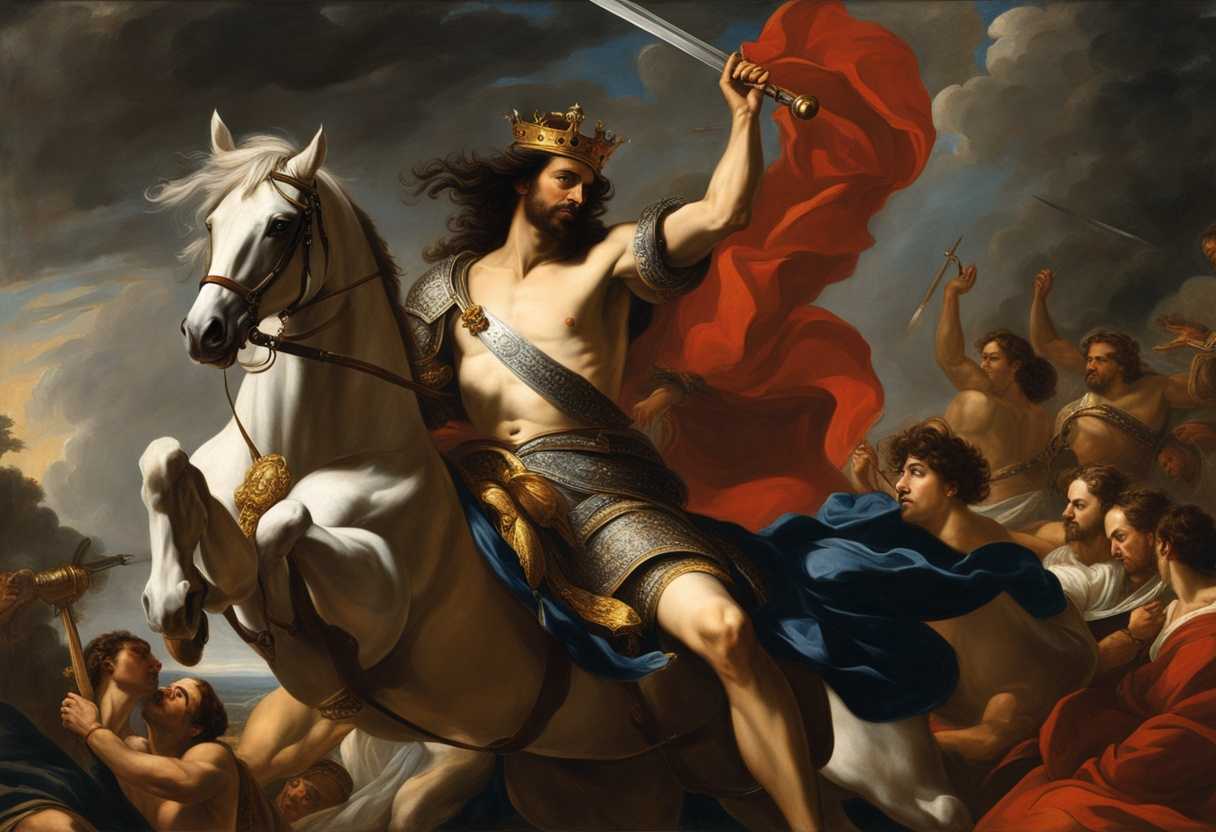
The True Meaning of 2 Chronicles 25
The Book of 2 Chronicles was written by an anonymous author, likely a Levite priest or scribe, who compiled the historical accounts of the kingdom of Judah after the reign of King David. This chapter focuses on the reign of King Amaziah, who sought to restore the kingdom’s fortunes after a period of decline. Amaziah rises to power in this passage and attempts to consolidate his rule. However, the chapter also foreshadows the challenges he will face, both from external threats and from within his own kingdom. Amaziah’s decisions and actions will have far-reaching consequences, as he navigates the complex political and religious landscape of his time.
The events described in this chapter echo themes found throughout the biblical narrative, such as the importance of obedience to God, the consequences of pride and disobedience, and the fragility of human power. As we delve into the details of Amaziah’s reign, we will gain insights into the broader story of God’s relationship with His people and the ongoing struggle between righteousness and wickedness.
2 Chronicles 25:1-4
Amaziah begins his reign in 2 Chronicles 25:1-4, becoming king of Judah after his father, King Joash. It is noted that Amaziah was twenty-five years old when he became king, and he reigned in Jerusalem for twenty-nine years. One important aspect highlighted in these verses is that Amaziah did what was right in the sight of the Lord, but not with a loyal heart. This indicates that while outwardly he may have followed the commandments of God, his inner motives and intentions were not entirely dedicated to serving God faithfully.
This passage serves as a reminder that mere outward obedience or adherence to religious practices is not enough in the eyes of God. True devotion and loyalty to God require a sincere heart and genuine faith. It is not just about following rituals or rules but about having a deep, personal relationship with the Lord. This concept is echoed in other parts of the Bible, such as in Matthew 15:8, where Jesus quotes Isaiah saying, “These people honor me with their lips but their hearts are far from me.”
Amaziah’s story can be seen as a cautionary tale for believers today. It prompts us to examine our own hearts and motivations in our service to God. Are we simply going through the motions of religion, or do we genuinely seek to know and follow God’s will in our lives? The importance of inner sincerity and authenticity in our faith is a timeless lesson that resonates throughout the Bible, emphasizing the significance of genuine devotion to God.
2 Chronicles 25:5-10
Several key sections in 2 Chronicles 25:5-10 can be identified for in-depth commentary.
-
Amaziah assembled Judah, appointed them according to their families, and took a census of those from twenty years old and upward, finding 300,000 choice men able to go to war, handle spear and shield. King Amaziah of Judah prepares his kingdom for war by organizing the people into military units. The emphasis on counting the men capable of going to war demonstrates the importance of military readiness and strategic planning in ancient times. Amaziah showcases his commitment to preparedness and defense of his kingdom by meticulously counting and organizing his troops. This display of military organization can be seen as a lesson in the importance of being prepared for challenges and dangers that may come our way. It teaches us the value of proper planning and leadership in facing adversities, both in ancient times and in our contemporary lives.
-
“But a man of God came to him saying, ‘O king, do not let the army of Israel go with you, for the Lord is not with Israel, namely, with all the sons of Ephraim.’” (2 Chronicles 25:7)
The intervention of the man of God in this section serves as a reminder of the importance of seeking divine guidance and following God’s will in all our endeavors. Despite Amaziah’s efforts to strengthen his army with additional troops from Israel, the man of God warns him against it, emphasizing that victory comes from God’s favor rather than sheer military might. This episode underscores the foundational biblical principle that relying on God’s guidance and obedience to His commands is far more critical than relying on human strength or strategies alone. It echoes the wisdom found in Proverbs 3:5-6, “Trust in the Lord with all your heart and lean not on your own understanding; in all your ways submit to him, and he will make your paths straight.”
- “But Amaziah said to the man of God, ‘But what shall we do about the hundred talents which I have given to the troops of Israel?’ And the man of God answered, ‘The Lord has much more to give you than this.’” (2 Chronicles 25:9)
Amaziah’s concern about the financial loss incurred by sending home the troops from Israel reflects a lack of complete trust in God’s provision and sovereignty. The man of God’s response serves as a reassurance that God’s blessings far surpass any material costs or sacrifices made in obedience to His will. This interaction between Amaziah and the man of God highlights the theme of faith and trust in God’s abundance and ultimate provision. It resonates with the words of Jesus in Matthew 6:33, “But seek first his kingdom and his righteousness, and all these things will be given to you as well. The passage in 2 Chronicles 25:5-10 offers valuable insights on the importance of preparedness, seeking divine guidance, and trusting in God’s provision. It provides timeless lessons on the significance of proper planning, obedience to God’s commands, and unwavering faith in His promises, which are foundational principles conveyed throughout the Bible.
2 Chronicles 25:11-13
Amaziah, the king of Judah, interacts with a prophet sent by God in 2 Chronicles 25:11-13. Let’s break down these verses:
-
“Amaziah, however, would not listen, for God so worked that he might hand them over, because they sought the gods of Edom. Amaziah’s defiance against the prophet’s warning is witnessed in this section. Despite being given a message from God about the pitfalls of relying on the gods of Edom, Amaziah chooses to turn a deaf ear to the divine counsel. This act of disobedience stems from his insistence on seeking help and validation from false gods instead of putting his trust in the one true God. Amaziah’s refusal to heed the prophet’s words serves as a cautionary tale about the dangers of pride, stubbornness, and the consequences of forsaking God’s guidance.
-
“So the anger of the Lord was kindled against Amaziah, and he sent a prophet to him, who said to him, ‘Why have you sought the gods of a people who did not deliver their own people from your hand?’” – The prophet’s question to Amaziah is a powerful reminder of the futility of turning to idols and false gods for help. The prophet exposes the foolishness of seeking refuge in powerless entities instead of relying on the Almighty God by highlighting the inability of the gods of Edom to save their own people. This rebuke not only serves to correct Amaziah’s misguided actions but also underscores the importance of wholehearted devotion to God and the dangers of idolatry.
-
“But Amaziah would not listen, for it was of God, in order that he might give them into the hand of their enemies, because they had sought the gods of Edom.” – This verse underscores the divine orchestration behind Amaziah’s downfall. Despite the prophet’s warning and God’s attempts to lead him back to the right path, Amaziah’s continued disobedience ultimately leads to his defeat at the hands of his enemies. The consequences of seeking the gods of Edom serve as a stark reminder of the repercussions of forsaking God’s commands and compromising one’s faith for temporary worldly gains. It also highlights the overarching theme in the Bible of God’s justice and judgment upon those who choose to rebel against Him. We are called to reflect on these verses, examine our own lives, and assess where we place our trust and allegiance. Are we like Amaziah, seeking guidance and security from sources other than God? These passages urge us to prioritize our relationship with the Lord above all else, trust in His wisdom, and remain obedient to His commands. We can avoid the pitfalls of idolatry, pride, and disobedience by doing so, and instead experience the blessings and protection that come from walking in alignment with God’s will.
2 Chronicles 25:14-16
King Amaziah of Judah and King Jehoash of Israel interact in 2 Chronicles 25:14-16. This passage captures the aftermath of a battle between the two kingdoms. King Amaziah had hired a hundred thousand troops from Israel to help him in his campaign against the Edomites. However, after the victorious battle, God sent a prophet to warn Amaziah that he should not bring the Israelite soldiers back with him.
This section underscores the consequences of relying on human strength and foreign alliances rather than putting one’s trust in God. Despite experiencing success in battle, the prophet’s admonition was a reminder that victory does not come solely from military might but is ultimately derived from God’s guidance and favor. King Amaziah’s decision to pay the soldiers from Israel and send them home in disgrace illustrates the fleeting nature of earthly alliances and the importance of honoring one’s commitments.
The interaction between King Amaziah and King Jehoash also serves as a stark reminder of the consequences of pride and arrogance. King Amaziah’s challenge to King Jehoash to meet in battle reveals the hubris and overconfidence that had crept into his heart. King Jehoash wisely warns him with a parable about a thistle in Lebanon challenging a cedar tree, signifying the danger of picking a fight with someone more powerful. This cautionary tale underscores the dangers of arrogance and the importance of humility before God and others.
This passage in 2 Chronicles 25 connects to other biblical teachings that caution against relying on human strength over God’s guidance. Proverbs 3:5-6 reminds believers to trust in the Lord with all their hearts and lean not on their own understanding. Throughout the Bible, we see how individuals and nations faced dire consequences when they turned away from God and trusted in their own abilities or alliances with foreign powers. The story of King Amaziah serves as a cautionary tale about the dangers of pride, misplaced trust, and the fleeting nature of earthly power. Ultimately, seeking God’s wisdom and following His ways is emphasized over relying on human strategies.
2 Chronicles 25:17-20
King Amaziah of Judah consults with the King of Israel, Jehoash, regarding a potential conflict between their two kingdoms in an important section found in 2 Chronicles 25:17-20. This interaction between the two kings unfolds in a way that carries significant lessons for us to reflect upon.
Amaziah started his reign with a desire to follow God, but his actions were often filled with pride and self-reliance. When he gathered his army to go to war against Edom, he hired mercenaries from Israel to increase his military strength. However, a prophet warned him that God was not with these mercenaries and that hiring them would lead to his downfall. Instead of heeding the prophet’s warning, he challenged the prophet by asking if he should still have to pay the Israelites. This shows Amaziah’s arrogance and lack of faith in God’s guidance.
When Amaziah led his troops into battle against Edom, they suffered a crushing defeat. The Israelite mercenaries, sensing their impending loss, turned on Judah and pillaged many towns on their way back home. This event underscores the consequence of not following God’s guidance and relying on human strength alone, a recurring theme in the Bible.
After his defeat, Amaziah was captured by Jehoash, the King of Israel, who then broke down a section of the wall of Jerusalem, plundered the temple and the king’s house, and took hostages back to Samaria. This invasion and the subsequent damage to Judah’s defenses and sacred places symbolize the consequences of disobedience and reliance on worldly means rather than God.
This passage serves as a sobering reminder of the importance of humility, obedience, and reliance on God’s guidance in our lives. Amaziah’s story serves as a cautionary tale about the dangers of pride and self-reliance, highlighting the central theme of the Bible about the consequences of sin and the necessity of repentance. It also emphasizes the significance of seeking wisdom and guidance from God through prayer, seeking counsel from His appointed prophets, and staying true to His commandments, as mentioned in various other verses throughout the Bible, such as Proverbs 3:5-6 and Isaiah 31:1.
2 Chronicles 25:21-24
Amaziah, the king of Judah, confronts Joash, the king of Israel, in 2 Chronicles 25:21-24, and we see the aftermath. We can delve into this section of the verse for a deeper understanding of important lessons and insights. Amaziah of Judah challenges Joash of Israel to battle in the first part of the passage. Amaziah had become overconfident after a military victory against the Edomites and sought to expand his territory even further. However, Joash responds with a cryptic fable, warning Amaziah against pride and arrogance that can lead to destruction. Joash’s wisdom in this fable is a reminder of the dangers of hubris and the importance of humility. It echoes scriptures such as Proverbs 16:18, “Pride goes before destruction, a haughty spirit before a fall.” The Bible often cautions against the perils of pride and emphasizes the virtue of humility before God and others.
Amaziah ignores Joash’s warning and proceeds with the battle. Despite having a larger army, Amaziah is ultimately defeated by Joash and the army of Israel. The defeat of Amaziah highlights the consequences of disregarding wise counsel and acting out of arrogance. It serves as a cautionary tale about the importance of seeking and heeding advice, especially from those with wisdom and experience. Proverbs 15:22 reminds us, “Plans fail for lack of counsel, but with many advisers, they succeed.” Amaziah’s defeat underscores the biblical principle of the folly of ignoring wise counsel and the importance of humility in leadership.
Following his defeat, Amaziah is captured by Joash, and Jerusalem is breached, with treasures taken from the temple and the royal palace. This event signifies the humiliation and downfall of Amaziah due to his pride and disobedience. It reflects the biblical theme of the consequences of sin and the importance of repentance and obedience to God’s commands. Proverbs 11:2 states, “When pride comes, then comes disgrace, but with humility comes wisdom.” Amaziah’s story serves as a cautionary reminder of the repercussions of straying from God’s ways and the need for humility and obedience in our lives. The account of Amaziah and Joash in 2 Chronicles 25:21-24 demonstrates timeless truths about the dangers of pride, the value of wisdom and humility, and the consequences of disobedience. It reinforces the biblical teachings on seeking counsel, heeding warnings, and living in obedience to God. We encourage readers to reflect on their own actions, decisions, and attitudes, ensuring that they walk in humility, seek wise counsel, and remain obedient to God’s will, avoiding the pitfalls of pride and self-reliance.
2 Chronicles 25:25-28
The concluding verses of the chapter in 2 Chronicles 25:25-28 detail the reign of King Amaziah of Judah. This section holds significant lessons and insights for readers regarding the consequences of pride, idolatry, and turning away from God. A conspiracy was formed against Amaziah in Jerusalem after he turned away from following the Lord in the first part of the passage. This rebellion ultimately led to his assassination. Amaziah’s downfall stemmed from his pride and arrogance, as earlier in the chapter, we see him bringing back the gods of the people he defeated in battle and worshipping them. This act of idolatry and forsaking the one true God had provoked the Lord’s anger, leading to his eventual demise.
The assassination of Amaziah serves as a stark reminder of the consequences of abandoning God’s ways and seeking after false idols. Throughout the Bible, there are numerous warnings about the dangers of pride and idolatry. Proverbs 16:18 cautions, “Pride goes before destruction, a haughty spirit before a fall.” Similarly, Exodus 20:3-5 emphasizes the commandment to have no other gods before the Lord, for He is a jealous God. The passage mentions how the people of Judah conspired against Amaziah after his defeat by the Edomites as it continues. He was eventually killed in Lachish, and they brought his body back to Jerusalem to bury him with his ancestors. Despite his initial military successes, Amaziah’s reign ended in disgrace and defeat due to his disobedience and reliance on his own strength rather than on God.
The life of Amaziah serves as a cautionary tale of the dangers of forsaking God’s commandments and seeking self-glory. It underscores the importance of humility, obedience, and wholehearted devotion to God’s ways. Throughout the Bible, we see the recurring theme of God exalting the humble and obedient while humbling the proud and disobedient. “Humble yourselves before the Lord, and He will lift you up,” says James 4:10. The story of King Amaziah in 2 Chronicles 25:25-28 highlights the timeless message of the consequences of pride, idolatry, and turning away from God. It serves as a sobering reminder of the importance of remaining faithful, humble, and obedient to God’s commands, for He alone is worthy of our worship and trust.
After 2 Chronicles 25
The king had made many mistakes, but he had also done some good things. He had tried to follow God’s commands, but he had also made some poor choices. His life in the end was a mix of successes and failures, just like all of ours. We will see how the consequences of his actions played out, and how God continued to work in the lives of His people, even when they strayed from the path as we move into the next chapter. The journey of faith is never easy, but with God’s guidance, we can find our way back to Him, no matter how far we have wandered.

Reverend Michael Johnson is an experienced Church Minister with a profound expertise in spirituality and guidance. With a serene presence and a compassionate heart, he has faithfully served his congregation for over 20 years, leading them on a spiritual journey towards inner peace and enlightenment. Reverend Johnson’s extensive knowledge of religious philosophies and profound understanding of human nature have made him a trusted confidant and mentor to many, as he seamlessly weaves his profound wisdom into life teachings. Reverend Johnson’s calming demeanor and empathetic nature continue to uplift and heal souls, nurturing a sense of unity and tranquility within his community.