
1 Hezekiah began to reign when he was twenty-five years old, and he reigned twenty-nine years in Jerusalem. His mother’s name was Abijah the daughter of Zechariah.
2 And he did what was right in the eyes of the Lord, according to all that David his father had done.
3 In the first year of his reign, in the first month, he opened the doors of the house of the Lord and repaired them.
4 He brought in the priests and the Levites and assembled them in the square on the east
5 And said to them, “Hear me, Levites! Now consecrate yourselves, and consecrate the house of the Lord, the God of your fathers, and carry out the filth from the Holy Place.
6 For our fathers have been unfaithful and have done what was evil in the sight of the Lord our God. They have forsaken him and have turned away their faces from the habitation of the Lord and turned their backs.
7 They also shut the doors of the vestibule and put out the lamps and have not burned incense or offered burnt offerings in the Holy Place to the God of Israel.
8 Therefore the wrath of the Lord came on Judah and Jerusalem, and he has made them an object of horror, of astonishment, and of hissing, as you see with your own eyes.
9 For behold, our fathers have fallen by the sword, and our sons and our daughters and our wives are in captivity for this.
10 Now it is in my heart to make a covenant with the Lord, the God of Israel, so that his fierce anger may turn away from us.
11 My sons, do not now be negligent, for the Lord has chosen you to stand in his presence, to minister to him and to be his ministers and make offerings to him.
12 Then the Levites arose, Mahath the son of Amasai, and Joel the son of Azariah, of the sons of the Kohathites; and of the sons of Merari, Kish the son of Abdi, and Azariah the son of Jehallelel; and of the Gershonites, Joah the son of Zimmah, and Eden the son of Joah;
13 and of the sons of Elizaphan, Shimri and Jeuel; and of the sons of Asaph, Zechariah and Mattaniah;
14 And from the sons of Heman, Jehiel and Shimei; and from the sons of Jeduthun, Shemaiah and Uzziel.
15 They gathered their brothers and consecrated themselves and went in as the king had commanded, by the words of the Lord, to cleanse the house of the Lord.
16 The priests went into the inner part of the house of the Lord to cleanse it, and they brought out all the uncleanness that they found in the temple of the Lord into the court of the house of the Lord. And the Levites took it and carried it out to the brook Kidron.
17 They began to consecrate on the first day of the first month, and on the eighth day of the month they came to the vestibule of the Lord. Then for eight days they consecrated the house of the Lord, and on the sixteenth day of the first month they finished.
18 Then they went in to Hezekiah the king and said, “We have cleansed all the house of the Lord, the altar of burnt offering and all its utensils, and the table for the showbread and all its utensils.
19 Moreover, all the utensils that King Ahaz discarded in his reign when he was faithless, we prepared and consecrated. And behold, they are before the altar of the Lord.”
20 Then Hezekiah the king rose early and gathered the officials of the city and went up to the house of the Lord.
21 And they brought seven bulls, seven rams, seven lambs, and seven male goats for a sin offering for the kingdom and for the sanctuary and for Judah. And he commanded the priests, the sons of Aaron, to offer them on the altar of the Lord.
22 So they slaughtered the bulls, and the priests received the blood and threw it against the altar.
23 Then the goats for the sin offering were brought to the king and the assembly, and they laid their hands on them,
24 And the priests slaughtered them and made a sin offering with their blood on the altar, to make atonement for all Israel. For the king commanded that the burnt offering and the sin offering should be made for all Israel.
25 And he stationed the Levites in the house of the Lord with cymbals, harps, and lyres, according to the commandment of David and of Gad the king’s seer and of Nathan the prophet, for the commandment was from the Lord through his prophets.
26 The Levites stood with the instruments of David, and the priests with the trumpets.
27 And Hezekiah commanded to offer the burnt offering on the altar. And when the burnt offering began, the song to the Lord began also, and the trumpets, accompanied by the instruments of David king of Israel.
28 The whole assembly worshiped, and the singers sang, and the trumpeters sounded. All this continued until the burnt offering was finished.
29 When the offering was finished, the king and all who were present with him bowed themselves and worshiped.
30 And Hezekiah the king and the officials commanded the Levites to sing praises to the Lord with the words of David and of Asaph the seer. And they sang praises with gladness, and they bowed down and worshiped.
31 Then Hezekiah said, “You have now consecrated yourselves to the Lord. Come near; bring sacrifices and thank offerings to the house of the Lord.” And the assembly brought sacrifices and thank offerings, and all who were of a willing heart brought burnt offerings.
32 The number of the burnt offerings that the assembly brought was seventy bulls, a hundred rams, and two hundred lambs; all these were for a burnt offering to the Lord.
33 The consecrated offerings were six hundred bulls and three thousand sheep.
34 But the priests were too few and could not flay all the burnt offerings, so until other priests had consecrated themselves, their brothers the Levites helped them, until the work was finished.
35 There were many burnt offerings. The fat of the peace offerings was also there, and the drink offerings for the burnt offerings. Thus the service of the house of the Lord was restored.
36 And Hezekiah and all the people rejoiced because God had provided for the people, for the thing came about suddenly.
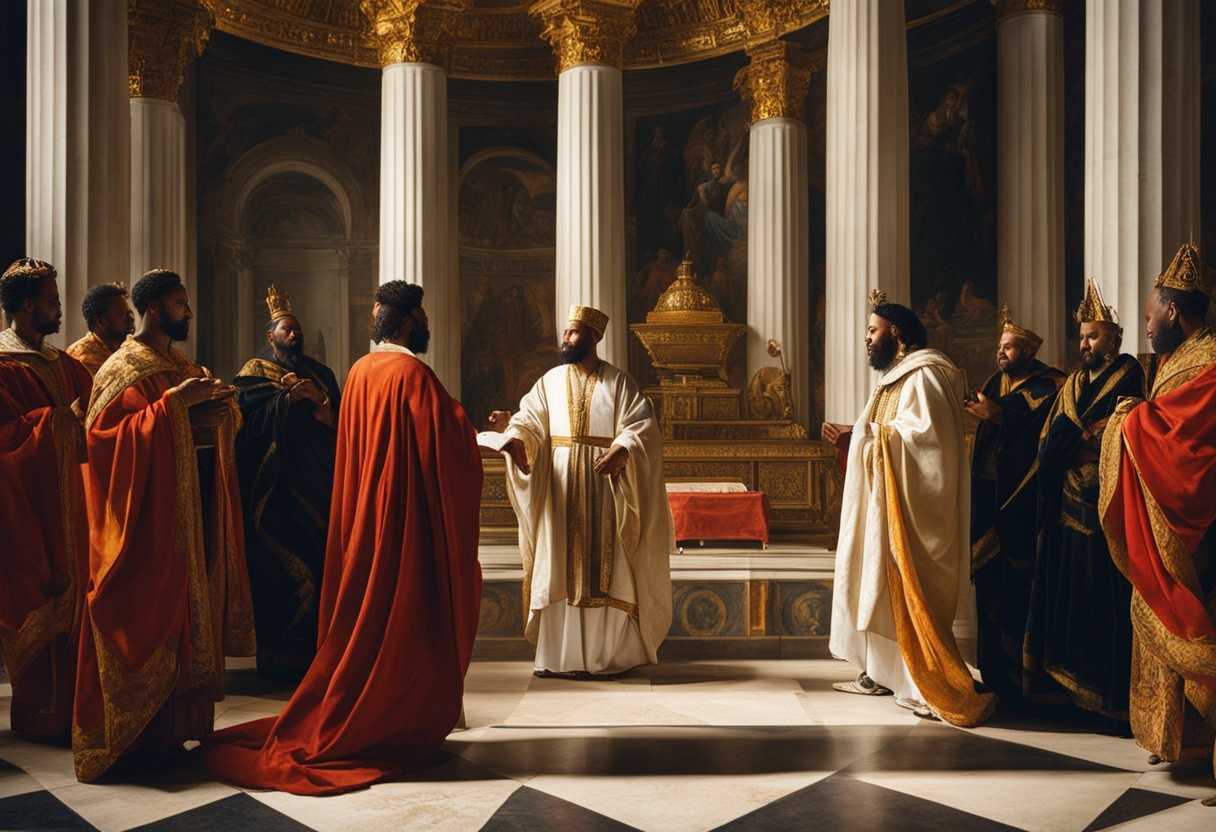
The True Meaning of 2 Chronicles 29
The Book of 2 Chronicles was written by an anonymous author, likely a Levite priest or scribe, who chronicled the history of the kingdom of Judah from the reign of King Solomon to the Babylonian exile. King Hezekiah ascends and makes efforts to restore the worship of the Lord in Jerusalem in this chapter, echoing the call of the prophet Isaiah to “Seek the Lord while he may be found” (Isaiah 55:6).
Hezekiah, a righteous king, takes bold steps to cleanse the temple and reinstitute the observance of Passover, in stark contrast to the idolatry and corruption of his predecessor, Ahaz (2 Chronicles 28). The chapter highlights Hezekiah’s commitment to leading the people back to the Lord, a theme that resonates throughout the book of 2 Chronicles, as seen in the words of the Psalmist: “Blessed is the nation whose God is the Lord” (Psalm 33:12). Hezekiah will play a pivotal role in the spiritual renewal of Judah as we witness the king’s decisive actions, the people’s response, and the restoration of the temple’s sanctity in this chapter. This account serves as a powerful reminder of the transformative power of repentance and the blessings that come from wholeheartedly seeking the Lord.
2 Chronicles 29:1-5
King Hezekiah’s reign in Judah starts in 2 Chronicles 29:1-5. This passage marks a significant moment in the history of Judah as Hezekiah is depicted as a righteous and reformative king. The verse begins by stating that Hezekiah became king at the age of 25, following the reign of his father Ahaz, who was known for his wickedness and idolatry. The fact that Hezekiah was only 25 when he took the throne highlights his youth and potential for leadership.
Hezekiah’s first notable action as king was to reopen the doors of the temple of the Lord and repair them. This emphasis on the restoration of the temple indicates Hezekiah’s commitment to restoring true worship and following God’s commandments. The temple had been neglected and defiled during the reign of Ahaz, who had even closed its doors and set up altars to other gods throughout the land. Hezekiah’s decision to prioritize the temple’s restoration symbolizes his desire to renew the worship of the true God and cleanse the nation from idolatry.
This act of reopening the temple and restoring its worship services was not just a physical renovation but also a spiritual revival. It signified a return to the proper worship of God and a rejection of the pagan practices that had taken hold in Judah. Hezekiah’s actions were in line with the teachings of the Torah, which emphasized the importance of the temple as the central place of worship for the Israelites.
Hezekiah’s dedication to reinstating the worship of the Lord shows his understanding of the significance of faith and the need for spiritual renewal. His commitment to this cause foreshadows the reforms he will later undertake in Judah, including the destruction of idols and the reinstitution of the Passover celebration (2 Chronicles 30). Hezekiah’s reign serves as a reminder of the importance of staying faithful to God’s commandments and seeking His will in all aspects of life. The story of Hezekiah in 2 Chronicles 29 serves as a powerful example of the impact of righteous leadership and the transformative power of returning to God. It demonstrates that even in times of spiritual decline and moral decay, individuals who are committed to following God’s ways can bring about renewal and restoration. Hezekiah’s actions inspire us to reflect on our own commitment to God and to consider how we can work towards spiritual revival in our own lives and communities.
2 Chronicles 29:6-11
King Hezekiah addressed the Levites to restore the temple of the Lord in 2 Chronicles 29:6-11. Hezekiah starts by acknowledging the failures of their fathers in turning away from the Lord, worshiping false gods, and neglecting the temple. He emphasizes the importance of returning to God and the need for the temple to be cleansed from all impurities. Hezekiah urges the Levites to consecrate themselves and the temple, highlighting the necessity of their role in serving the Lord faithfully.
This passage holds a powerful message about repentance, renewal, and the restoration of faith. Hezekiah’s call for the Levites to purify the temple symbolizes the cleansing of one’s heart and soul to make way for a renewed relationship with God. It underscores the importance of acknowledging past mistakes, seeking forgiveness, and taking active steps towards spiritual revival.
The mention of the failures of their fathers serves as a reminder of the consequences of straying from God’s path. It highlights the cyclical nature of faith throughout the history of the Israelites, where they often drifted away from God, faced hardships as a result, repented, and were restored by God’s grace. This pattern is a common theme in the Old Testament, emphasizing the faithfulness of God towards His people despite their shortcomings.
Hezekiah’s leadership in initiating the restoration of the temple sets a powerful example for believers today. Hezekiah’s actions demonstrate the importance of spiritual leadership and the impact it can have on a community as a righteous king who sought to lead his people back to God. Hezekiah’s reverence for God and zeal for the temple’s restoration inspires us to prioritize our relationship with God and uphold the sanctity of His dwelling place in our hearts.
This passage resonates with the broader biblical theme of repentance and renewal seen throughout the Bible. God promises in 2 Chronicles 7:14, “If my people, who are called by my name, will humble themselves and pray and seek my face and turn from their wicked ways, then I will hear from heaven, and I will forgive their sin and will heal their land.”” Hezekiah’s call to cleanse the temple aligns with God’s call for His people to turn back to Him wholeheartedly, promising restoration and blessing in return. 2 Chronicles 29:6-11 serves as a poignant reminder of the importance of repentance, renewal, and the restoration of faith. Through Hezekiah’s leadership and the Levites’ obedience, we are encouraged to examine our hearts, acknowledge our shortcomings, and take active steps towards spiritual revival. We too should seek purification and renewal in our relationship with God, drawing closer to Him with sincerity and devotion, just as Hezekiah cleansed and restored the temple.
2 Chronicles 29:12-19
The Levites, specifically the sons of Asaph and Heman, were tasked with the responsibility of offering sacrifices and leading the worship in the temple according to the commandment of King Hezekiah and the words of the prophet Isaiah, as mentioned in 2 Chronicles 29:12-13. This section highlights the importance of obedience to the commands of the king and the prophets in the worship practices of the people of Israel. The reference to Asaph and Heman is significant as they were prominent figures known for their musical talents and service in the temple during the reign of King David. Asaph, in particular, is attributed as the author of several Psalms, showcasing his influence in the worship life of Israel. This passage underscores the role of music and worship in praising God and how it was a central aspect of the religious ceremonies in the temple.
Moving on to verses 14-19, we see the Levites gathering their brothers, consecrating themselves, and then cleansing the temple as instructed by King Hezekiah. This act of purification and rededication of the temple symbolizes a return to true worship and reconciliation with God. The cleansing process was essential because the temple had been neglected and desecrated during the period of idolatry and unfaithfulness by the previous kings. The Levites were restoring the sanctity of the holy place and preparing it for the reinstatement of proper worship by following the commands to purify the temple.
The narrative in this section of 2 Chronicles 29 showcases the theme of repentance, renewal, and restoration. It highlights the importance of acknowledging past wrongs, seeking forgiveness, and making a deliberate effort to return to God. The actions of Hezekiah and the Levites serve as a powerful example of how individuals and communities can realign themselves with God’s will through sincere repentance and obedience. This account can inspire believers today to reflect on their own lives and consider areas where they may need to repent, renew their commitment to God, and make changes to walk in His ways.
The passages in 2 Chronicles 29:12-19 not only provide historical context about the religious reforms undertaken during Hezekiah’s reign but also offer timeless lessons about the significance of worship, obedience, and the importance of maintaining the sanctity of sacred spaces. We, as Christians, can draw parallels to the need for spiritual renewal in our lives, regularly examining our hearts, seeking forgiveness for our sins, and rededicating ourselves to living a life that honors and glorifies God. We are called to continually purify our hearts and renew our commitment to serving the Lord wholeheartedly, just as the temple was purified and rededicated in this passage.
2 Chronicles 29:20-24
King Hezekiah initiates the cleansing and restoration of the temple of the Lord in 2 Chronicles 29:20-24, marking a pivotal moment in his reign. This section can be broken down into several key parts.
Firstly, in verse 20, Hezekiah gathered the priests and Levites and confronted them about the desecration of the temple by their ancestors, leading to God’s wrath and punishment. This shows Hezekiah’s awareness of the sins of the past and his willingness to address them head-on. It’s a reminder that our actions, even those of our predecessors, have consequences, and it’s important to seek repentance and restoration. Hezekiah commands the priests to purify the temple by removing all impurities and restoring it to its holiness in verses 21-22. This act of cleansing symbolizes the removal of sin and defilement from their midst, preparing the way for God’s presence to dwell among His people once again. It reflects the biblical theme of purification and sanctification, emphasizing the need for spiritual cleanliness and consecration.
Next, in verse 23, the priests begin the process of cleansing the inner part of the temple according to the command of King Hezekiah. This obedience to the king’s directive underscores the importance of following Godly leadership and authority. Hezekiah’s role as a righteous king who leads his people back to God is reminiscent of other faithful leaders like David and Josiah, who sought to restore true worship among the Israelites.
Finally, in verse 24, we see the culmination of their efforts as the priests bring the sacrifices and offerings into the house of the Lord. This act of worship and dedication signifies the renewal of the covenant between God and His people, demonstrating their commitment to serving Him wholeheartedly. It echoes the central theme of obedience and worship found throughout the Bible, emphasizing the significance of being in right relationship with God through obedience and sacrifice. This passage in 2 Chronicles 29:20-24 serves as a powerful reminder of the importance of repentance, obedience, purification, and worship in the life of God’s people. It highlights the transformative power of seeking forgiveness, making amends for past wrongs, and recommitting oneself to the Lord. We, as believers, can draw inspiration from Hezekiah’s actions and strive to follow his example in our own spiritual journey of renewal and revival.
2 Chronicles 29:25-30
King Hezekiah’s restoration of the worship of the Lord in the temple in Jerusalem is detailed in 2 Chronicles 29:25-30. Let’s break down this verse into key sections to provide a comprehensive commentary.
Firstly, in verse 25, it mentions that King Hezekiah stationed the Levites in the house of the Lord with cymbals, harps, and lyres according to the commandment of David and Gad, the king’s seer, and Nathan the prophet. This act is significant as it shows King Hezekiah’s intention to revive the worship practices prescribed by King David, who was known for his passion for worship and his deep relationship with God. Hezekiah is signaling a return to the authentic, God-ordained worship that had been neglected in the tumultuous times before his reign by invoking David’s name. This reflects the importance of honoring and following the righteous ways established by predecessors in our own lives to maintain a strong connection with God. The Levites are standing with the instruments of David in verse 26, and the priests are with the trumpets. This illustrates a united front of both the Levites and the priests in their roles within the worship service. The Levites, who were from the tribe of Levi, were appointed to assist the priests in carrying out the rituals and services in the temple. They exemplify unity and collaboration in serving God by coming together in this act of worship. This unity is a powerful reminder for us today that in serving God, we must set aside our differences and work together harmoniously for His glory.
Moving on to verse 27, we learn that Hezekiah gave the command to offer burnt offerings on the altar. This act of offering burnt sacrifices was a key part of the Israelites’ worship practices, symbolizing dedication and atonement for sins. Hezekiah was emphasizing the importance of repentance and obedience to God’s commandments in reinstating this practice. This restoration of sacrificial worship underlines the essential principle of recognizing the need for repentance and seeking God’s forgiveness. It also foreshadows the ultimate sacrifice of Jesus Christ, who offered Himself as atonement for the sins of humanity once and for all.
Continuing to verse 30, we see that Hezekiah and the assembly worshipped and praised the Lord with gladness and bowed down and worshiped. This expression of worship with gladness and humility reflects the proper attitude of reverence and joy that should accompany our worship of God. It signifies a heart that is truly grateful for God’s faithfulness and mercy. We, as believers, are called to worship the Lord not out of obligation but with a spirit of joy and humility, acknowledging His greatness and expressing our gratitude for His love and grace. These verses from 2 Chronicles 29 provide a rich tapestry of themes including revival, unity, repentance, and heartfelt worship. Through the actions of King Hezekiah and the Levites, we are reminded of the importance of honoring God in our worship, following the righteous ways set by our predecessors, working together in unity, seeking repentance, and joyfully worshiping the Lord with gladness and humility. These timeless messages continue to resonate with believers today, encouraging us to remain faithful and devoted in our relationship with God.
2 Chronicles 29:31-36
Several important sections can be outlined in 2 Chronicles 29:31-36. King Hezekiah and the assembly brought sacrifices and offerings before the Lord in this passage. This act was crucial as it symbolized the repentance and dedication of the people to return to the worship of the one true God. The offering of sacrifices was an integral part of the religious practices of the Israelites as outlined in the Law given to Moses. King Hezekiah was leading the people back to the ways of the Lord by reinstating these practices and offerings after years of neglect and idolatry during the reign of his father, King Ahaz.
-
Hezekiah’s Leadership
King Hezekiah’s role in initiating these sacrificial offerings is significant in the context of the spiritual revival that he led in Judah. Hezekiah was known as a righteous king who “did what was right in the eyes of the Lord” (2 Chronicles 29:2). His dedication to restoring the worship of God and purging the land of idolatry marked a turning point for the nation of Judah. Hezekiah’s leadership serves as a powerful example of the impact a godly leader can have on the spiritual direction of a nation. Through his obedience and commitment to the Lord, Hezekiah brought about a revival that impacted the entire community. -
The Response of the People
The response of the people to the reinstatement of sacrifices and offerings was one of reverence and joy. They were filled with gratitude and gladness, bowing down and worshipping the Lord. This reaction indicates a heart transformation among the people, moving from apathy and disobedience to a genuine desire to worship and honor God. It highlights the power of repentance and renewal in restoring the relationship between God and His people. The people’s willingness to participate in the sacrifices demonstrated their renewed commitment to following the ways of the Lord. -
The Conclusion of the Ceremony
The passage concludes with the Levites praising and worshipping God with music and instruments. This celebration and worship marked the culmination of the sacrificial ceremony and served as a joyful acknowledgment of God’s faithfulness and grace. The use of music and instruments in worship was a common practice in the Old Testament, emphasizing the importance of praising God with all forms of creativity and artistry. This act of worship was a fitting response to the forgiveness and restoration that the people experienced through their renewed dedication to the Lord. King Hezekiah led the people of Judah back to the worship of the true God through sacrifices and offerings, as captured in 2 Chronicles 29:31-36. The passage underscores the significance of repentance, leadership, communal worship, and the power of God to bring about spiritual renewal. It serves as a timeless reminder of the importance of prioritizing God in our lives, seeking forgiveness, and worshipping Him with sincerity and joy.
After 2 Chronicles 29
The people of Judah had strayed far from the Lord. But now, King Hezekiah had restored the temple and called the people to return to God. The Levites cleansed the temple, and the people brought their offerings with glad and willing hearts. The Spirit of God moved among the people as they worshipped the Lord. Hezekiah and the leaders of the people rejoiced, for they saw the hand of God at work. Yet, the journey of restoration had only just begun. The people would need to continue walking in obedience, lest they fall back into the same patterns of sin and idolatry. The road ahead would not be easy, but with God’s help, they could overcome the darkness and find the light.

Reverend Michael Johnson is an experienced Church Minister with a profound expertise in spirituality and guidance. With a serene presence and a compassionate heart, he has faithfully served his congregation for over 20 years, leading them on a spiritual journey towards inner peace and enlightenment. Reverend Johnson’s extensive knowledge of religious philosophies and profound understanding of human nature have made him a trusted confidant and mentor to many, as he seamlessly weaves his profound wisdom into life teachings. Reverend Johnson’s calming demeanor and empathetic nature continue to uplift and heal souls, nurturing a sense of unity and tranquility within his community.