
2 Chronicles 29:3 is about King Hezekiah’s restoration of the temple worship in Jerusalem, emphasizing the importance of returning to true worship and dedication to God after a period of neglect and idolatry by previous leaders.
3 In the first year of his reign, in the first month, he opened the doors of the house of the Lord and repaired them.
Setting the Scene for 2 Chronicles 29:3
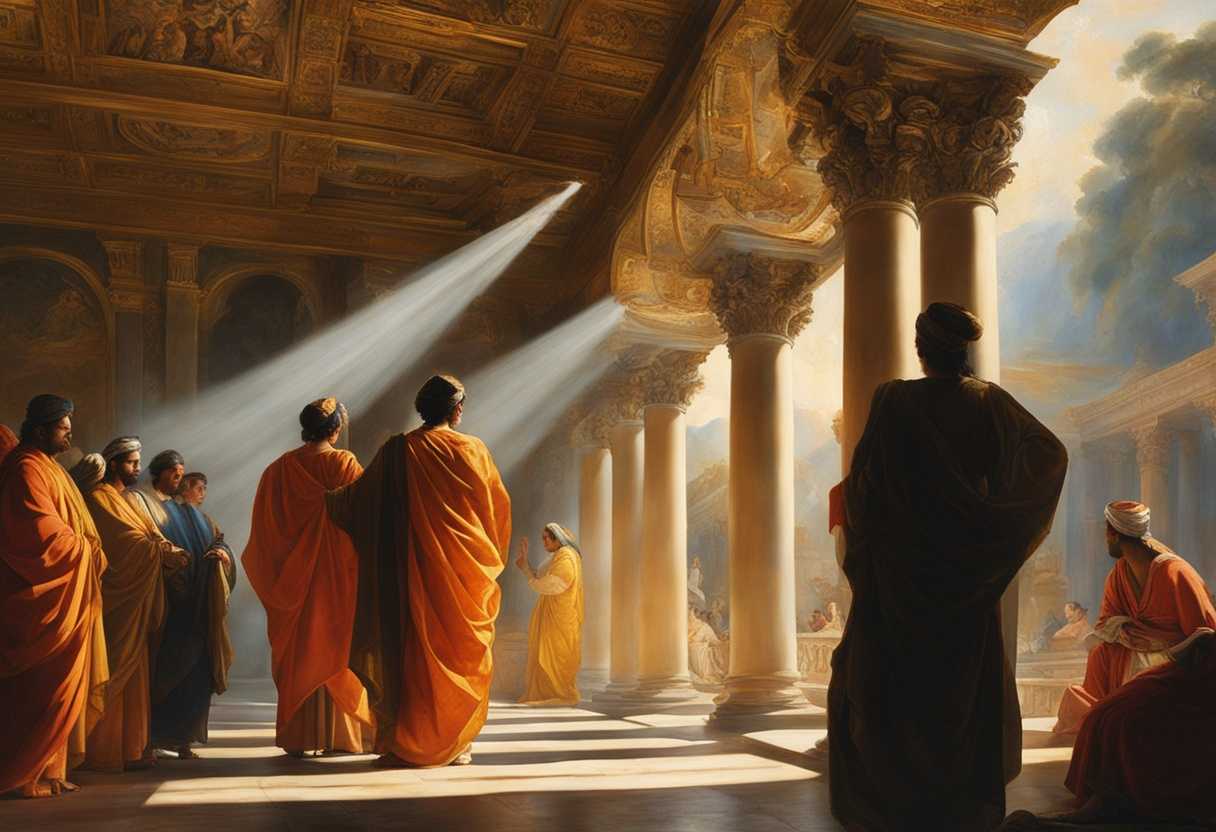
In the heart of Jerusalem, the air was thick with anticipation and a sense of renewal. The temple, once a glorious symbol of God’s presence among His people, had fallen into disrepair and neglect. King Hezekiah, a young and zealous ruler, had ascended to the throne of Judah, determined to restore the worship of Yahweh and cleanse the land of idolatry. As he stepped into the temple, the sun streamed through the high windows, illuminating the dust motes that danced in the air, a poignant reminder of the years of abandonment. The once-sacred space was now filled with the remnants of forgotten sacrifices and the echoes of prayers long silenced.
Hezekiah was not alone in this momentous endeavor. Accompanying him were the priests and Levites, the spiritual leaders of the nation, who had gathered in response to the king’s call for a revival. Among them was the high priest, Hilkiah, whose heart burned with a desire to see the temple restored to its former glory. The atmosphere was charged with a mix of hope and solemnity as they prepared to cleanse the temple, removing the idols and debris that had accumulated over the years. The sound of their footsteps echoed against the stone walls, a reminder of the weight of their task and the significance of their mission.
As they began their work, the surroundings of the temple reflected the state of the nation. Outside, the streets of Jerusalem were filled with the murmurs of the people, many of whom had long forgotten the ways of their ancestors. The vibrant colors of the marketplace contrasted sharply with the somber task at hand, yet there was a flicker of hope in the eyes of the onlookers. They sensed that something monumental was about to unfold. The temple, once a place of worship and connection with God, was on the brink of transformation, and the people of Judah were poised to witness a revival that would restore their faith and renew their covenant with the Almighty.
What is 2 Chronicles 29:3 about?
The act of reopening the temple doors signifies a profound moment in the religious life of Judah in the context of Hezekiah’s reign. It is more than just a physical restoration; it symbolizes a deliberate and committed return to what is sacred and significant in their worship practices. Have you ever considered the power that physical spaces hold in our spiritual lives? When Hezekiah made the choice to restore access to the temple, he was effectively inviting the people to re-engage with their faith, encouraging them to come together as a community under God’s guidance. This act serves as a reminder of how important it is to create spaces where we can encounter the divine.
Furthermore, initiating reforms to restore true worship reflects Hezekiah’s desire to align the practices of his people with the core principles of their faith. This wasn’t merely about ancient rituals or the ceremonial aspects of worship; it was about reinstating a genuine relationship with God. Don’t you think it’s fascinating how a leader can influence a whole nation’s approach to spirituality? Hezekiah was setting a path for his people to reconnect with their roots and reinvigorate their religious identity by removing idolatrous practices and reinstating the true worship of Yahweh. This act of reform suggests that spiritual renewal often requires not just personal commitment, but communal effort. How might we as individuals and communities learn from Hezekiah’s example when it comes to refreshing or restoring our own practices of faith or worship?
Understanding what 2 Chronicles 29:3 really means
In 2 Chronicles 29:3, we find a pivotal moment in the reign of King Hezekiah, who is celebrated for his profound commitment to restoring the worship of Yahweh in Judah. The verse states, “In the first year of his reign, in the first month, he opened the doors of the house of the Lord and repaired them.” This action is not merely a physical restoration; it symbolizes a significant spiritual renewal for the nation. Understanding the historical context of Hezekiah’s reign allows us to appreciate the weight of this moment. Hezekiah inherited a kingdom that had strayed from its covenant with God, and his immediate actions set the stage for a transformative revival.
One of the key themes in this verse is the restoration of worship. By opening the doors of the temple, Hezekiah was making a bold statement about accessibility to God. Worship had been neglected, and the temple lay in disrepair, reflecting a broader spiritual malaise among the people. This act of opening the doors signifies an invitation to return to God, a theme echoed in Psalm 51:10-12, where the psalmist cries out for a clean heart and a renewed spirit. How often do we find ourselves in need of such renewal? Hezekiah’s actions remind us that restoration begins with a willingness to open ourselves to God’s presence.
Leadership plays a crucial role in spiritual matters, as demonstrated by Hezekiah’s example. His decisive actions inspired the people to follow suit, emphasizing the importance of having leaders who are committed to spiritual integrity. In 2 Kings 18:1-6, we see Hezekiah’s character and his dedication to following God, which laid the groundwork for the reforms he initiated. This raises an important question for us today: How can we embody leadership in our own communities? Whether in our families, workplaces, or churches, our commitment to spiritual renewal can influence those around us.
The relevance of Hezekiah’s actions extends beyond ancient Judah. In our contemporary world, many feel disconnected from their faith or have strayed from their spiritual roots. Hezekiah’s reforms serve as a powerful reminder of the importance of returning to God. Just as he took the initiative to restore worship, we too are called to engage actively in our spiritual lives. Reflecting on my own experience, I recall a time when our church faced stagnation. Inspired by Hezekiah’s example, we organized prayer meetings and outreach events, leading to a revival in our congregation. This mirrors the restoration that Hezekiah sought for the temple and the people of Judah.
The phrase “opened the doors of the house of the Lord” is particularly meaningful. It signifies the removal of barriers that prevent people from encountering God. In our lives, we must ask ourselves: What doors need to be opened to invite God back into our hearts and communities? Similarly, the phrase “repaired them” indicates a need for ongoing maintenance in our spiritual lives. Just as Hezekiah repaired the temple, we must tend to our relationship with God, ensuring it remains strong and healthy.
In conclusion, the actions of Hezekiah in 2 Chronicles 29:3 serve as a powerful call to action for us today. They remind us of the importance of leadership, the need for restoration in our spiritual lives, and the ongoing commitment to worship and community. As we reflect on this passage, let us consider how we can open the doors of our hearts and repair our relationship with God, just as Hezekiah did for the people of Judah. What steps can we take today to initiate our own spiritual renewal?
How can we restore our spiritual community today?
To restore our spiritual community today, we must first address the importance of returning to foundational practices of worship and reverence. This involves creating spaces where individuals feel welcomed and encouraged to engage with their faith authentically. Establishing programs that facilitate regular gatherings, such as prayer meetings, study groups, and community outreach, can foster a sense of belonging and togetherness. We cultivate an environment where members can reconnect with their purpose and each other by prioritizing spiritual enrichment and communal support. Leadership plays a crucial role in revitalizing our spiritual community. Leaders should embody a servant attitude, providing guidance and inspiration that resonates with the needs and aspirations of congregants. Leaders can encourage participation and ownership within the community by focusing on inclusive practices that invite diverse voices and experiences. This not only strengthens bonds but also enhances collective spiritual growth, allowing everyone to contribute uniquely to the communal narrative.
Lastly, embracing a spirit of renewal involves addressing past grievances or divisions within the community. Open dialogues and reconciliation efforts can heal wounds and rebuild trust. Members can work towards a common vision that elevates each person’s spiritual journey by acknowledging the importance of forgiveness and unity. Together, through intentional actions and a commitment to love and understanding, we can restore and invigorate our spiritual community, fostering a vibrant and harmonious atmosphere for all.
Application
Like King Hezekiah, it’s your time to open the doors in your life that have been shut. Think about the places where your spirit feels tired or neglected, just like an old office overdue for a makeover. What aspects of your work, family, or community need a fresh start? It’s time to roll up your sleeves and reignite your connection with what truly matters. Are you ready to take that first step and invite positive change into your life?

Reverend Michael Johnson is an experienced Church Minister with a profound expertise in spirituality and guidance. With a serene presence and a compassionate heart, he has faithfully served his congregation for over 20 years, leading them on a spiritual journey towards inner peace and enlightenment. Reverend Johnson’s extensive knowledge of religious philosophies and profound understanding of human nature have made him a trusted confidant and mentor to many, as he seamlessly weaves his profound wisdom into life teachings. Reverend Johnson’s calming demeanor and empathetic nature continue to uplift and heal souls, nurturing a sense of unity and tranquility within his community.