
2 Chronicles 2:2 is about King Solomon’s intent to build a magnificent temple for the Lord, showcasing his dedication and commitment to worship and honor God with grandeur and precision.
2 And Solomon assigned 70,000 men to bear burdens and 80,000 to quarry in the hill country, and 3,600 to oversee them.
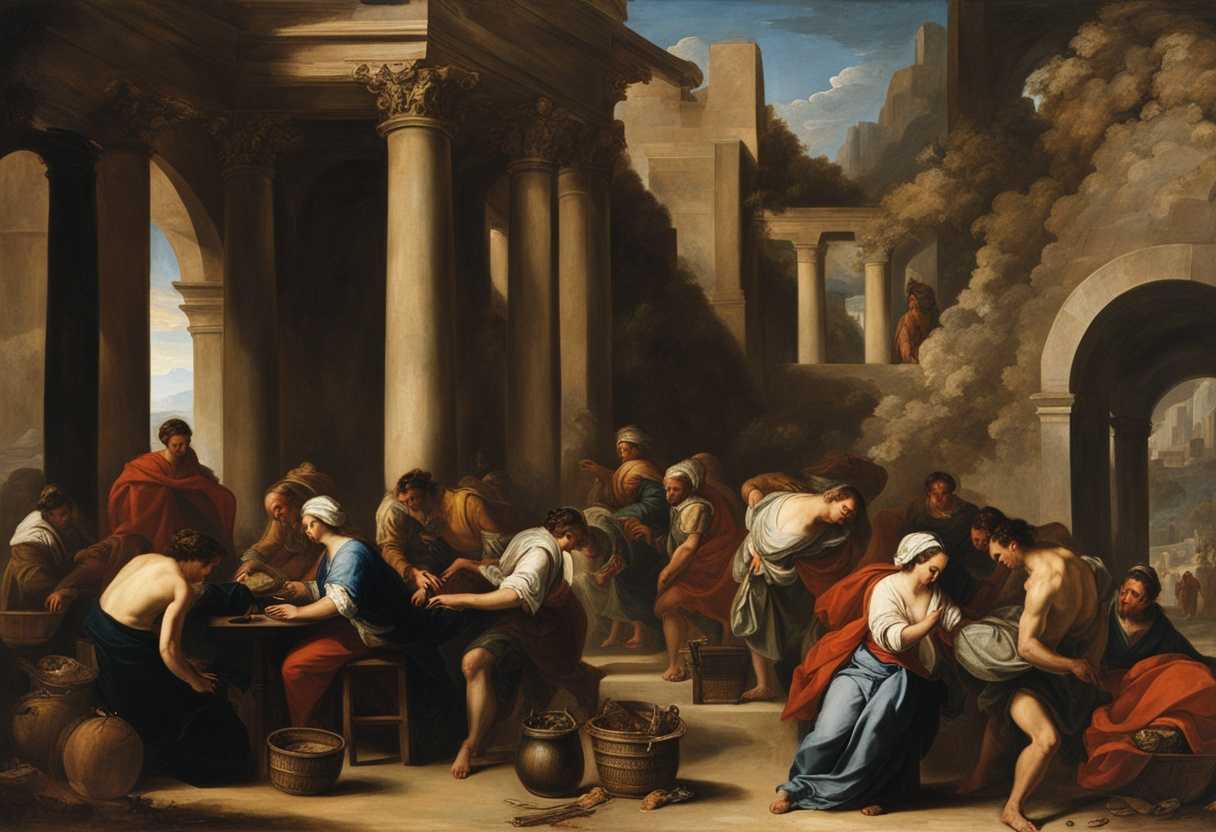
Setting the Scene for 2 Chronicles 2:2
In 2 Chronicles chapter 2, we find King Solomon of Israel preparing to build the magnificent temple of the Lord in Jerusalem. The scene is set in the bustling city, with workers and craftsmen bustling about, preparing materials and making plans for the grand project ahead. King Solomon, known for his wisdom and wealth, is overseeing the preparations with great care and attention to detail.
Among those present in the scene are Hiram, the skilled craftsman from Tyre, who has been commissioned to work on the temple alongside the Israelite workers. The air is filled with the sounds of hammers striking metal, saws cutting wood, and the voices of workers discussing the intricate designs of the temple. The surroundings are filled with the smell of cedar and cypress wood, brought from Lebanon for the construction, and the sight of massive stones being hauled into place by teams of laborers.
As King Solomon and his team work diligently to bring the temple to fruition, there is a sense of reverence and awe in the air, knowing that this structure will be a place of worship and sacrifice for generations to come. The scene is a testament to the dedication and faith of the Israelites in fulfilling the commands of the Lord and honoring Him with a temple worthy of His name.
What is 2 Chronicles 2:2 about?
Solomon steps into his role as a faithful servant of the Lord by embarking on the monumental task of building the temple, which was his father David’s desire in this verse. This act symbolizes a continuation of David’s legacy and a deepening of the relationship between the Israelites and their God. Beyond the physical construction of a temple, this act represents a spiritual and symbolic commitment to honor and worship God in a dedicated and permanent space.
Have you ever felt called to continue a legacy or fulfill a dream of someone who came before you? We can also think about how our actions and choices today can carry on the values and beliefs of those who have influenced us, just as Solomon is honoring his father’s wish to build the temple. This verse reminds us of the importance of honoring the past while looking towards the future, and the significance of faithfulness and dedication in serving a higher purpose.
Understanding what 2 Chronicles 2:2 really means
To provide a structured commentary on this verse, we will follow these key points: Context, Key Phrases, Related Passages, Relevance Today, and Personal Anecdote.
Context:
This verse is set in the context of King Solomon’s preparations to build the temple in Jerusalem. Solomon, eager to fulfill his father’s vision and God’s command, organizes a large workforce to undertake the monumental task. Understanding the historical and situational backdrop helps us appreciate the magnitude and significance of Solomon’s actions.
Key Phrases:
A critical phrase in this verse is the description of the workforce: “70,000 men to bear burdens, 80,000 to quarry in the hill country, and 3,600 to oversee them.” These numbers are not just statistics; they reflect the scale and seriousness of the project. The “burden bearers” symbolize the laborious effort required, the “quarry workers” denote the foundational work in preparing materials, and the “overseers” indicate the need for leadership and organization.
Related Passages:
Comparing this with Exodus 35:30-35, we see a parallel in the meticulous planning and skillful execution needed for the tabernacle construction. Also, in 1 Kings 5:13-18, we see a more detailed account of Solomon’s labor force, including the involvement of King Hiram of Tyre, emphasizing cooperation and resourcefulness.
Relevance Today:
This passage underscores the importance of preparation, teamwork, and dedication in achieving great tasks. Significant accomplishments require collective effort and proper organization in our modern context. How often do we take the time to plan and gather the necessary resources before embarking on our endeavors? I once organized a church mission trip. Much like Solomon’s project, it required careful planning, from fundraising to logistics. We needed dedicated volunteers, skilled leaders, and a clear vision. Though challenging, the collective effort brought our church community closer and resulted in a successful mission. This experience resonated with the lessons from Solomon’s workforce, demonstrating that with unity and purpose, great things can be achieved. Solomon’s wisdom in organizing a workforce is highlighted in this verse from 2 Chronicles, serving as a timeless lesson in preparation, teamwork, and leadership. It challenges us to think critically about how we approach our own projects and endeavors, encouraging a spirit of cooperation and dedication.
How can we properly honor and worship God?
We can properly honor and worship God by acknowledging His greatness and approaching Him with reverence and humility. This involves recognizing His power, sovereignty, and holiness. It also means giving Him the honor and praise that He deserves, as the Creator and Sustainer of all things. We should seek to bring glory to His name and align our actions with His will in our worship and daily lives.
Furthermore, honoring and worshiping God involves dedicating ourselves to serving Him wholeheartedly and obeying His commandments. This means living a life that is pleasing to Him and following the teachings and example of Jesus Christ. We can constantly grow in our understanding of who God is and how we can honor Him in all that we do by prioritizing our relationship with God, praying, studying the Scriptures, and participating in fellowship with other believers. Our love, gratitude, and devotion to Him as our Lord and Savior should ultimately reflect in our worship of God.
Application
Think of your life as a construction project. Just as Solomon built a magnificent temple, you too have the power to create something meaningful with your actions and decisions. Are you pouring your skills and effort into building something that honors what truly matters? Look around you – family, work, community – these are the spaces where you can make a difference. Are you dedicating yourself fully to what you believe in?

Reverend Michael Johnson is an experienced Church Minister with a profound expertise in spirituality and guidance. With a serene presence and a compassionate heart, he has faithfully served his congregation for over 20 years, leading them on a spiritual journey towards inner peace and enlightenment. Reverend Johnson’s extensive knowledge of religious philosophies and profound understanding of human nature have made him a trusted confidant and mentor to many, as he seamlessly weaves his profound wisdom into life teachings. Reverend Johnson’s calming demeanor and empathetic nature continue to uplift and heal souls, nurturing a sense of unity and tranquility within his community.