
2 Chronicles 30:1-27 is about King Hezekiah’s efforts to reinstate the celebration of Passover in Judah, emphasizing themes of national repentance, divine grace, and the restoration of rightful worship among the people of Israel.
1 Hezekiah sent to all Israel and Judah, and wrote letters also to Ephraim and Manasseh, that they should come to the house of the Lord at Jerusalem to keep the Passover to the Lord, the God of Israel.
2 For the king and his princes and all the assembly in Jerusalem had taken counsel to keep the Passover in the second month.
3 for they could not keep it at that time, because the priests had not consecrated themselves in sufficient number, nor had the people assembled in Jerusalem.
4 The plan seemed right to the king and all the assembly.
5 So they decreed to make a proclamation throughout all Israel, from Beersheba to Dan, that the people should come and keep the Passover to the Lord, the God of Israel, at Jerusalem, for they had not kept it as often as prescribed.
6 So couriers went throughout all Israel and Judah with letters from the king and his princes, as the king had commanded, saying, “O people of Israel, return to the Lord, the God of Abraham, Isaac, and Israel, that he may turn again to the remnant of you who have escaped from the hand of the kings of Assyria.
7 Do not be like your fathers and your brothers, who were faithless to the Lord God of their fathers, so that he made them a desolation, as you see.
8 Do not be like your fathers and your brothers, who were faithless to the Lord God of their fathers, so that he made them a desolation, as you see.
9 For if you return to the Lord, your brothers and your children will find compassion with their captors and return to this land. For the Lord your God is gracious and merciful and will not turn away his face from you, if you return to him.”
10 So the couriers went from city to city through the country of Ephraim and Manasseh, and as far as Zebulun, but they laughed them to scorn and mocked them.
11 However, some men of Asher, of Manasseh, and of Zebulun humbled themselves and came to Jerusalem.
12 The hand of God was also on Judah to give them one heart to do what the king and the princes commanded by the word of the Lord.
13 And many people came together in Jerusalem to keep the Feast of Unleavened Bread in the second month, a very great assembly.
14 They set to work and removed the altars that were in Jerusalem, and all the altars for burning incense they took away and threw into the Kidron Valley.
15 They slaughtered the Passover lamb on the fourteenth day of the second month. And the priests and the Levites were ashamed, so they consecrated themselves and brought burnt offerings into the house of the Lord.
16 They took their accustomed posts according to the Law of Moses the man of God. The priests threw the blood that they received from the hand of the Levites.
17 For there were many in the assembly who had not consecrated themselves. So the Levites had to slaughter the Passover lamb for everyone who was not clean, to consecrate it to the Lord.
18 For a majority of the people, many of them from Ephraim, Manasseh, Issachar, and Zebulun, had not cleansed themselves, yet they ate the Passover otherwise than as prescribed. But Hezekiah prayed for them, saying, “May the good Lord pardon everyone
19 that has set his heart to seek God, the Lord, the God of his fathers, even though not according to the sanctuary’s rules of cleanness.”
20 And the Lord heard Hezekiah and healed the people.
21 And the people of Israel who were present at Jerusalem kept the Feast of Unleavened Bread seven days with great gladness, and the Levites and the priests praised the Lord day by day, singing with all their might to the Lord.
22 And Hezekiah spoke encouragingly to all the Levites who showed good skill in the service of the Lord. So they ate the food of the festival for seven days, sacrificing peace offerings and giving thanks to the Lord, the God of their fathers.
23 And the whole assembly agreed to keep the feast for another seven days, and they kept it for another seven days with gladness.
24 For Hezekiah king of Judah gave the assembly a thousand bulls and seven thousand sheep for offerings, and the princes gave the assembly a thousand bulls and ten thousand sheep. And the priests consecrated themselves in great numbers.
25 The whole assembly of Judah, and the priests and the Levites, and the whole assembly that came out of Israel, and the sojourners who came out of the land of Israel, and the sojourners who lived in Judah, rejoiced.
26 So there was great joy in Jerusalem, for since the time of Solomon the son of David king of Israel there had been nothing like this in Jerusalem.
27 Then the priests and the Levites arose and blessed the people, and their voice was heard, and their prayer came to his holy habitation in heaven.
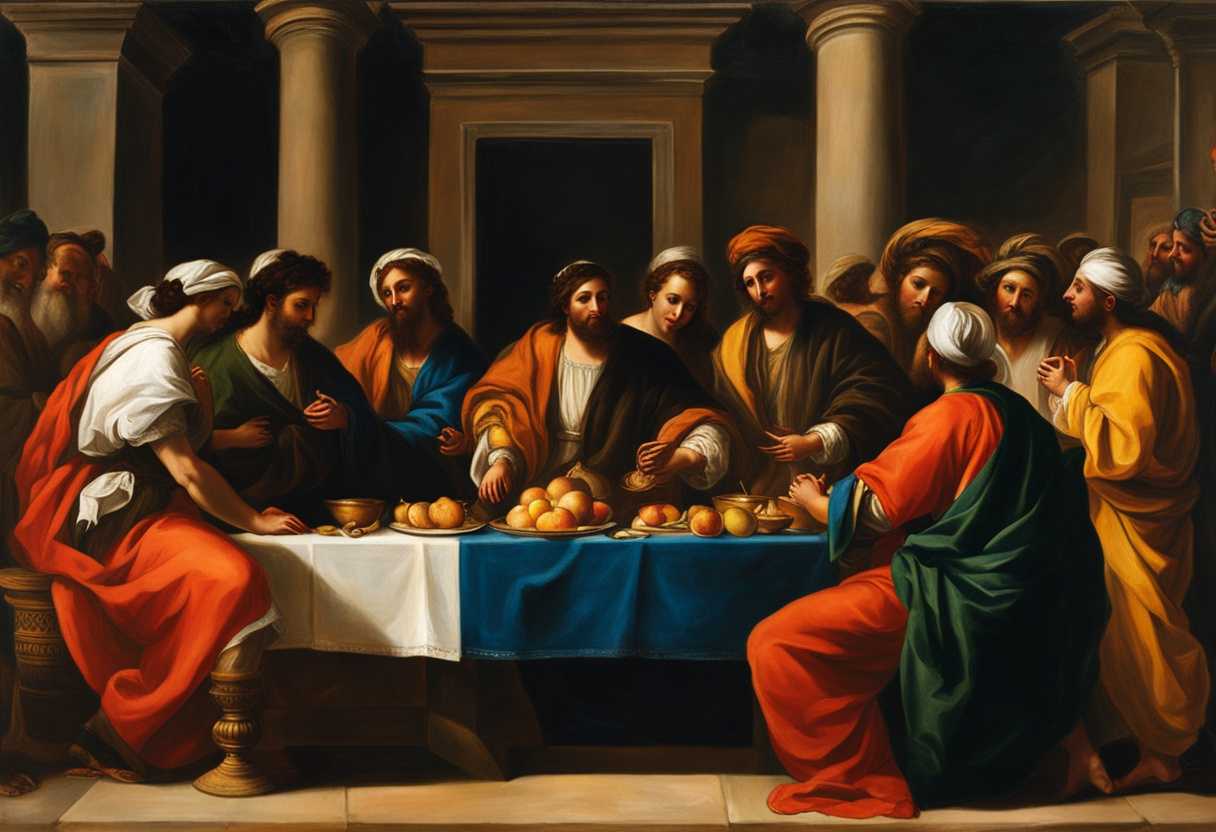
Setting the Scene for 2 Chronicles 30:1-27
In the vibrant land of Judah, a time of spiritual renewal was dawning under the leadership of King Hezekiah. The air was thick with anticipation as Hezekiah, having ascended to the throne after a period of idolatry and neglect of the temple, sought to restore the worship of Yahweh among his people. He sent out messengers throughout all Israel and Judah, inviting them to come to Jerusalem to celebrate the Passover, a festival that had been neglected for far too long. The messengers traveled through the towns and villages, their voices echoing in the streets, calling the people to return to the Lord and partake in the sacred feast that commemorated their deliverance from Egypt.
As the appointed day approached, the atmosphere in Jerusalem was electric with excitement and a sense of unity. Families from various tribes, including those from Ephraim and Manasseh, began to arrive, some traveling great distances, their hearts filled with hope and a desire to reconnect with their heritage. The city, adorned with banners and the aroma of freshly prepared offerings, buzzed with the sounds of laughter and conversation. The temple stood majestically at the center, its doors wide open, inviting all who sought the Lord. The priests and Levites, clad in their ceremonial garments, prepared the altar and the sacrifices, their faces reflecting a mix of reverence and joy as they anticipated the return of the people to true worship.
However, not all were in agreement; some mocked the messengers, dismissing the call to repentance and celebration. Yet, a remnant responded with eagerness, recognizing the significance of the moment. As the sun began to set, casting a golden hue over the city, the gathered crowd filled the temple courts, their hearts united in worship. They offered sacrifices, sang hymns of praise, and shared in the Passover meal, a powerful reminder of their identity as God’s chosen people. The atmosphere was charged with a sense of divine presence, as the people, once scattered and divided, found themselves restored in fellowship with one another and with their God, fulfilling the very purpose of the festival. The celebration became a pivotal moment in their history, marking a renewed commitment to faith and community, as they collectively sought to honor the Lord who had delivered them.
What is 2 Chronicles 30:1-27 about?
King Hezekiah’s invitation to all Israel to celebrate Passover serves as a powerful catalyst for restoring worship and unity among a fragmented people. At this point in history, Israel was facing division, both politically and spiritually, which often leaves individuals feeling isolated and disconnected from their collective identity. Hezekiah honors a deeply rooted tradition and fosters a profound sense of community and belonging by calling the people together for this significant religious observance. Have you ever taken part in a gathering that reminded you of shared values with those around you? It’s in these moments that we truly experience the importance of coming together.
The observance of Passover symbolizes liberation, remembrance, and renewal. For King Hezekiah, this celebration is more than a ritual; it is a call to reclaim their identity as a united nation under God’s covenant. It is a chance for the people to reflect on their shared history, to remember the impact of their faith, and to recommit to their spiritual lives. Isn’t it interesting how collective rituals can ground us in a larger story? Hezekiah emphasizes the inclusive nature of faith by inviting all of Israel, reminding that worship is not an isolated act but a shared experience that strengthens bonds among people. Together, they can embody a living testament to their faith, resilience, and hope for the future. Through this act of unity, Hezekiah effectively revitalizes not only their worship practices but their communal identity.
Understanding what 2 Chronicles 30:1-27 really means
In 2 Chronicles 30:1-27, we witness a pivotal moment in the history of Judah under King Hezekiah. After years of neglecting the worship of Yahweh, Hezekiah takes decisive action to restore the spiritual life of his people. He sends out invitations to all of Israel, urging them to come to Jerusalem for the Passover. This act is not merely about a religious observance; it is a call for unity and repentance. Have you ever considered how a single leader can influence an entire nation’s spiritual direction?
The underlying meaning of this passage is profound. It emphasizes the significance of communal worship and the necessity for spiritual renewal. Hezekiah’s leadership exemplifies how one person can inspire a collective return to God. The themes of repentance, forgiveness, and the joy of restoration resonate throughout the text. When was the last time you felt a deep sense of community in your worship experience?
Several related biblical passages enhance our understanding of this narrative. For instance, 2 Chronicles 7:14 speaks to the power of humility and prayer in seeking God’s face, paralleling Hezekiah’s call for repentance. Similarly, Isaiah 55:6-7 encourages the wicked to forsake their ways, reinforcing the message of returning to the Lord. In the New Testament, Luke 15:10 reminds us of the joy in heaven over one sinner who repents, echoing the celebration that follows the observance of Passover in this passage. How do these connections deepen your understanding of repentance and community?
In our contemporary context, the call to return to God remains as relevant as ever. Many individuals today grapple with feelings of disconnection from their faith and community. This passage serves as a poignant reminder of the importance of gathering together in worship and seeking God’s forgiveness. In a world filled with distractions, how can we cultivate a spirit of unity and renewal in our own lives?
Consider the story of a community that faced division and strife. A local pastor organized a day of prayer and reconciliation, inviting everyone, regardless of past grievances. As people gathered, they shared stories of hurt and healing, ultimately finding common ground in their faith. This mirrors Hezekiah’s call for unity and the collective return to worship, illustrating how communal efforts can lead to spiritual renewal. What steps can we take in our own communities to foster such healing?
Several meaningful phrases in this passage stand out. “Return to the Lord” encapsulates the essence of repentance, signifying a heartfelt turning away from sin. “With a whole heart” emphasizes the need for sincerity in our worship. God desires our full commitment, not half-hearted efforts. Finally, “the hand of God was on them” illustrates the divine favor that accompanies those who earnestly seek Him. How might these phrases challenge you to reflect on your own spiritual journey?
In conclusion, the passage from 2 Chronicles serves as a powerful reminder of the importance of community, repentance, and the joy that comes from returning to God. It encourages us to reflect on our lives and consider how we can foster a spirit of unity and worship in our communities today. Are we ready to answer the call to return, not just as individuals, but as a collective body seeking God’s presence?
How can we restore our relationship with God?
Restoring our relationship with God involves a sincere acknowledgment of our past shortcomings and a commitment to seek reconciliation. This process begins with a heart open to repentance, recognizing the importance of coming together in unity and worship. It means actively choosing to turn away from actions that have caused distance from God. We create a communal atmosphere of grace and acceptance, which strengthens our faith and fosters deeper connections with one another and with God by reaching out to fellow believers and encouraging them to join in this journey.
Participating in acts of worship, whether through communal gatherings, prayer, or the observance of sacred traditions, is also essential in this restoration. Engaging fully in these practices helps us to remember God’s faithfulness and goodness. Celebrating these moments together not only deepens our individual understanding of God’s love but also fortifies our collective spirit as a community, reminding us that we are not alone in this pursuit. These gatherings serve to rekindle our commitment to God and reinforce our dedication to living in a way that honors Him.
Finally, we must cultivate a life marked by obedience to God’s word and a willingness to grow in our faith. This might involve studying scripture, seeking guidance through prayer, and being receptive to the prompting of the Holy Spirit. We foster a deeper understanding of God’s will for us, transform our hearts, and restore the intimacy of our relationship with Him by integrating these spiritual disciplines into our daily lives. It’s a journey that requires ongoing effort, humility, and a willingness to embrace change, but it ultimately leads us back to a fulfilling and vibrant connection with God.
Application
Just like a busy workday can drain our energy, life can sometimes pull us away from what truly matters, including our faith. King Hezekiah called his people to turn back to God, and now it’s your turn to answer that call. Take a moment and think about how you can reignite that spark in your own life—maybe through heartfelt prayer, joining a community group, or simply taking time to reflect. Your spiritual renewal is just as important as nurturing family bonds or hitting your work goals. So, what steps will you take today to return and celebrate the positivity that faith brings into your life?

Reverend Michael Johnson is an experienced Church Minister with a profound expertise in spirituality and guidance. With a serene presence and a compassionate heart, he has faithfully served his congregation for over 20 years, leading them on a spiritual journey towards inner peace and enlightenment. Reverend Johnson’s extensive knowledge of religious philosophies and profound understanding of human nature have made him a trusted confidant and mentor to many, as he seamlessly weaves his profound wisdom into life teachings. Reverend Johnson’s calming demeanor and empathetic nature continue to uplift and heal souls, nurturing a sense of unity and tranquility within his community.