
2 Chronicles 30:1-5 is about Hezekiah sending messengers to all of Israel and Judah to gather them to celebrate the Passover in Jerusalem, symbolizing a call to unity, repentance, and reconciliation with God.
1 Hezekiah sent to all Israel and Judah, and wrote letters also to Ephraim and Manasseh, that they should come to the house of the Lord at Jerusalem to keep the Passover to the Lord, the God of Israel.
2 For the king and his princes and all the assembly in Jerusalem had taken counsel to keep the Passover in the second month.
3 for they could not keep it at that time, because the priests had not consecrated themselves in sufficient number, nor had the people assembled in Jerusalem.
4 The plan seemed right to the king and all the assembly.
5 So they decreed to make a proclamation throughout all Israel, from Beersheba to Dan, that the people should come and keep the Passover to the Lord, the God of Israel, at Jerusalem, for they had not kept it as often as prescribed.
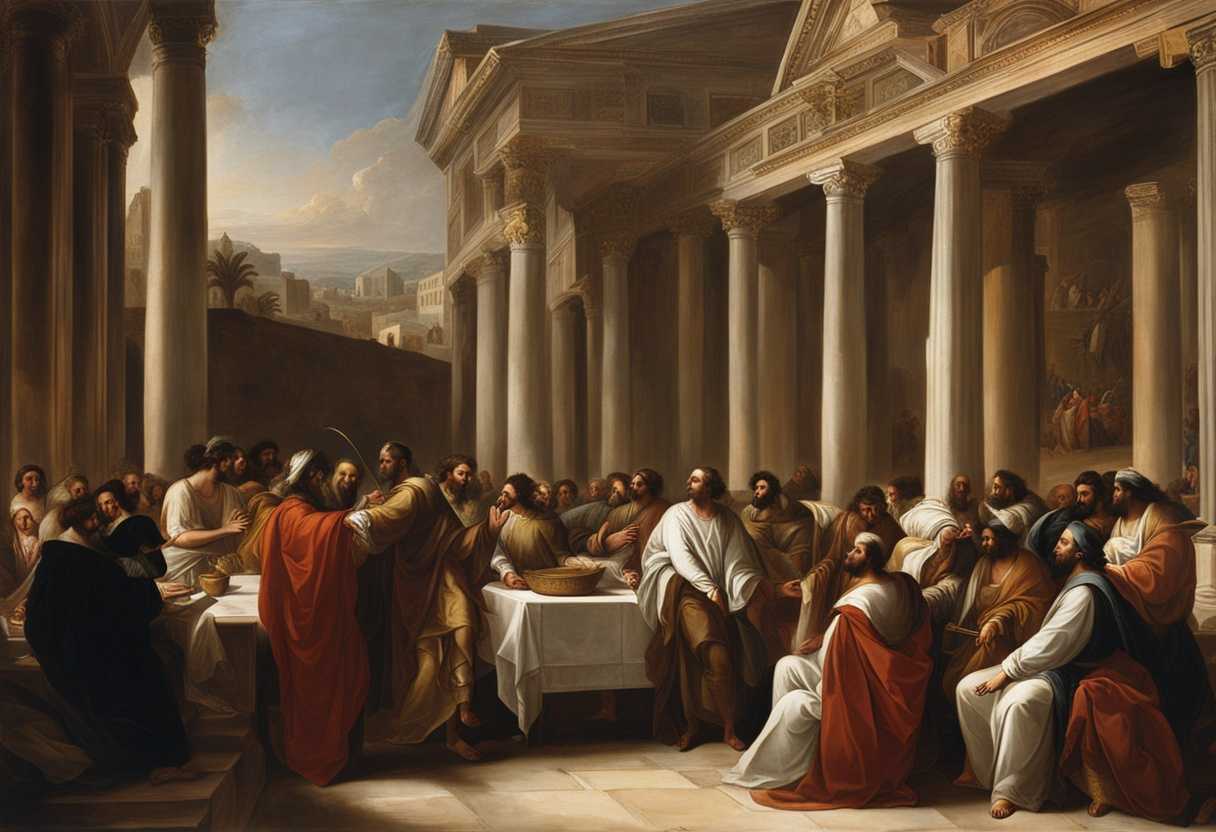
Setting the Scene for 2 Chronicles 30:1-5
In 2 Chronicles chapter 30, we find King Hezekiah of Judah preparing to celebrate the Passover. The scene is set in the royal court of Jerusalem, where King Hezekiah has gathered the priests, Levites, and the people of Judah and Israel who have come to worship the Lord. The atmosphere is one of anticipation and excitement as the preparations for the Passover feast are underway.
The reason for this gathering is that Hezekiah has called for a nationwide revival of worship in Judah and Israel. He sends out messengers throughout the land, inviting all the people to come to Jerusalem to celebrate the Passover, even those who had strayed from the ways of the Lord. The response is overwhelming, as people from all over Judah and Israel make the journey to Jerusalem to join in the worship and celebration.
As the people gather in the royal court, the priests and Levites are busy making the necessary preparations for the Passover sacrifice. The scene is filled with the sounds of prayers, songs of praise, and the smell of incense as the people come together to seek forgiveness and renewal in their relationship with God. It is a powerful moment of unity and faith as the people of Judah and Israel come together to worship the Lord with one heart and one voice.
What is 2 Chronicles 30:1-5 about?
King Hezekiah’s invitation to all Israel and Judah to celebrate Passover in Jerusalem signifies an important moment of unity and spiritual renewal among the Israelites in this verse. King Hezekiah emphasizes the common heritage and faith that binds all the people together as one nation under God by extending the invitation to all, regardless of their specific locations or tribes. This act of gathering in Jerusalem for the Passover celebration serves as a powerful symbol of solidarity, shared traditions, and cultural identity among the Israelites.
Imagine the significance of this event for the Israelites, who may have been scattered throughout the land or divided by previous conflicts. King Hezekiah’s invitation not only fosters a sense of community and belonging but also renews their commitment to their shared religious practices and beliefs. It is a momentous occasion that unites the people in worship, reflection, and gratitude for their heritage and faith. Reflecting on this verse reminds us of the power of coming together as a community to celebrate our common values and beliefs, despite any differences or divisions that may exist.
Understanding what 2 Chronicles 30:1-5 really means
In the time of King Hezekiah, a pivotal moment in the history of the divided kingdom of Israel and Judah, we see a leader striving to bring his people back to God. Hezekiah’s efforts to reunite the nation under the worship of the Lord set the stage for a significant spiritual revival.
The Passover, a central event in the Israelite calendar, held deep significance for the people. It was a time to remember God’s deliverance from slavery in Egypt and to renew their commitment to Him. However, due to years of neglect and spiritual decline, the observance of the Passover had been forsaken, reflecting the spiritual state of the nation.
Hezekiah’s message, sent to all Israel and Judah, called for a return to the temple in Jerusalem to celebrate the Passover. This inclusive invitation emphasized the unity Hezekiah sought to restore among the people, bringing them back to the central place of worship and the heart of their faith.
The delay in celebrating the Passover at the regular time highlights God’s grace and understanding towards genuine repentance and return. Despite past neglect, there was room for renewal and restoration, showing that God’s laws are not rigid but allow for a response to His call for reconciliation.
Looking at related biblical passages, we see the roots of the Passover in Exodus, the reforms of Hezekiah in 2 Kings, and the connection of the Passover to Christ in the New Testament. These references underscore the continuity of God’s redemptive plan throughout history and the importance of remembering His faithfulness.
Today, the theme of returning to God and experiencing spiritual renewal remains relevant. Just as Hezekiah sought unity and inclusivity in worship, we are called to break down barriers and come together in faith. Remembering and celebrating God’s past deliverances can serve as a foundation for our present and future trust in Him.
In our modern context, stories abound of communities and individuals finding renewal and unity through a return to foundational beliefs. These experiences illustrate the power of significant spiritual events to bring people together and reignite their faith, much like the Passover did for the Israelites.
As we reflect on Hezekiah’s call to return to God, may we also seek spiritual renewal and unity in our lives and communities. Let us remember the faithfulness of God throughout history and look forward with hope to the ways He continues to work in our midst. May this commentary inspire you to embrace a journey of faith and seek unity with others in worship and service.
How can we come back to the Lord wholeheartedly?
To come back to the Lord wholeheartedly, we must make a conscious decision to seek Him anew with sincerity and devotion. We should acknowledge any wrongdoing or neglect of our relationship with Him and repent from our ways. We should take intentional steps towards reconciliation, just as the people in 2 Chronicles 30 made a deliberate choice to return to the Lord.
Additionally, turning back to the Lord wholeheartedly involves a genuine desire to follow His ways and obey His commandments. It requires us to align our hearts, minds, and actions with God’s will, allowing Him to reign as the center of our lives. We demonstrate our love and faith towards the Lord by committing ourselves fully to Him and seeking His presence diligently. Returning to the Lord wholeheartedly ultimately means surrendering ourselves completely to His grace and mercy. It involves letting go of our own pride and selfish desires and placing our trust in His unfailing love. When we come before the Lord with humility, repentance, and a genuine desire to seek Him, we open the door for restoration and renewed fellowship with our Creator.
Application
Fellow believers, let’s unite in faith and worship, just as 2 Chronicles 30:1-5 reminds us. Take a moment to think about reaching out to those who may have strayed from the fold. Let’s come together as a family, setting aside our disagreements and embracing one another with love and unity. Will you join us in building bridges and fostering peace within our community of believers?

Reverend Michael Johnson is an experienced Church Minister with a profound expertise in spirituality and guidance. With a serene presence and a compassionate heart, he has faithfully served his congregation for over 20 years, leading them on a spiritual journey towards inner peace and enlightenment. Reverend Johnson’s extensive knowledge of religious philosophies and profound understanding of human nature have made him a trusted confidant and mentor to many, as he seamlessly weaves his profound wisdom into life teachings. Reverend Johnson’s calming demeanor and empathetic nature continue to uplift and heal souls, nurturing a sense of unity and tranquility within his community.