
2 Chronicles 30:2-3 is about King Hezekiah sending messengers throughout Judah and Israel to encourage the people to return to the Lord and celebrate the Passover, symbolizing God’s call for repentance, unity, and renewal among His people.
2 For the king and his princes and all the assembly in Jerusalem had taken counsel to keep the Passover in the second month.
3 for they could not keep it at that time, because the priests had not consecrated themselves in sufficient number, nor had the people assembled in Jerusalem.
Setting the Scene for 2 Chronicles 30:2-3
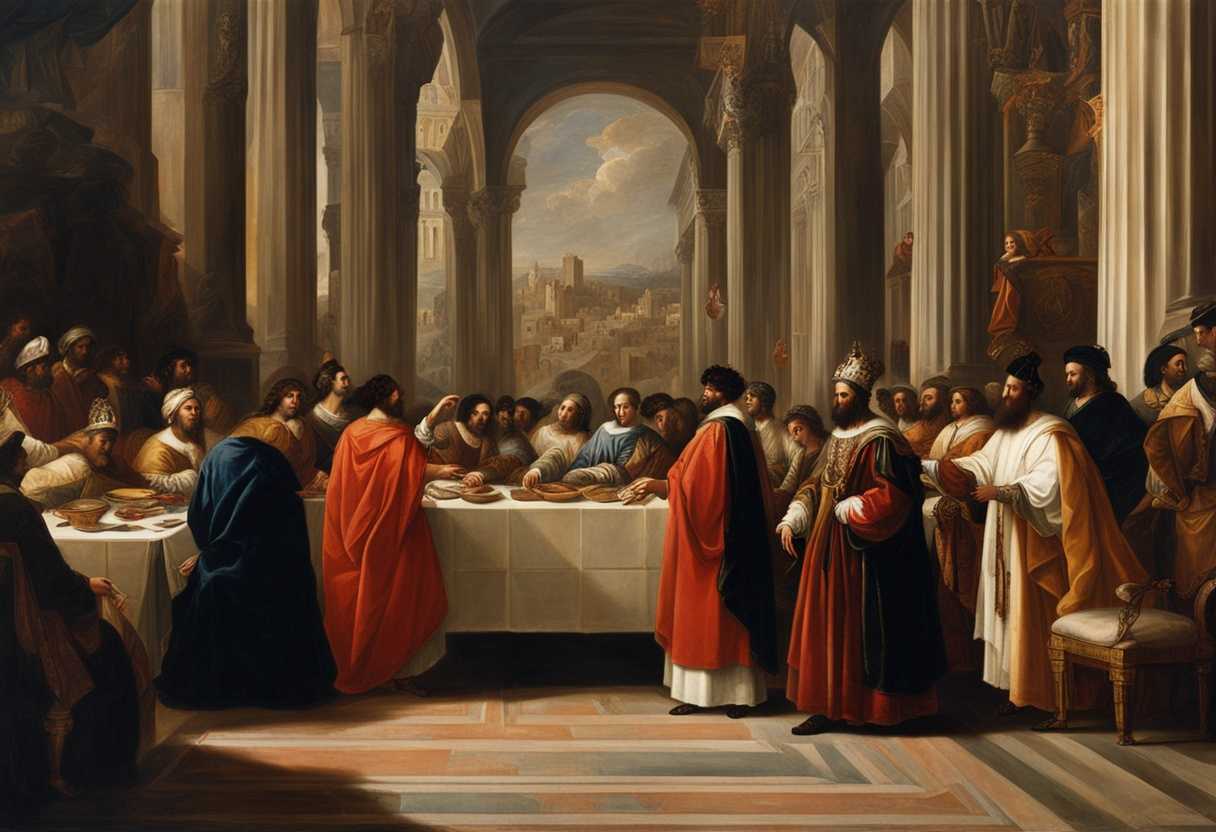
In 2 Chronicles chapter 30, we find King Hezekiah of Judah preparing to celebrate the Passover. The scene is set in the royal court of Jerusalem, where King Hezekiah has gathered the priests, Levites, and the people of Judah and Israel who have come to worship the Lord. The atmosphere is one of anticipation and excitement as the preparations for the Passover feast are underway.
The reason for this gathering is that Hezekiah has called for a nationwide revival of worship in Judah and Israel. He sends out messengers throughout the land, inviting everyone to come to Jerusalem to celebrate the Passover, even those who were unclean or living in disobedience. This act of inclusivity and grace is a significant departure from the previous neglect of the Passover observance.
As the people begin to arrive in Jerusalem, the city is bustling with activity. The streets are filled with pilgrims from all over the kingdom, coming together to worship and seek the Lord. The temple is being prepared for the sacrifices and offerings, and the air is filled with the sounds of prayers and praises as the people gather to honor God and seek His forgiveness and favor.
What is 2 Chronicles 30:2-3 about?
Hezekiah’s gesture of inviting all of Israel and Judah to celebrate Passover in this verse holds profound meaning. Hezekiah’s invitation symbolizes unity and inclusivity among the people of Israel and Judah. He illustrates a sense of community and togetherness by inviting all, emphasizing the importance of coming together as one nation to worship and celebrate their shared heritage and faith.
Imagine the impact of such a grand invitation – from the king himself – to every corner of the land. It signifies an opportunity for reconciliation, forgiveness, and a fresh start for the divided kingdoms of Israel and Judah. Through this act, Hezekiah sets an example of leadership that values collective worship and reaffirms the significance of traditions and connections that bind the people together. Consider how this verse applies to your own context. How can you, like Hezekiah, extend invitations of unity and inclusivity in your community? Reflect on the power of coming together, despite differences, to celebrate shared values and beliefs. Let Hezekiah’s actions inspire you to foster a sense of belonging and harmony among those around you.
Understanding what 2 Chronicles 30:2-3 really means
During the reign of King Hezekiah, a pivotal moment arose when he, along with his officials and the assembly in Jerusalem, made a collective decision to celebrate the Passover in the second month. This decision was significant as it showcased the unity and communal effort required to return to the worship of Yahweh. The flexibility allowed by the law to celebrate the Passover in the second month instead of the first highlighted the understanding and grace present in God’s commandments, catering to those who were unclean or on a journey during the initial timeframe.
The inability to celebrate the Passover at the regular time was attributed to the lack of consecrated priests and the failure of the people to assemble in Jerusalem. This emphasized the crucial role of proper preparation and consecration in worship, shedding light on the disarray and neglect that had plagued religious duties before Hezekiah’s reforms. The passage not only delves into historical context but also provides timeless lessons on the significance of communal worship and the necessity of spiritual readiness.
Drawing parallels to contemporary settings, the passage underscores the importance of communities coming together for worship and the value of being spiritually prepared. It serves as a reminder that God’s grace allows for second chances when circumstances hinder the fulfillment of our duties at the designated time. Just as Hezekiah and the assembly in Jerusalem adjusted their plans to honor God, we are encouraged to adapt and unite in worship, even if it means making alterations to accommodate our current situations.
Consider a scenario where a neglected church undergoes a revival akin to Hezekiah’s reforms. A new pastor, alongside the remaining congregation members, embarks on restoring the physical and spiritual aspects of the church. Despite not following the traditional timeline for rededicating the church, they decide to hold a special service, leading to a communal revival. This anecdote mirrors the essence of 2 Chronicles 30:2-3, emphasizing the restoration of proper worship, communal decision-making, and the acceptance of grace and flexibility in spiritual endeavors.
In conclusion, the passage from 2 Chronicles 30:2-3 imparts valuable lessons on unity, preparation, and the grace of second chances in our spiritual journeys. It prompts us to gather as a community to worship, even if adjustments are necessary due to circumstances beyond our control. By reflecting on Hezekiah’s example, we are inspired to rejuvenate and uphold our faith practices, assured that God acknowledges and honors our sincere efforts and intentions.
How can we cultivate unity among believers?
We can cultivate unity among believers by inviting and encouraging them to come together in worship and service to God. This can be done by extending invitations to others to join in communal activities such as prayer, worship services, Bible studies, and fellowship gatherings. When believers come together in unity to praise and serve the Lord, they can strengthen their bond with one another and create a sense of community that transcends differences.
Another way to cultivate unity among believers is by emphasizing the importance of coming before the Lord with a humble and contrite heart. Encouraging believers to set aside their own agendas and submit themselves to God’s will can help foster a spirit of unity and cooperation among them. When believers approach God with sincerity and humility, they can find common ground in their shared desire to seek His guidance and blessings.
Furthermore, promoting a spirit of inclusivity and love among believers can also help cultivate unity within the community of faith. Encouraging believers to show compassion, understanding, and forgiveness towards one another can create an environment where differences are respected and conflicts are resolved in a spirit of love and reconciliation. Believers can build a strong and united community that reflects the love and grace of God by practicing love and acceptance towards one another.
Application
Dear friends, let us take a page from King Hezekiah’s book and ignite our passion for spiritual connection. Just like he opened the doors of Jerusalem for worship, let us reopen the doors of our hearts to the divine. It is time to act, to come closer to our faith and feel the embrace of the divine. Will you join hands with your spiritual family and rejoice in the presence of the Almighty with unbridled devotion?

Reverend Michael Johnson is an experienced Church Minister with a profound expertise in spirituality and guidance. With a serene presence and a compassionate heart, he has faithfully served his congregation for over 20 years, leading them on a spiritual journey towards inner peace and enlightenment. Reverend Johnson’s extensive knowledge of religious philosophies and profound understanding of human nature have made him a trusted confidant and mentor to many, as he seamlessly weaves his profound wisdom into life teachings. Reverend Johnson’s calming demeanor and empathetic nature continue to uplift and heal souls, nurturing a sense of unity and tranquility within his community.