
2 Chronicles 35:20-27 is about King Josiah’s untimely death in battle, demonstrating the consequences of disobedience to God’s warnings and the fulfillment of prophecies foretold by the prophets, emphasizing the importance of heeding divine guidance and the inevitability of God’s plans coming to fruition.
20 After all this, when Josiah had prepared the temple, Neco king of Egypt went up to fight at Carchemish on the Euphrates, and Josiah went out to meet him.
21 But he sent envoys to him, saying, “What have we to do with each other, king of Judah? I am not coming against you this day, but against the house with which I am at war. And God has commanded me to hurry. Cease opposing God, who is with me, lest he destroy you.”
22 Nevertheless, Josiah did not turn away from him, but disguised himself in order to fight with him. He did not listen to the words of Neco from the mouth of God, but came to fight in the plain of Megiddo.
23 And the archers shot King Josiah. And the king said to his servants, “Take me away, for I am badly wounded.”
24 So his servants took him out of the chariot and carried him in his second chariot and brought him to Jerusalem. And he died and was buried in the tombs of his fathers. All Judah and Jerusalem mourned for Josiah.
25 Jeremiah also uttered a lament for Josiah; and all the singing men and singing women have spoken of Josiah in their laments to this day. They made these a rule in Israel; behold, they are written in the Laments.
26 Now the rest of the acts of Josiah and his good deeds, according to what is written in the Law of the Lord,
27 And his deeds, first and last, behold, they are written in the Book of the Kings of Israel and Judah.
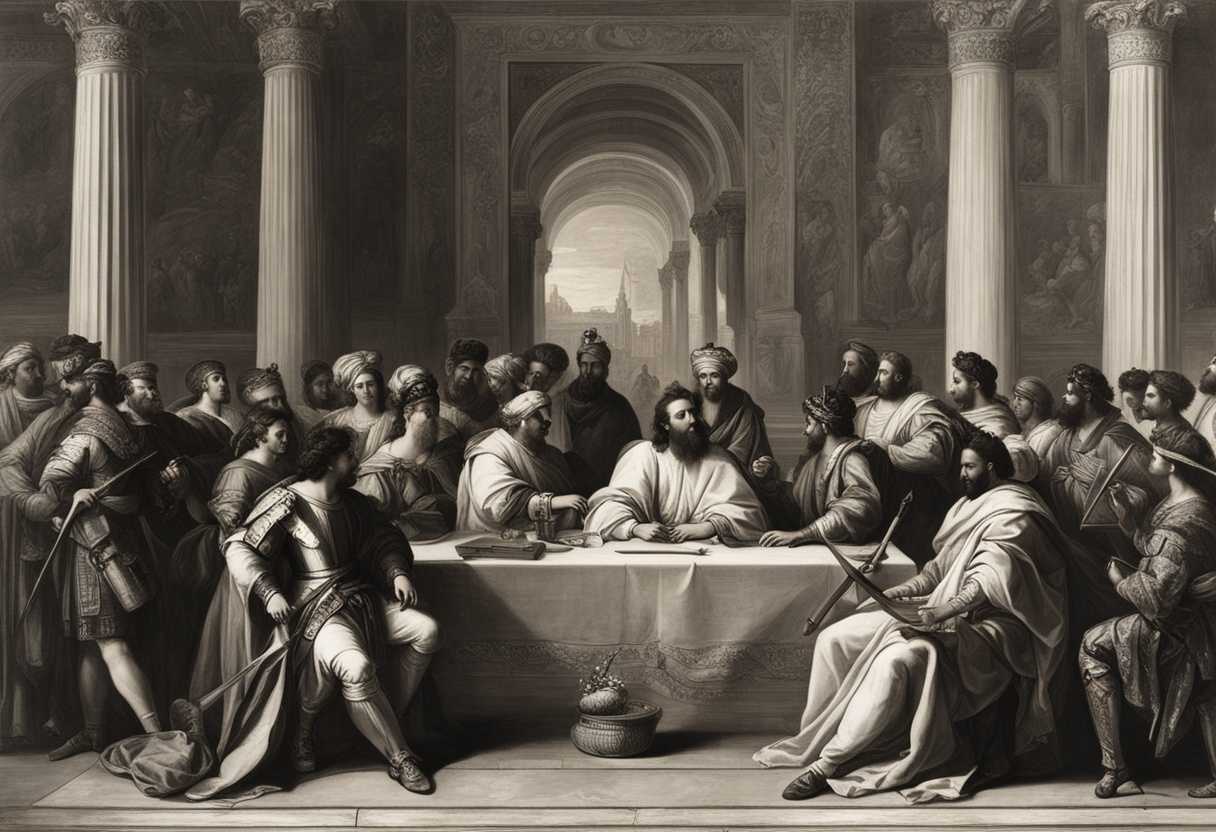
Setting the Scene for 2 Chronicles 35:20-27
The scene in 2 Chronicles 35:20-27 takes place during the reign of King Josiah of Judah. King Josiah was a righteous ruler who sought to restore the worship of the Lord in Judah. In this particular passage, King Josiah is leading his army to confront Pharaoh Necho of Egypt, who was marching through Judah to support the Assyrians against the Babylonians.
The surroundings are a battlefield, with the armies of Judah and Egypt facing off against each other. King Josiah is leading his troops with courage and determination, despite the warnings of the Egyptian king that he should not interfere in their conflict. The prophet Jeremiah is also present, witnessing the unfolding events and the tragic outcome that is about to occur.
As the battle unfolds, King Josiah is fatally wounded by archers and is taken back to Jerusalem to die. The people of Judah mourn the loss of their beloved king, as Jeremiah laments the passing of a righteous leader. The scene is one of sorrow and tragedy, as the nation of Judah loses a king who had sought to lead them back to the ways of the Lord.
What is 2 Chronicles 35:20-27 about?
This verse captures a pivotal moment in the history of ancient Israel. Josiah, a righteous king of Judah, meets his tragic end in battle, a fate foretold by prophets. Despite his efforts to lead his people back to the ways of God, Josiah’s life is cut short. The prophet Jeremiah laments the loss of this righteous leader, mourning the passing of a king who sought to bring about religious reforms and social justice in his kingdom.
Reflecting on this verse, we can consider the profound impact of leaders who strive to uphold righteousness in the face of adversity. We might ponder the ways in which the fulfillment of prophecy can serve as a reminder of the power and mystery of divine providence. How does Josiah’s story inspire us to reflect on our own roles as leaders and individuals striving to make a positive impact in the world? What lessons can we draw from his legacy of righteousness and commitment to justice, even in the face of daunting challenges and unforeseen circumstances? Let us pause to honor and remember those who have left a lasting impact through their steadfast dedication to what is right and just, like Josiah.
Understanding what 2 Chronicles 35:20-27 really means
The passage in 2 Chronicles 35:20-27 delves into the tragic events surrounding the death of King Josiah, a revered and righteous ruler of Judah during the 7th century BC. Josiah’s reign was marked by religious reforms and a fervent desire to restore true worship in Judah, showcasing his dedication to God’s commands. However, the narrative takes a somber turn as Josiah faces Pharaoh Necho of Egypt in battle at Megiddo, ultimately leading to his untimely demise.
In a poignant twist of fate, Josiah, known for his unwavering faithfulness, chooses to disguise himself for battle against Pharaoh Necho, a decision that ultimately proves fatal. The phrase “The archers shot King Josiah” encapsulates the sudden and tragic end to Josiah’s life, despite his prior righteousness and efforts to lead his people in accordance with God’s will. The mourning that ensues throughout Judah and Jerusalem underscores the deep sorrow and loss experienced by the nation at the passing of their beloved leader.
Drawing parallels from related biblical passages such as 2 Kings 23:29-30 and Jeremiah 22:10, we gain further insights into the significance of Josiah’s death and the lamentation it evoked among the people. Additionally, Proverbs 3:5-6 offers a timeless lesson on the importance of trusting in the Lord rather than relying solely on human understanding, a principle that Josiah may have overlooked in his final moments.
The relevance of Josiah’s story extends to contemporary times, serving as a poignant reminder of the need to seek God’s guidance in decision-making processes. Furthermore, it underscores the profound impact that righteous leadership can have on a community, emphasizing the enduring value of integrity and faithfulness in positions of authority. By reflecting on Josiah’s narrative, individuals are prompted to evaluate their own approaches to decision-making and consider how they can align their actions with God’s will.
Consider a scenario where a modern-day leader, despite good intentions and past successes, makes a critical decision without seeking wise counsel or considering all factors. This anecdote mirrors Josiah’s misstep in confronting Pharaoh Necho, highlighting the potential consequences of acting independently of God’s guidance. The story of Josiah serves as a cautionary tale, reminding us that even the most well-intentioned actions can lead to unforeseen outcomes if not aligned with God’s will.
In conclusion, the passage from 2 Chronicles 35:20-27 prompts readers to contemplate the themes of humility, seeking divine guidance, and the enduring impact of righteous leadership. It encourages introspection on decision-making processes and the importance of aligning one’s actions with God’s will, echoing the timeless lessons embedded within Josiah’s tragic yet instructive narrative.
Why did Josiah go to battle against Neco?
Josiah went to battle against Neco because Neco’s intention was to fight on his way to help the king of Assyria. Josiah saw Neco as a threat to his territory and sought to confront him in order to protect his kingdom and maintain control over his land. Despite being warned by Neco that he had no quarrel with Josiah and that it was a matter between him and the God of Israel, Josiah was determined to defend his kingdom and went into battle against Neco. The archers struck Josiah in the battle, and he eventually died as a result of his injuries. This tragic outcome illustrates the consequences of Josiah’s decision to confront Neco in battle. Josiah’s desire to protect his kingdom ultimately drove his actions, but they led to his downfall and the loss of his life. This serves as a reminder of the importance of seeking wisdom and carefully considering the implications of one’s actions before engaging in conflict.
Application
Just like you consult a GPS for the fastest route to work or gather family opinions for important decisions, seek God’s guidance in every step you take. Commit to prayer and earnestly seek His will, just like King Josiah did. Your life’s blueprint from God can lead you to true blessings and protection. Will you follow His guidance in your daily life and see where His path leads you?

Reverend Michael Johnson is an experienced Church Minister with a profound expertise in spirituality and guidance. With a serene presence and a compassionate heart, he has faithfully served his congregation for over 20 years, leading them on a spiritual journey towards inner peace and enlightenment. Reverend Johnson’s extensive knowledge of religious philosophies and profound understanding of human nature have made him a trusted confidant and mentor to many, as he seamlessly weaves his profound wisdom into life teachings. Reverend Johnson’s calming demeanor and empathetic nature continue to uplift and heal souls, nurturing a sense of unity and tranquility within his community.