
2 Chronicles 36:19-21 is about the consequences of Israel’s disobedience to God, highlighting the destruction of Jerusalem and the temple, the exile of the people to Babylon, and the fulfillment of prophecy concerning their return, emphasizing God’s sovereignty and the importance of repentance and obedience.
19 And they burned the house of God and broke down the wall of Jerusalem and burned all its palaces with fire and destroyed all its precious vessels.
20 He took into exile in Babylon those who had escaped from the sword, and they became servants to him and to his sons until the establishment of the kingdom of Persia,
21 to fulfill the word of the Lord by the mouth of Jeremiah, until the land had enjoyed its Sabbaths. All the days that it lay desolate it kept Sabbath, to fulfill seventy years.
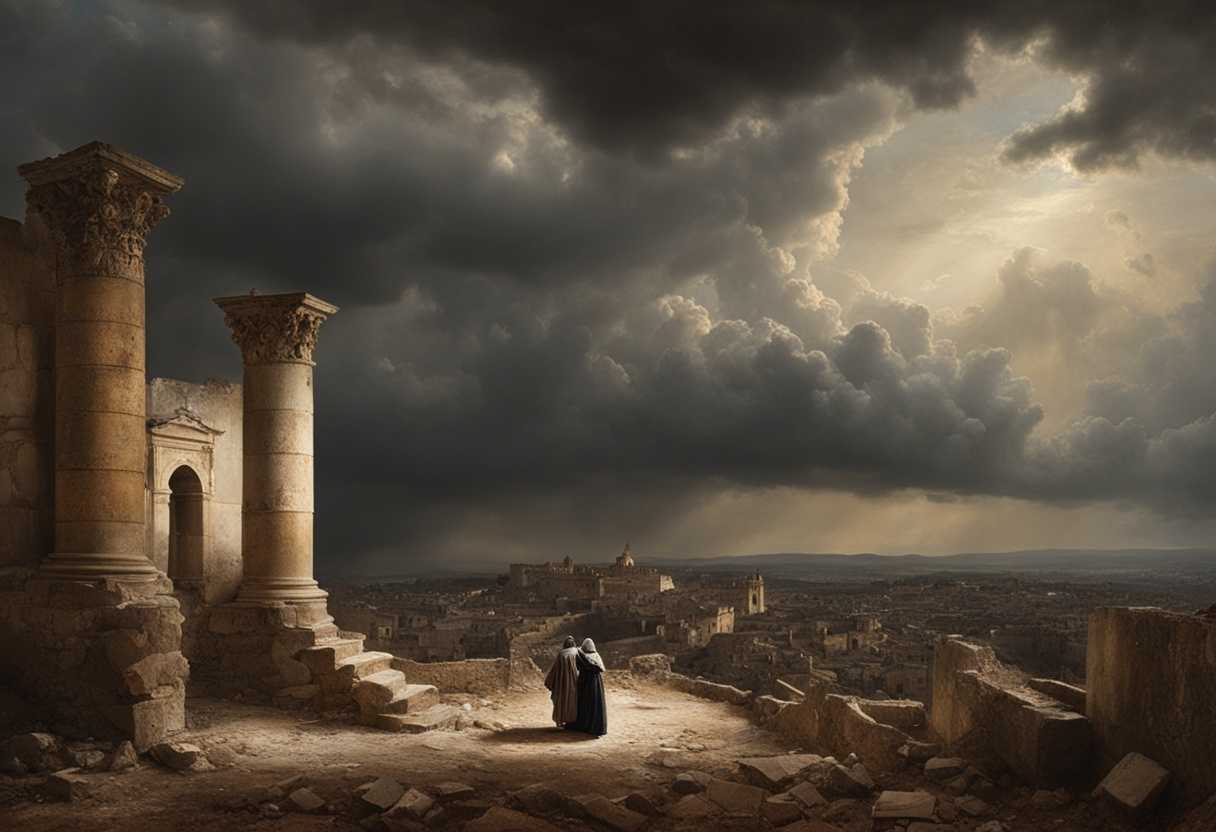
Setting the Scene for 2 Chronicles 36:19-21
The scene unfolds in the aftermath of the Babylonian conquest of Jerusalem, a city once vibrant with life and the center of worship for the Israelites. The air is thick with the scent of smoke and ash, remnants of the destruction that has befallen the holy city. The once-magnificent temple, a symbol of God’s presence among His people, lies in ruins, its sacred artifacts stripped away and taken to Babylon. The streets, once bustling with the sounds of merchants and worshippers, are now eerily silent, save for the distant cries of those mourning the loss of their homeland. The people of Judah, led by their elders and priests, gather in the remnants of what was once a thriving community, their faces etched with despair and disbelief.
Among those present is Jehoiakim, the former king, whose reign ended in failure and disgrace. He stands amidst the rubble, a figure of lost authority, reflecting on the choices that led to this calamity. Beside him is Jeremiah, the prophet, whose warnings of impending doom went unheeded. Jeremiah’s heart is heavy with sorrow, for he had foreseen this destruction and had pleaded with the people to turn back to God. The elders, weary and disheartened, listen intently as Jeremiah speaks of the consequences of their disobedience and the hope of restoration that lies ahead. They are a remnant of a once-great nation, grappling with the reality of their exile and the weight of their collective sin.
As the sun begins to set, casting a golden hue over the ruins, the people gather to hear the words of the prophet. The atmosphere is charged with a mix of grief and a flicker of hope, as Jeremiah reminds them of God’s promise to bring them back to their land after a period of desolation. He speaks of the seventy years of captivity that they must endure, a time of reflection and repentance. The surrounding hills, once a backdrop to their joyous celebrations, now loom as silent witnesses to their plight. Yet, in the midst of their sorrow, there is a glimmer of faith that perhaps, one day, they will return to rebuild what has been lost and restore their covenant with God.
What is 2 Chronicles 36:19-21 about?
The passage you’re reflecting on presents a poignant narrative about the destruction of Jerusalem and the profound implications it had for its inhabitants. When we consider the gravity of this event, we may ask ourselves: What does it truly mean to witness the fall of a city that holds such spiritual significance? The destruction of Jerusalem represents not just a physical ruin but also a heartbreaking rupture of community, identity, and heritage. It symbolizes the culmination of a series of prophetic warnings that had urged the people to turn back to their faith, reconsider their actions, and realign with the values that defined their existence. Are we not reminded of the importance of heedfulness in our own lives?
The exile that follows the destruction is equally significant. It signifies a transformative journey, forcing the people to grapple with loss, displacement, and the longing for a homeland. How does this resonate with our contemporary experiences regardless of time and place? We too face moments of exile in our lives, just as those ancient Israelites faced uncertainty and despair, whether through personal losses or societal upheavals. The narrative invites us to reflect on the consequences of not doing what is right and the moral responsibilities we bear toward our communities. It compels us to consider the pathways to healing and restoration in the aftermath of great loss. We might find that as we unpack these layers of meaning, the struggle for hope and identity in the face of adversity remains a timeless theme that resonates deeply with our own journeys. How can we learn from these ancient lessons as we navigate our modern world?
Understanding what 2 Chronicles 36:19-21 really means
In 2 Chronicles 36:19-21, we encounter a sobering moment in the history of Judah, where the consequences of disobedience are starkly laid out. The destruction of Jerusalem and the temple by the Babylonians marks a pivotal point, illustrating the severe repercussions of turning away from God. This passage serves as a reminder that persistent rebellion against divine guidance leads to judgment. Have you ever considered how our choices can lead us down paths we never intended to take?
The themes of this passage resonate deeply, particularly the idea of consequences stemming from disobedience. The Israelites had repeatedly turned their backs on God, and the resulting devastation was not merely a historical event but a profound lesson. It prompts us to reflect on our own lives. Are there areas where we might be straying from God’s teachings? The narrative encourages us to recognize that neglecting our spiritual lives can lead to dire outcomes, much like the fate of Jerusalem.
Yet, amidst the destruction, there is a glimmer of hope. The promise of restoration is woven throughout Scripture, as seen in related passages like Jeremiah 29:10-14. God assures His people that even after a period of exile, He has plans for their future. This duality of judgment and hope is crucial for understanding God’s character. How can we hold onto hope in our own struggles, knowing that God’s plans for us are ultimately good?
Consider the phrase “burned the house of God.” This stark imagery symbolizes a complete rejection of God’s presence and the severing of the relationship between Him and His people. It challenges us to think about our own worship practices. Are we prioritizing our relationship with God, or are we allowing distractions to lead us away? Similarly, the phrase “carried away captive” serves as a warning about spiritual bondage. When we abandon our faith, we risk becoming enslaved to worldly desires. What captivities might we be facing today?
The concluding thought of fulfilling the word of the Lord emphasizes God’s sovereignty. Even in judgment, His promises remain intact. This serves as a powerful reminder that God’s plans are not thwarted by our failures. Instead, they are often fulfilled through our return to Him. How can we actively seek to align our lives with God’s word, ensuring that we remain in His grace?
In summary, 2 Chronicles 36:19-21 is both a warning and a beacon of hope. It calls us to examine our relationship with God and encourages us to remain steadfast in our faith. As we navigate the complexities of modern life, let us remember the importance of seeking God first. His mercy and restoration await those who turn back to Him, reminding us that no matter how far we stray, the path back is always open. Are you ready to take that step?
How can I learn from past failures to grow?
Learning from past failures involves a deep understanding of the consequences of one’s actions and making conscious efforts to change future behavior. The passage reflects how the people faced destruction and exile due to their persistent disobedience and lack of repentance. This emphasizes the importance of recognizing the patterns in our own lives that lead to negative outcomes. Acknowledging where we have gone wrong provides a crucial opportunity for reflection and growth.
Embracing the lessons from our failures can foster a sense of humility and a desire to seek redemption. The stark consequences faced by those in the passage illustrate that failure often carries weighty repercussions. Taking responsibility for our choices and understanding that change is necessary for growth are essential as we draw parallels in our lives. This process may include seeking forgiveness, whether from others or ourselves, and committing to make amends in our path forward.
Finally, integrating the insights gained from past mistakes can lead to transformation and renewal. We too can find hope in starting anew, just as the passage indicates that remnants were given a second chance to return and rebuild. We empower ourselves to move forward with a clearer purpose and a more profound commitment to making wiser choices that align with our values and goals by focusing on how to apply these lessons to our lives.
Application
Life is like a workplace and family, requiring teamwork and respect to thrive. Just as ignoring our responsibilities can lead to chaos at home or on the job, straying from God’s guidance leads to emptiness. Take a moment to reflect: are your daily choices bringing you closer to fulfilling your purpose, or are they creating a gap that leaves you feeling lost? Now is the time to rethink your path. What small action will you take this week to bring your life back in line with His plan? Isn’t it time to rebuild and strengthen that connection?

Reverend Michael Johnson is an experienced Church Minister with a profound expertise in spirituality and guidance. With a serene presence and a compassionate heart, he has faithfully served his congregation for over 20 years, leading them on a spiritual journey towards inner peace and enlightenment. Reverend Johnson’s extensive knowledge of religious philosophies and profound understanding of human nature have made him a trusted confidant and mentor to many, as he seamlessly weaves his profound wisdom into life teachings. Reverend Johnson’s calming demeanor and empathetic nature continue to uplift and heal souls, nurturing a sense of unity and tranquility within his community.