
2 Chronicles 5:1-5 is about the completion of the construction of the temple under King Solomon, signifying the fulfillment of God’s promise and the establishment of His presence among His people.
2 When Solomon had finished building the house of the Lord, the king’s house, and all that Solomon desired to build,
2 Then Solomon assembled the elders of Israel and all the heads of the tribes, the leaders of the fathers’ houses of the people of Israel, in Jerusalem, to bring up the ark of the covenant of the Lord out of the city of David, which is Zion.
3 And all the men of Israel assembled before the king at the feast that is in the seventh month.
4 And all the elders of Israel came, and the Levites took up the ark.
5 And they brought up the ark, the tent of meeting, and all the holy vessels that were in the tent; the Levitical priests brought them up.
Setting the Scene for 2 Chronicles 5:1-5
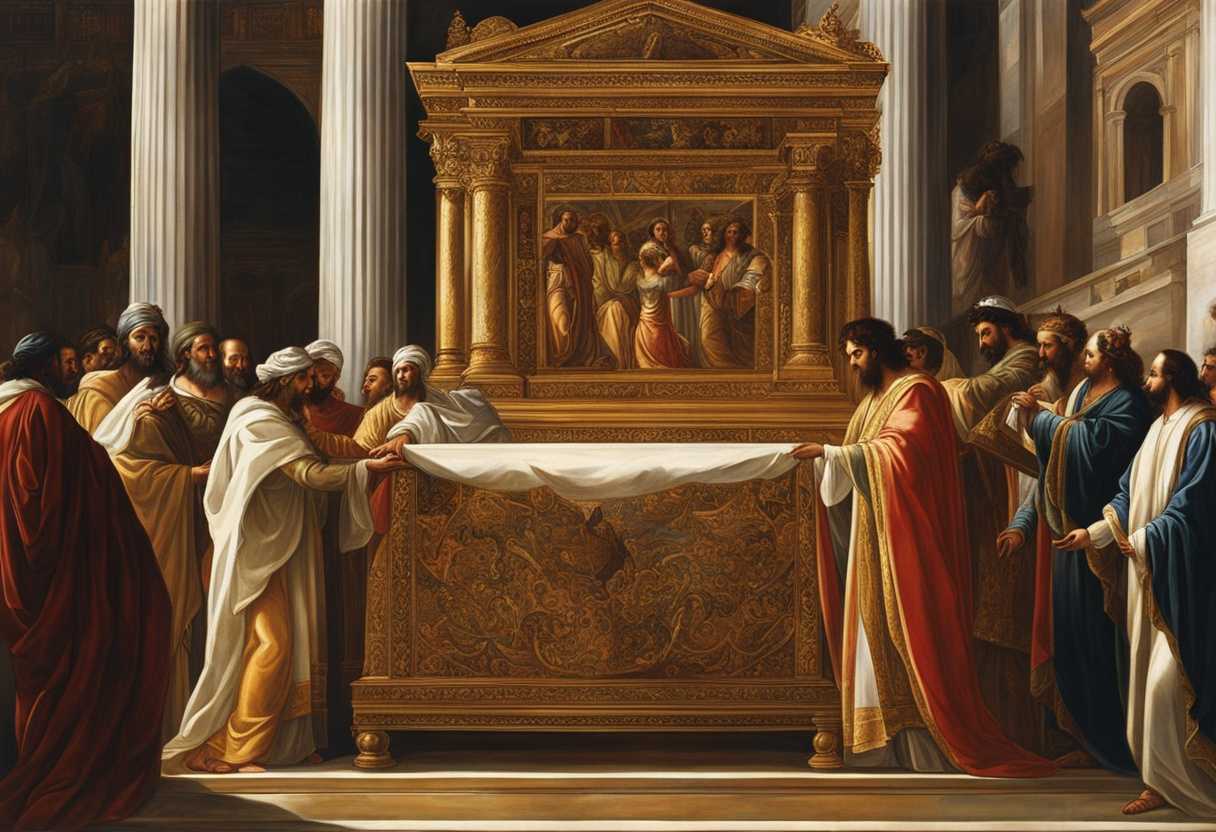
The scene in 2 Chronicles 5:1-5 takes place in Jerusalem, specifically at the Temple of Solomon. The temple had just been completed, and it was a magnificent structure made of the finest materials and adorned with intricate decorations. The air was filled with the scent of incense, and the sound of craftsmen putting the finishing touches on the temple could be heard in the background.
In attendance were King Solomon, the priests, the Levites, and all the elders of Israel. They had gathered to bring the ark of the covenant into the temple, a momentous occasion that signified the presence of God among His people. The ark was a sacred chest containing the stone tablets of the Ten Commandments and was considered the holiest object in Israelite worship.
The priests and Levites carefully carried the ark into the inner sanctuary of the temple, while the elders and King Solomon followed behind, their hearts filled with reverence and awe. As the ark was placed in its designated spot beneath the wings of the cherubim, a cloud filled the temple, signifying the glory of the Lord descending upon His dwelling place. It was a moment of great significance and holiness, as the people of Israel witnessed the culmination of years of preparation and dedication to God.
What is 2 Chronicles 5:1-5 about?
The symbolic significance of bringing the Ark of the Covenant to the temple in this verse is immense. The Ark represents the presence of God among His people and the covenant He made with them. The act of bringing the Ark to the temple with great ceremony signifies the importance of honoring and revering God’s presence and His promises. Through this symbolic act, the people are reaffirming their commitment to God and acknowledging His role as the center of their worship and faith.
Think about the reverence and excitement that must have filled the hearts of the people as they brought the Ark into the temple. It was a moment of great significance and spiritual connection, reminding everyone of the covenant between God and His people. The ceremony surrounding this event served as a powerful reminder of the importance of honoring and worshiping God with all our hearts. Let us reflect on this verse and consider how we can bring the presence of God into our own lives and communities with reverence and celebration.
Understanding what 2 Chronicles 5:1-5 really means
In 2 Chronicles 5:1-5, we are presented with a pivotal moment in Israel’s history as Solomon completes the construction of the Temple, fulfilling his father David’s dream of providing a house for the Lord. This event holds immense significance as the Temple symbolizes God’s presence among His people and serves as a central place of worship and sacrifice. The completion of the Temple signifies the culmination of a monumental task, reflecting dedication, perseverance, and divine guidance. It showcases the importance of fulfilling commitments made to honor God and His dwelling place.
As Solomon brings in the items dedicated by his father David, we see a beautiful display of continuity in faith and respect for the legacy of past generations. The silver, gold, and furnishings dedicated to the Lord symbolize the best offerings given to honor God, reflecting the value placed on worship and service. The involvement of the elders of Israel and the heads of the tribes highlights the unity and collective effort of the community in their dedication to God, emphasizing the importance of communal worship and service.
The presence of the Ark of the Covenant in the Temple further underscores God’s covenant with Israel, His promises, and His abiding presence among His people. This sacred object serves as a tangible reminder of God’s faithfulness and the special relationship He shares with His chosen ones. The glory of the Lord filling the Temple, as described in related passages like 1 Kings 8:10-11 and Exodus 40:34-35, emphasizes the divine approval and presence that sanctifies the place of worship.
The timeless lessons from this passage resonate with us today. We are called to emulate Solomon’s dedication and perseverance in fulfilling the tasks assigned to us by God. By honoring the legacy of those who paved the way for us, we acknowledge the contributions of past generations and build upon their foundations. The unity displayed by the Israelites in worship serves as a reminder of the importance of community and collective effort in our service to God. Just as the Ark symbolized God’s presence in the Temple, we are reminded that God is with us in our daily lives and endeavors.
Consider a small church community coming together to build a new place of worship. Each member contributes in various ways, reflecting the diverse gifts and resources they offer. Upon completion, the congregation gathers for the dedication, feeling a deep sense of accomplishment and unity. They remember the sacrifices made by those before them and sense God’s presence among them. This anecdote mirrors the dedication of Solomon’s Temple and illustrates the enduring principles of dedication, community, and divine presence.
In conclusion, 2 Chronicles 5:1-5 encourages us to remain steadfast in our God-given tasks, honor the legacy of our predecessors, work together in unity, and seek God’s presence in all aspects of our lives. May we draw inspiration from the dedication of Solomon and the Israelites, striving to build a legacy of faithfulness and unity in our worship and service to the Lord.
How can we invite God’s presence into our lives?
We can invite God’s presence into our lives by creating a sacred space where we can connect with Him. Just like how the Israelites consecrated the temple and set everything in place for the ark of the covenant, we can also prepare our hearts and minds to welcome God’s presence. This may involve setting aside time each day for prayer, meditation, and reflection on His Word, creating an environment that is conducive to spiritual growth and intimacy with God.
Furthermore, maintaining an attitude of reverence and humility before God is key to inviting His presence into our lives. We can approach God with a humble heart, acknowledging His sovereignty and seeking His guidance and direction in all aspects of our lives, just as the priests in the temple did with awe and respect. We demonstrate our desire for His presence to dwell with us and lead us in the path of righteousness by cultivating a spirit of submission and obedience to God. Inviting God’s presence into our lives ultimately requires us to sincerely and earnestly pursue Him. We can experience the richness of His presence in our daily lives by seeking Him wholeheartedly, trusting in His promises, and aligning our will with His. We can rest assured that as we open our hearts to God and commit ourselves to walking in His ways, He will draw near to us and manifest His love, peace, and grace in our lives.
Application
Let’s mirror the dedication and reverence shown in 2 Chronicles 5:1-5 as we worship. Just as they prepared meticulously to bring the Ark of the Covenant into the temple, let’s prepare our hearts wholeheartedly for God. Prioritize spiritual readiness before entering His presence, striving to give Him our utmost devotion. Will you align your worship and dedication to God with the same care and reverence as those we read about?

Reverend Michael Johnson is an experienced Church Minister with a profound expertise in spirituality and guidance. With a serene presence and a compassionate heart, he has faithfully served his congregation for over 20 years, leading them on a spiritual journey towards inner peace and enlightenment. Reverend Johnson’s extensive knowledge of religious philosophies and profound understanding of human nature have made him a trusted confidant and mentor to many, as he seamlessly weaves his profound wisdom into life teachings. Reverend Johnson’s calming demeanor and empathetic nature continue to uplift and heal souls, nurturing a sense of unity and tranquility within his community.