
2 Chronicles 6:12-21 is about King Solomon’s prayer of dedication for the Temple, emphasizing the importance of God’s presence among His people, the significance of prayer, and the hope that God will hear and respond to the petitions brought before Him, thereby establishing a covenant relationship with Israel.
12 Then Solomon stood before the altar of the Lord in the presence of all the assembly of Israel and spread out his hands.
13 For Solomon had made a bronze platform five cubits long, five cubits wide, and three cubits high, and had set it in the court, and he stood on it. Then he knelt on his knees in the presence of all the assembly of Israel, and spread out his hands toward heaven,
14 and said, “O LORD, God of Israel, there is no God like you, in heaven or on earth, keeping covenant and showing steadfast love to your servants who walk before you with all their heart,
15 You have kept your promise, for you are righteous.
16 Now therefore, O Lord, God of Israel, keep for your servant David my father what you have promised him, saying, ‘You shall not lack a man to sit before me on the throne of Israel, if only your sons pay close attention to their way, to walk in my law as you have walked before me.’
17 Now therefore, O Lord, God of Israel, let your word be confirmed, which you have spoken to your servant David.
18 “But will God indeed dwell with man on the earth? Behold, heaven and the highest heaven cannot contain you, how much less this house that I have built!”
19 Yet have regard to the prayer of your servant and to his plea, O Lord my God, listening to the cry and to the prayer that your servant prays before you,
20 that your eyes may be open day and night toward this house, the place where you have promised to set your name, that you may listen to the prayer that your servant offers toward this place.
21 And listen to the pleas of your servant and of your people Israel, when they pray toward this place. And listen from heaven your dwelling place, and when you hear, forgive.
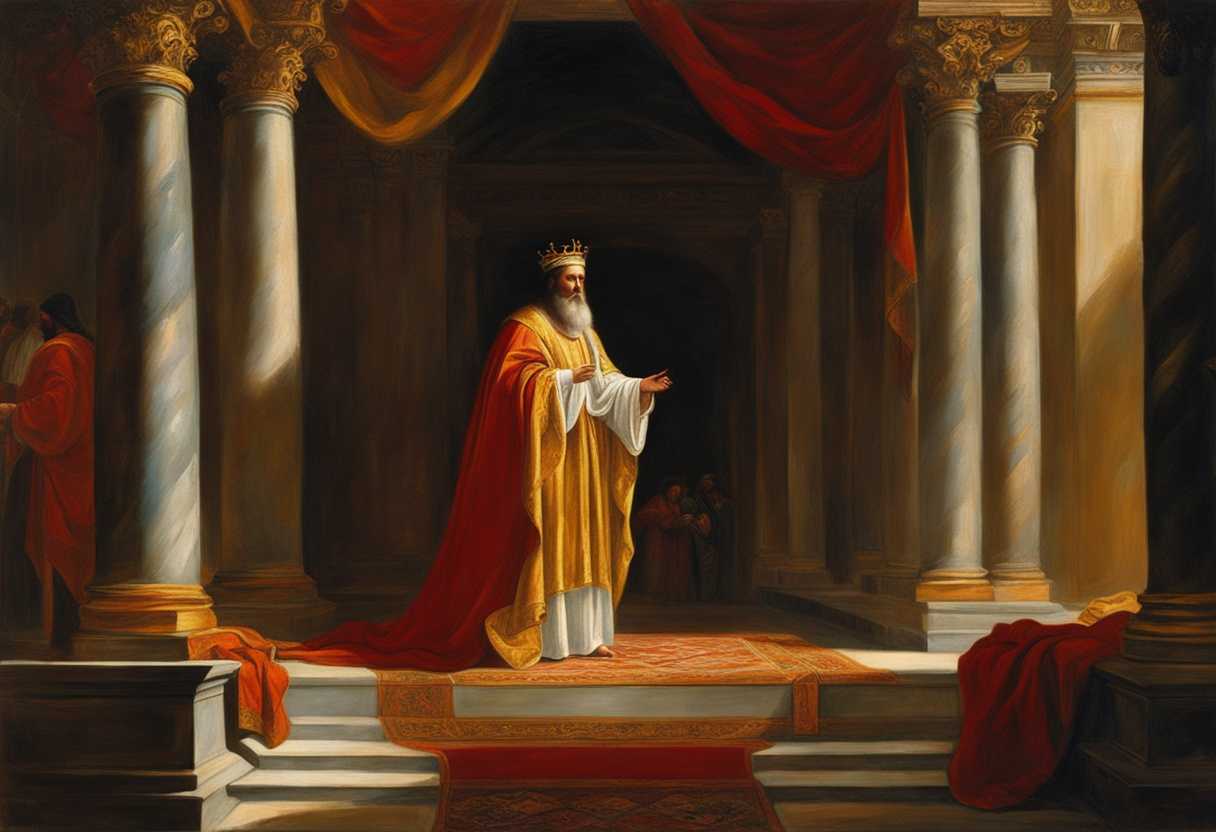
Setting the Scene for 2 Chronicles 6:12-21
In the grand and majestic temple built by King Solomon, a scene of profound reverence and solemnity unfolds. The temple, a magnificent structure adorned with gold and intricate carvings, stands as a testament to the glory of God and the dedication of the people of Israel. The air is thick with anticipation as the congregation gathers, their hearts united in worship. Solomon, the wise king, stands before the altar, his royal robes flowing elegantly around him, symbolizing his authority and responsibility as the leader of the nation. He has called upon the people to witness this momentous occasion—the dedication of the temple, a place where heaven and earth would meet.
As Solomon prepares to pray, he is surrounded by the elders of Israel, priests, and a multitude of worshippers who have traveled from far and wide to be part of this sacred event. The priests, clad in their ceremonial garments, move with purpose, carrying the Ark of the Covenant, which represents God’s presence among His people. The atmosphere is charged with a sense of holiness, as the sound of trumpets and the voices of the people rise in unison, praising the Lord. Solomon, with his heart full of gratitude, reflects on the journey that has brought them to this moment—the years of labor, the sacrifices made, and the faithfulness of God throughout their history.
As he kneels before the altar, Solomon lifts his hands toward heaven, his voice resonating with sincerity and humility. He acknowledges the greatness of God, recognizing that even the highest heavens cannot contain Him, let alone the temple he has built. His prayer is a heartfelt plea for God’s attention and mercy, asking that He would hear the cries of His people when they turn toward this holy place. Solomon’s words echo through the temple, a reminder of the covenant between God and Israel, and the hope that this sacred space will be a beacon of divine presence and guidance for generations to come. The scene is one of unity, reverence, and a deep yearning for connection with the Almighty, as the people stand in awe of what God has done and what He will continue to do among them.
What is 2 Chronicles 6:12-21 about?
We find ourselves standing at the monumental moment of the temple’s dedication in this verse. The act of dedicating the temple is not merely a ceremonial affair; it embodies a profound acknowledgment of God’s presence among His people. Imagine, if you will, the deep reverence that fills the air as Solomon places his heart into this prayer. Isn’t it awe-inspiring to think about a space that is not just physically constructed of stone and wood but is also spiritually made alive through the collective prayers and worship of its people? Solomon’s words serve as a blueprint for understanding how a physical location becomes a sacred space when infused with spiritual significance.
But beyond the simple act of construction, Solomon highlights the critical importance of prayer. It is in prayer that God’s people communicate with Him, expressing their concerns, their gratitude, and their hopes. Why does prayer warrant such emphasis? Perhaps it’s because it signifies relationship—it shows that God is not some distant deity, but rather, a constant presence intimately involved in the lives of His people. When Solomon prays for the temple, he is not just praying for a building; he is seeking a connection that will foster ongoing dialogue and relationship. Isn’t it compelling to realize that through prayer, we too can invite that same divine presence into our lives today? The echoes of Solomon’s call for fidelity in prayer continue to resonate, serving as a reminder to us that our own lives can be sacred spaces where God dwells, provided we approach Him earnestly and with open hearts.
Understanding what 2 Chronicles 6:12-21 really means
In 2 Chronicles 6:12-21, we find ourselves at a pivotal moment in Israel’s history—the dedication of Solomon’s temple. This event is not merely a ceremonial occasion; it represents a profound shift in the relationship between God and His people. Solomon’s prayer during this dedication encapsulates the essence of prayer, intercession, and the faithfulness of God. As we delve into this passage, we are invited to reflect on the significance of prayer in our own lives and the assurance that God is always present and listening.
One of the key themes in this passage is the power of prayer and intercession. Solomon stands before the assembly of Israel, humbly acknowledging the greatness of God while earnestly seeking His guidance. He recognizes that prayer is not just a ritual but a vital means of connecting with the divine. How often do we approach prayer with the same humility and earnestness? In our fast-paced lives, it can be easy to forget the importance of taking a moment to seek God’s presence and direction.
Another significant theme is God’s faithfulness. Solomon’s prayer emphasizes that God has promised to dwell among His people and to listen to their prayers. This assurance is echoed throughout Scripture, reminding us that God is not distant or indifferent. He is actively involved in our lives, ready to respond to our cries for help. In a world filled with uncertainty, how comforting it is to know that we can turn to a God who hears us!
To further understand the depth of Solomon’s prayer, we can look at parallel passages, such as 1 Kings 8:22-30. Here, we see a similar emphasis on humility and reverence. James 5:16 also reinforces the power of prayer, stating that the prayer of a righteous person is powerful and effective. These verses remind us that our prayers can have a profound impact, both in our lives and in the lives of others. Are we harnessing this power in our daily interactions and challenges?
In today’s context, the call to prayer is more relevant than ever. We live in a world filled with distractions, challenges, and crises. Just as the Israelites sought God’s guidance during their times of need, we too are called to turn to Him in prayer. Consider a recent community gathering in response to a local crisis, such as a natural disaster. The collective prayer not only provided comfort but also fostered unity and hope. This illustrates the enduring power of prayer to bring people together and inspire action.
Solomon’s prayer contains meaningful phrases that resonate deeply. When he asks God to “hear from heaven,” it signifies our belief that God is attentive to our prayers. This phrase reassures us that our cries do not go unheard. Additionally, the plea to “forgive and act” highlights God’s mercy and willingness to respond to our repentance. It reminds us of the transformative power of seeking forgiveness. Lastly, the phrase “Your people Israel” reflects the special relationship between God and His chosen people, reminding us that we are part of a larger community of faith.
In conclusion, 2 Chronicles 6:12-21 serves as a powerful reminder of the importance of prayer, God’s faithfulness, and our role as intercessors for one another. As we navigate our modern lives, let us embrace these principles, fostering a deeper relationship with God and with each other. How can we incorporate more prayer into our daily routines? How can we support one another in our spiritual journeys? These are questions worth pondering as we seek to live out the lessons found in this passage.
How can we invite God’s presence into our lives?
Inviting God’s presence into our lives involves approaching Him with sincerity, humility, and a heart willing to connect. Acknowledging our dependence on Him and recognizing His sovereignty establishes a foundation for this relationship. When we set ourselves in a posture of prayer and worship, we open our hearts to receive His guidance and grace. It’s in these moments of genuine communion that we become more aware of His presence and more attuned to His will. Creating sacred spaces and moments in our daily routines can foster deeper encounters with God. This could be through setting aside regular times for prayer, reflecting on His word, or engaging in worship. Such practices not only enhance our spiritual awareness but also invite His presence into our mundane activities, transforming them into meaningful interactions with the divine.
Finally, being intentional about community can greatly amplify our experience of God’s presence. Gathering with others who seek to honor and glorify Him creates an atmosphere where His presence can dwell more fully. Sharing testimonies and engaging in collective worship can deepen our collective experience of God, allowing each of us to witness and participate in His transformative power more vividly. Through these means, we actively cultivate an environment ripe for God’s presence to manifest in our lives.
Application
Think about your work life and family gatherings. Just as you invest time in building strong relationships with your colleagues and loved ones, your prayers should deepen your connection with God. Take a moment to pause and reflect: Are you bringing your hopes and worries to Him with genuine sincerity? Like Solomon at the temple, you have the power to uplift not just yourself, but your community. So, set aside time each day to pray—infuse your words with faith and compassion. What can you do today to strengthen that sacred bond?

Reverend Michael Johnson is an experienced Church Minister with a profound expertise in spirituality and guidance. With a serene presence and a compassionate heart, he has faithfully served his congregation for over 20 years, leading them on a spiritual journey towards inner peace and enlightenment. Reverend Johnson’s extensive knowledge of religious philosophies and profound understanding of human nature have made him a trusted confidant and mentor to many, as he seamlessly weaves his profound wisdom into life teachings. Reverend Johnson’s calming demeanor and empathetic nature continue to uplift and heal souls, nurturing a sense of unity and tranquility within his community.